



- Home
- /
- Top Stories
- /
- Over 2.33 Crore Cases Pending In...
Over 2.33 Crore Cases Pending In Indian Courts Suitable For Mediation: Justice Vikram Nath
Debby Jain
22 March 2026 8:16 AM IST
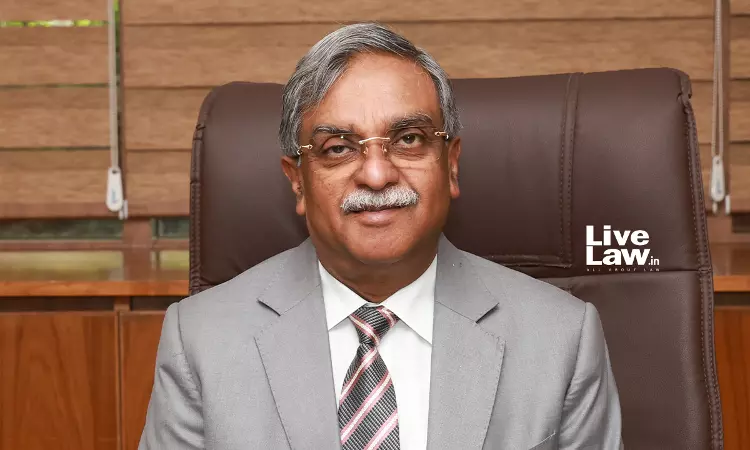
While speaking at an event, Justice Vikram Nath of the Supreme Court expressed that recognition of mediators should not be limited to any particular centre/Court-annexed programme, but rather extend to all jurisdictions.Justice Nath utilized the forum to urge all institutions which confer recognition on mediators to ensure that the mediators are recognized across all jurisdictions. It was...
This is a premium content
Available exclusively to
Our subscribers
Subscribe Premium 
INR 1099+GST
Your support helps us to bring you more content at
an affordable subscription scheme !!!
All payment options available
While speaking at an event, Justice Vikram Nath of the Supreme Court expressed that recognition of mediators should not be limited to any particular centre/Court-annexed programme, but rather extend to all jurisdictions.
Justice Nath utilized the forum to urge all institutions which confer recognition on mediators to ensure that the mediators are recognized across all jurisdictions. It was stated that limiting a professional's recognition as mediator to a particular centre/Court-annexed programme results in fragmentation and may be discouraging.
The judge was speaking at the 1st Supreme Court Bar Association National Conference on 'Reimagining Judicial Governance: Strengthening Institutions for Democratic Justice'. Besides Justice Nath, many judges of the Supreme Court, Chief Justices/Judges of High Courts, Attorney General R Venkataramani, Senior Advocate Sriram Panchu (renowned mediator) and others graced the occasion.
Focusing on the importance of mediation as a dispute resolution mechanism, Justice Nath expressed that mediation is widely spoken about but it is also one of the most misunderstood areas. He said that the most common misconception is that mediation is the art of splitting the difference - that, at its core, it is a process of compromise. "If that were true, mediation would be a lesser form of justice. What mediation does is far more ambitious and human. It seeks equilibrium and that is not compromise. Compromise means both sides lose something, equilibrium means both sides find something. A restored balance."
Justice Nath also emphasized on mediation's tendency to not find fault with one side, but rather, a means for coexistence. He added that while Courts are overwhelmed and pendency keeps on increasing, mediation performs a function that is both "pragmatic and principled". It helps resolving a significant category of disputes, particularly those involving continuing relationships, in a manner that is faster and less adversarial.
Considering the rising influence of artificial technology in the field of law and administration of justice, Justice Nath also highlighted that mediation is a process grounded in listening, perception and the understanding of human behavior. "It is a space within the system where emotion and human experience are not peripheral, but central to resolution", he stated.
Being the head of the Mediation and Conciliation Project Committee of Supreme Court, Justice Nath also apprised the audience about recent developments in the field of mediation, such as integration of law colleges in the training process. The judge remarked that the Mediation Act, 2023 holds promise and also underlined certain limitations of the mediation process, such as dilatory tactics adopted by parties. He emphasized that such problems require "real response", including better training for mediators and institutional support.
Expounding on people's expectations, Justice Nath also said that in long pending cases, sometimes parties are not looking for a particular amount or favorable order. Rather, they seek an acknowledgement "from the person across the table" that they understand and recognize the party's sacrifice, which is possible in mediation but may not necessarily happen in a courtroom.
Pertinently, Justice Nath mentioned that as per data received by High Courts, more than 2,33,00,000 cases pending in Indian Courts as of today are suitable for mediation.
The event can be viewed here.
Tags
Debby Jain
Debby Jain is a Correspondent with LiveLaw, covering the Supreme Court of India

