



- Home
- /
- Top Stories
- /
- Supreme Court Adjourns Plea Against...
Supreme Court Adjourns Plea Against Nimisha Priya's Execution Sine Die
Anmol Kaur Bawa
24 March 2026 3:18 PM IST
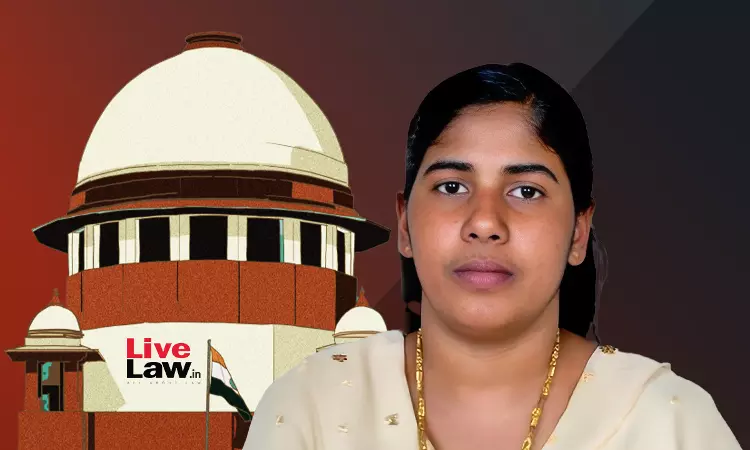
The Supreme Court today adjourned 'sine die' (without giving a date) the plea by Save Nimisha Priya International Action Council seeking directions to secure the release of Malayali nurse Nimisha Priya, who is on the death row in Yemen.The Court was informed that negotiations for saving Priya were underway. A bench of Justice Vikram Nath and Justice Sandeep Mehta recorded the submission of...
This is a premium content
Available exclusively to
Our subscribers
Subscribe Premium 
INR 1099+GST
Your support helps us to bring you more content at
an affordable subscription scheme !!!
All payment options available
The Supreme Court today adjourned 'sine die' (without giving a date) the plea by Save Nimisha Priya International Action Council seeking directions to secure the release of Malayali nurse Nimisha Priya, who is on the death row in Yemen.
The Court was informed that negotiations for saving Priya were underway.
A bench of Justice Vikram Nath and Justice Sandeep Mehta recorded the submission of the counsel for the petitioners and ordered that the parties are at liberty to get the matter listed again through an application if there was a change in circumstances and the matter needed to be revived.
Additional Solicitor General Vikramjit Banerjee appeared for the Union.
The order is yet to be uploaded.
Background
Nimisha Priya, a 36-year-old nurse from Kerala, is facing the death penalty in Yemen for the 2017 murder of Yemeni national Talal Abdo Mahdi. She allegedly tried to sedate Talal with ketamine to recover her passport, which he had allegedly seized after forging documents to claim she was his wife. The sedative overdose led to his death.
She was sentenced to death in 2018, retried in 2020 with the same outcome, and lost her appeal before Yemen's Supreme Judicial Council in 2023. The Yemeni President later approved the death sentence.
Under Shariat law, a death sentence can be set aside if the victim's family pardons the convict in exchange for “blood money.” The petitioner-organisation, Save Nimisha Priya International Action Council – formed by her relatives and supporters – has been trying to secure such a pardon. Priya's family has offered 1 million US dollars (around ₹8.6 crore) as compensation.
Seeking diplomatic interventions to prevent the execution of Priya, the present writ petition was filed.
Last year, a day before Priya's scheduled execution, reports came in that the execution had been postponed with the help of private interventions.
Case Details : Save Nimisha Priya International Action Council v. Union of India and Anr.| W.P.(C) No. 649/2025

Anmol Kaur Bawa
Reporter

