



- Home
- /
- Top Stories
- /
- Supreme Court Asks UP To Clarify...
Supreme Court Asks UP To Clarify That Motor Vehicle Offences With Mandatory Imprisonment Never Got Abated
Gursimran Kaur Bakshi
15 Sept 2026 5:09 PM IST
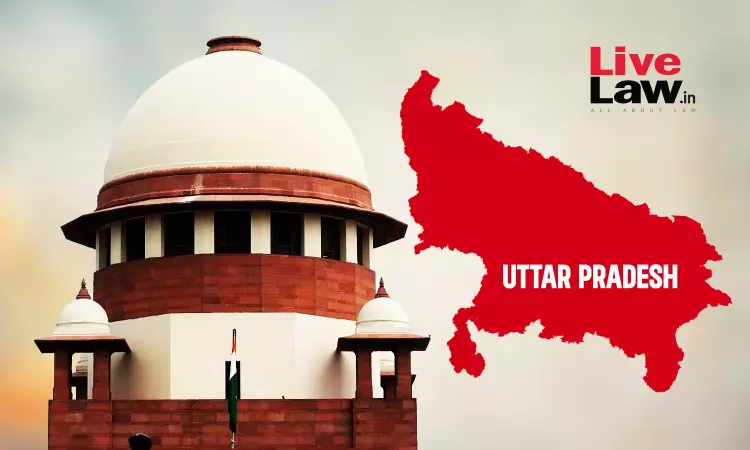
The Supreme Court on Tuesday asked the Uttar Pradesh Government to clarify through an Ordinance that prosecutions for non-compoundable offences under the Motor Vehicles Act, 1988, including offences carrying mandatory imprisonment and repeated offences, were never deemed to have been abated under the State's 2023 law.A Bench of Justices JB Pardiwala and KV Viswanathan was hearing an...
This is a premium content
Available exclusively to
Our subscribers
Subscribe Premium 
INR 1099+GST
Your support helps us to bring you more content at
an affordable subscription scheme !!!
All payment options available
The Supreme Court on Tuesday asked the Uttar Pradesh Government to clarify through an Ordinance that prosecutions for non-compoundable offences under the Motor Vehicles Act, 1988, including offences carrying mandatory imprisonment and repeated offences, were never deemed to have been abated under the State's 2023 law.
A Bench of Justices JB Pardiwala and KV Viswanathan was hearing an Interlocutory Application concerning the Uttar Pradesh Criminal Law (Composition of Offences and Abatement of Trials) Act, 2023, under which the State Government had proposed to abate trials for offences under the Motor Vehicles Act, 1988, pending as of December 31, 2021.
The Court's suggestion came after the amicus curiae, Senior Advocate Guarav Agarwal, reiterated his objection to the State's proposed amendment, arguing that it would not resolve the constitutional challenge to the legislation.
The Court had, in November last year, questioned the Uttar Pradesh Government over the 2023 amendment. Subsequently, the State informed the Court that it proposed to amend the provision to clarify that non-compoundable offences, offences carrying mandatory punishment and subsequent offences would not stand abated.
However, the amicus argued that the proposed amendment would serve no meaningful purpose unless the constitutional validity of the State legislation was examined, as it purportedly conflicted with the central law governing motor vehicle offences.
He pointed out that the State Government had filed an affidavit stating that committees had been constituted in the districts to identify cases involving offences that would continue to be prosecuted.
"I believe, my Lords may examine the constitutionality of such amendment because central law says you will be prosecuted. Road safety is for the citizens and if there is no deterrence, the citizens will not follow," the amicus submitted.
The counsel appearing for the Uttar Pradesh Government informed the Bench that the State had also brought an Ordinance in 2026 clarifying that the three categories of offences would not be abated.
Justice Pardiwala then asked what would happen to cases in which the offences had already stood abated under the law.
The State counsel responded that the Government had undertaken an exercise to identify such cases. Of the 75 districts in Uttar Pradesh, information had already been received from 72 districts, he submitted.
The Bench considered the State's response and suggested that the Government issue a further Ordinance clarifying that prosecutions in cases already treated as abated would be revived.
Justice Pardiwala indicated that if the State came up with a solution to deal with such cases, the Court might not need to examine the constitutional validity of the amendments.
"Put it in so many words that you will revive non-compoundable offences, offences where imprisonment is mandatory and repeated offences. If such Ordinance is issued, perhaps we will not have to go into the constitutional validity," Justice Pardiwala suggested.
Justice Viswanathan suggested that the Ordinance should clarify that the offences were "never deemed" to have been abated.
Based on this, the Court ordered: "By this application, the learned amicus seeks to question the constitutional validity of the UP Criminal Law(Composition of Offences and Abatement of Trials) Act, 2023. As per him, the amendment Act, 2023 doesn't have presidential assent as required under 254(2) of the Constitution. The effect of the amendment is that all criminal prosecutions under the Motor Vehicle Act pending as on December 31, 2021, will stand abated. According to him, the State government should file a report indicating that non-compoundable offences, offences carrying mandatory and/or repeated offences are now being revived and prosecuted. We have taken the stance of the Uttar Pradesh Government. We are at one with amicus that there is absolutely no justification for not prosecuting the offences under the Motor Vehicles Act, and that too which are non-compoundable and where imprisonment is mandatory and repeated offences. We seek some further clarity in this regard from the State.. We expect the State to come out with an ordinance specifically clarifying that all non-compoundable offences, where imprisonment is mandatory and/or repeated offences never deemed to have been abated."
The Court was hearing the 'S.Rajaseekaran' matter pertaining to road safety.
Case Details: S.RAJASEEKARAN v UNION OF INDIA AND ORS. AND ORS.|W.P.(C) No. 295/2012
Tags
Gursimran Kaur Bakshi
Gursimran is the Principal Correspondent with LiveLaw for the Supreme Court. She can be reached out at: simrankaurbakshi@livelaw.in

