



- Home
- /
- Top Stories
- /
- CJI Surya Kant Responds To...
CJI Surya Kant Responds To Criticism On 2024 'Delhi Metro' Ruling
Debby Jain
21 July 2026 10:08 PM IST
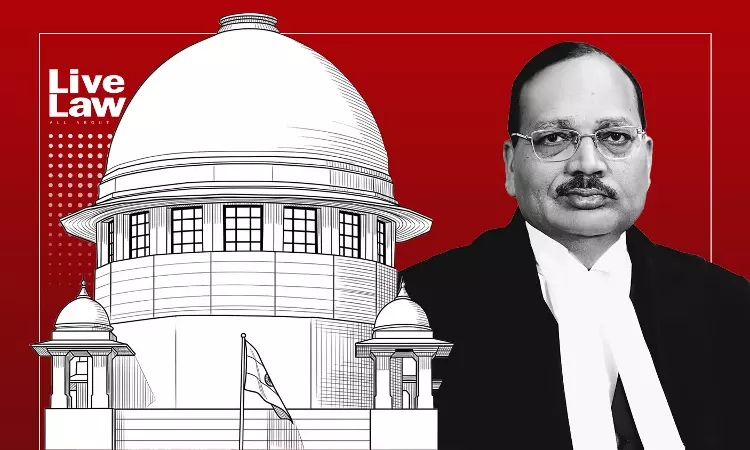
Chief Justice of India Surya Kant today made a veiled response to a criticism made by a Supreme Court Judge that the 2024 judgment in the 'Delhi Metro' case had caused immense damage to arbitration in India.A bench led by the CJI was hearing the proceedings arising out of the curative petition filed by the Delhi Metro Rail Corporation Ltd against the Delhi Airport Metro Express Pvt Ltd.During...
This is a premium content
Available exclusively to
Our subscribers
Subscribe Premium 
INR 1099+GST
Your support helps us to bring you more content at
an affordable subscription scheme !!!
All payment options available
Chief Justice of India Surya Kant today made a veiled response to a criticism made by a Supreme Court Judge that the 2024 judgment in the 'Delhi Metro' case had caused immense damage to arbitration in India.
A bench led by the CJI was hearing the proceedings arising out of the curative petition filed by the Delhi Metro Rail Corporation Ltd against the Delhi Airport Metro Express Pvt Ltd.
During the hearing, the CJI said : "Judgment debtor is now getting so many supporters also. Judgment debtor appears to be too influential...we never thought that he is too influential...that on public platforms, statements will come in in favor of a person who has lost...anyway."
The development came as Attorney General R Venkataramani (for the Delhi Metro) sought an adjournment in the matter, while submitting that things are at a standstill. "We need little more time to work it out", the AG said. On behalf of the banks, it was submitted that there has been some progress and the issues are sought to be worked out internally. "No, but you are not the judgment debtor...judgment debtor is somebody else", noted the CJI in response.
Apparently, the CJI's comment was a reference to Justice Ujjal Bhuyan's observation during a recent lecture, where the judge opined that the judgment in Delhi Metro Rail Corporation Ltd. v. Delhi Airport Metro Express Pvt. Ltd. (delivered by then CJI Dr DY Chandrachud, Justice BR Gavai and Justice Surya Kant) undermined the country's efforts to emerge as a global arbitration hub.
Delivering a lecture on "Arbitration in India: Reform, Relevance & the Road Ahead", at an event organized by The Law Forum, Justice Bhuyan said the Delhi Metro ruling, rendered in the Supreme Court's curative jurisdiction, sent shock waves through the arbitration community. He pointed out that the judgment triggered a series of policy decisions by the Union Government discouraging arbitration, thereby reversing years of legislative reforms aimed at making India an arbitration-friendly jurisdiction.
The Delhi Metro judgment was delivered on April 10, 2024, whereby the Supreme Court allowed a curative petition filed by the Delhi Metro Rail Corporation (DMRC) and set aside a nearly ₹2,800-crore arbitral award in favour of Delhi Airport Metro Express Pvt. Ltd. (DAMEPL), holding that the award suffered from patent illegality and that its earlier restoration by the Supreme Court had resulted in a grave miscarriage of justice.
Justice Bhuyan said that it was an "unprecedented move", as the three-judge Bench exercised its extraordinary curative jurisdiction under Article 142 in April 2024 to set aside a high-value arbitral award more than seven years after it was rendered. He pointed out that the award had already survived challenges under Sections 34 and 37 of the Arbitration and Conciliation Act, proceedings under Article 136 and even a review petition before being overturned. In curative proceedings, the Supreme Court reappreciated evidence and effectively undertook a merits review in what became the fifth round of challenge to the award.
"While declaring and clarifying that exercise of curative jurisdiction should not be adopted as a matter of ordinary course... the Bench did just the opposite," Justice Bhuyan remarked. He said the judgment had raised serious questions regarding the extent of judicial intervention in arbitral awards and India's suitability as an arbitration hub for commercial disputes. "Arbitrators and critics are aghast; this judgment is a clear case of judicial intrusion into the domain of arbitration, much beyond the statute," he said.
Justice Bhuyan further said the Delhi Metro judgment directly led to the Finance Ministry's Office Memorandum dated June 3, 2024, which discouraged government departments and public sector undertakings from including arbitration clauses in contracts involving disputes exceeding ₹10 crore. The Office Memorandum reasoned that arbitration involving the government had failed to achieve finality because arbitral awards were routinely challenged in courts, making arbitration "an additional layer of adjudication", and instead encouraged mediation.
The Supreme Court is currently dealing with a contempt petition filed by DMRC in the curative petitions whereupon the 2024 judgment was delivered.
Case Title - DELHI METRO RAIL CORPORATION LTD. Versus DELHI AIRPORT METRO EXPRESS PVT LTD AND ORS. CONMT.PET.(C) No. 574-575/2024 in CURATIVE PET(C) No. 108-109/2022 in R.P.(C) No. 1158-1159/2021 in C.A. No. 5627/2021
Tags

Debby Jain
Debby Jain is a Correspondent with LiveLaw, covering the Supreme Court of India

