



- Home
- /
- Top Stories
- /
- Supreme Court Directs Meta To...
Supreme Court Directs Meta To Restore AAP Gujarat's Facebook, Instagram Pages
Gursimran Kaur Bakshi
17 Aug 2026 2:08 PM IST
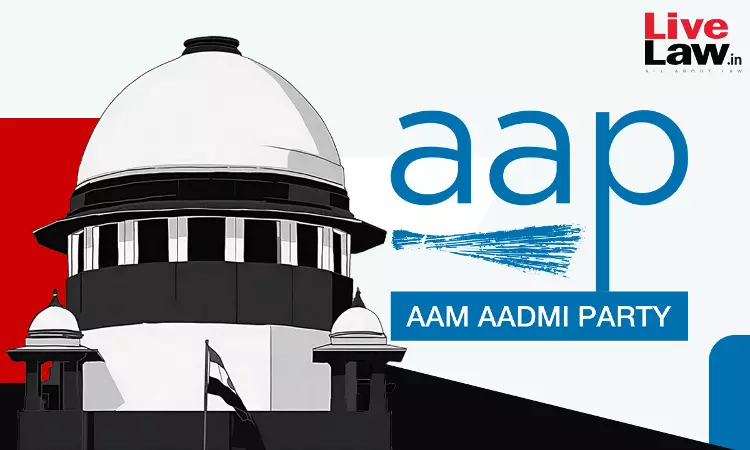
The Court clarified that the account restoration will be subject to the removal of objectionable posts.
The Supreme Court today(August 17) allowed interim relief to the Aam Aadmi Party, directing Meta to restore its Instagram and Facebook pages of the Gujarat State unit, subject to the removal of objectionable posts. The present order was passed in an interlocutory application filed in the main matter where AAP raised the larger issue regarding the blocking of content and accounts without...
This is a premium content
Available exclusively to
Our subscribers
Subscribe Premium 
INR 1099+GST
Your support helps us to bring you more content at
an affordable subscription scheme !!!
All payment options available
The Supreme Court today(August 17) allowed interim relief to the Aam Aadmi Party, directing Meta to restore its Instagram and Facebook pages of the Gujarat State unit, subject to the removal of objectionable posts.
The present order was passed in an interlocutory application filed in the main matter where AAP raised the larger issue regarding the blocking of content and accounts without informing the users. IA has been filed for an interim order to restore the Instagram page of AAP's Gujarat unit, '@aapgujarat', and its Facebook page, which cumulatively had over 10.39 lakh followers before it was ordered to be blocked on April 24. It has been stated that an interim order is necessary because blocking of the social media pages results in choking the entire communication channel of a national political party.
A bench comprising Justice P. S. Narasimha and Justice Alok Aradhe passed the order. Senior Advocate Shadan Farasat(for the petitioner) appeared before the bench and prayed that the interim relief may be allowed, considering that the Union has again sought an adjournment. When the matter was first taken up, it was passed over, since Solicitor General Tushar Mehta was in another court. The bench, before adjourning, had indicated that it would grant the interim relief.
When the matter was finally taken up, an Advocate vehemently sought adjournment till Wednesday, but the Court nevertheless allowed the application. Justice Narasimha said: "How many times will we adjourn this matter?"
The Court passed an order: "In the facts and circumstances of the case, pending disposal of the writ petition and as an interim measure, we deem it appropriate to direct the respondents to restore the Petitioner's Instagram Handle “@aapgujarat” and the Facebook Page “@aapgujarat” subject to removal of objectionable material. Accordingly, I.A. NO 178565/2026 is allowed to the extent indicated."
The suspension took place on April 25, 2026, ahead of local body elections in Gujarat. The suspension was linked to alleged copyright violations involving the use of scenes and clips from Gujarati films in political campaign material without permission. At the time, AAP leaders claimed that the action was politically motivated and alleged that Meta blocked the accounts at BJP's behest.
In its petition, the party has questioned the legal basis for the blocking and suspension of its social media accounts. The petition seeks a declaration that Section 79(3)(b) is not a source of power for authorities to direct blocking of information.
Section 79 deals with exemption from liability of intermediaries. Sub-section (3)(b) states that the safe harbour protection available to intermediaries will not apply if, upon receiving actual knowledge through a court order or government notification that unlawful information hosted on its platform is being used to commit an unlawful act, the intermediary fails to expeditiously remove or disable access to that material.
The plea also seeks a declaration that all consequential directions, rules and notifications issued under the provision, insofar as they relate to blocking of information, are void.
AAP has sought quashing of the directions allegedly issued by law enforcement authorities to Meta for blocking or suspending the Gujarat unit's Instagram and Facebook accounts. The petition seeks direction from the Court to call for the records relating to the blocking directions.
The party has further sought a declaration that the action of blocking the “@aapgujarat” Instagram account and Facebook page is arbitrary, illegal, unconstitutional and violative of the Constitution. The plea also seeks guidelines and procedural safeguards governing blocking or suspension of official social media accounts of registered political parties.
It has asked the Court to ensure that such action can only be taken after prior notice, an opportunity of hearing, and written reasons, and only in conformity with the grounds under Article 19(2) of the Constitution read with Section 69A of the IT Act.
Section 69A empowers the government to block public access to online information under specified conditions – in the interest of the sovereignty and integrity of India, defence of India, security of the State, friendly relations with foreign States, public order, or for preventing incitement to the commission of a cognisable offence relating to these grounds.
Case Details: AAM AADMI PARTY & ORS V UOI| IA 22668 in WP 576/2026
Appearances: For Petitioner(s) :Mr. Shadan Farasat, Sr. Adv. Mr. Abdul Talha Rehman, Adv. Mr. Siddhant Sharma, AOR Mr. Akshay Malhotra, Adv. Mr. Varisha Sharma, Adv. Ms. Mishi Chaudhary, Adv. Mr. Paras Nath Singh, AOR Mr. Prasanth Sugathan, Adv. Mr. Jayant Malik, Adv. Mr. Syed Mohammad Haroor, Adv. Mr. Nayan Grover, Adv.
For Respondent(s) :Mr. Tushar Mehta, Solicitor General (NP) Ms. Swati Ghildiyal, AOR (NP) Ms. Astha Sungh, Adv. Mr. Gaurang, Adv. Ms. Neha Singh, Adv. Ms. Sonakshi Sinha, Adv. Ms. Apoorva Anand, Adv. Ms. Archana Pathak Dave, A.S.G. (NP) Ms. Madhulika Upadhyay, AOR Mr. Parmod Kumar Vishnoi, Adv. Mr. Arun Kumar Singh, Adv. Mr. Sachin Sharma, Adv. Mr. S. S. Shroff, A
Gursimran Kaur Bakshi
Gursimran is the Principal Correspondent with LiveLaw for the Supreme Court. She can be reached out at: simrankaurbakshi@livelaw.in

