



- Home
- /
- Top Stories
- /
- Supreme Court Endorses Proposal For...
Supreme Court Endorses Proposal For 'Young Lawyers' Professional Assistance Fund' To Support Junior Advocates
Amisha Shrivastava
19 Jun 2026 12:22 PM IST
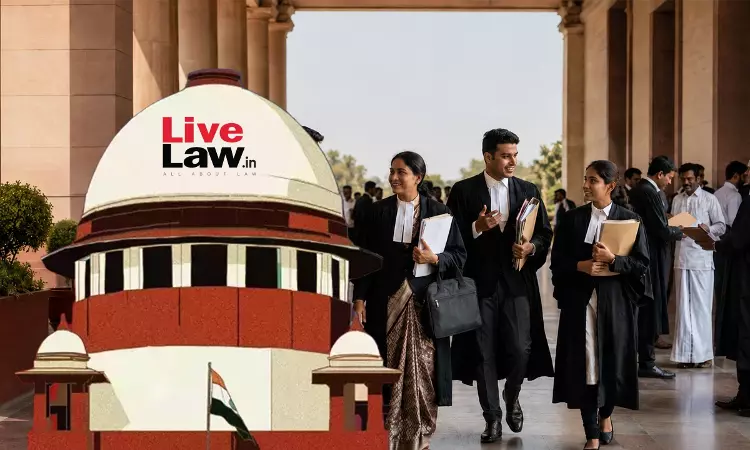
The Court sought the views of the Attorney General for India and the Advocate Generals of the State.
The Supreme Court on Friday endorsed a proposal to create a "Young Lawyers' Professional Assistance Fund" to provide financial support to young advocates during the formative years of their legal careers, observing that financial hardships often drive talented lawyers away from litigation practice. The proposal found favour with a Bench comprising Chief Justice of India Surya Kant and Justice...
This is a premium content
Available exclusively to
Our subscribers
Subscribe Premium 
INR 1099+GST
Your support helps us to bring you more content at
an affordable subscription scheme !!!
All payment options available
The Supreme Court on Friday endorsed a proposal to create a "Young Lawyers' Professional Assistance Fund" to provide financial support to young advocates during the formative years of their legal careers, observing that financial hardships often drive talented lawyers away from litigation practice.
The proposal found favour with a Bench comprising Chief Justice of India Surya Kant and Justice V Mohana while hearing a public interest petition filed by women advocates concerning infrastructural deficiencies in courts and the challenges faced by young members of the Bar. The Court said a dedicated fund could help address the steep economic barriers confronting first-generation lawyers and those from disadvantaged backgrounds.
"The absence of a steady stream of clients and the limited remuneration available during these years tends to create extreme financial hardship," the Court observed, noting that many junior advocates remain dependent on modest stipends from seniors while learning the craft of advocacy.
Senior Advocate Dr. Monika Gusain, appearing for the petitioner, submitted that the Supreme Court has now mandated 3-year practice to appear for the judicial service examination; however, without any stipend or support system, many women are finding it difficult to join legal practice.
Highlighting the difficulties faced by newcomers to the profession, the Court said a young lawyer entering litigation does not immediately inherit an office, clientele, library, or predictable source of income. The initial years are largely spent observing proceedings, assisting seniors and acquiring courtroom skills, often with little financial security.
The Bench warned that the resulting attrition could lead to a form of "brain drain" within the legal profession, particularly affecting first-generation lawyers and those who are under pressure to support their families soon after completing their legal education. This might force many to explore alternative career options offering more stable income, despite their genuine interest and potential in litigation.
It is often said that the rewards of practice accrue with time and perseverance, and that young advocates must remain steadfast through the initial years of struggle. While this is largely true, it presupposes the existence of a financial and social support network that enables a young lawyer to endure that period of uncertainty. Not every aspiring advocate enjoys such support and for many, the decision whether or not to continue in litigation is influenced much more by economic considerations than merit or dedication.
Against this backdrop, the Court observed that a Young Lawyers' Professional Assistance Fund should be established under the exclusive control of the jurisdictional High Courts or an autonomous body constituted by the Union and State Governments. According to the Court, such a framework would inspire confidence among prospective donors and contributors.
The Court suggested that Parliament and other stakeholders could consider a structured statutory scheme under which successful senior advocates and other members of the legal profession contribute to the fund. It also proposed that a portion of court fees collected by the judiciary and a substantial share of costs imposed in judicial proceedings could be channelled towards the corpus.
To encourage donations, the Bench suggested incentives such as tax exemptions, national awards and other honours. The fund, it said, should provide a reasonable monthly stipend to first-generation lawyers and advocates from economically and socially disadvantaged backgrounds during the early years of practice. Beneficiaries could simultaneously work as associates with experienced lawyers in exchange for the stipend support.
The Court further suggested that financial assistance should be sufficient to ensure basic sustenance during the first three years of practice and thereafter be gradually reduced, ending after six to seven years when the lawyer is expected to attain professional self-sufficiency.
It also proposed a self-sustaining model whereby advocates who benefited from the fund in their early years contribute back to it through phased instalments after establishing themselves in practice, thereby supporting future generations of young lawyers.
Clarifying that the observations were tentative and illustrative, the Court issued notice in the matter and sought assistance from the Attorney General for India as well as the Advocate Generals of the States and Union Territories.
Petition also raises issue of lack of washrooms for lady advocates
The petition also highlighted the lack of adequately equipped Ladies' Bar Rooms and essential facilities in courts across the country, which adversely affected the ability of women lawyers to effectively discharge their professional responsibilities.
The petitioners relied on a survey conducted among women advocates and physical inspections of court complexes, which revealed that many High Courts, District Courts and Taluka Courts either lacked dedicated Ladies' Bar Rooms altogether or provided facilities that were grossly inadequate. The survey pointed to a shortage of clean washrooms, seating arrangements, changing spaces, nursing facilities and other basic amenities.
Taking note of these concerns, the Court observed that the issue could not be brushed aside as a matter of mere convenience. It noted that women advocates spend long hours within court premises and that the availability of adequate infrastructure, including clean washrooms and safe working spaces, bears a direct nexus with the constitutional guarantee of life and dignity under Article 21. The Court further observed that the lack of such facilities could discourage women from continuing in litigation practice.
The Chief Justice said that he has formed a committee of judges to propose suggestions to improve judicial infrastructure in the country.
"The provision of such essential facilities prima facie bears a direct nexus with the fundamental guarantee of life and dignity under Article 21 of the Constitution. The expression “life” under Article 21 has consistently received an expansive interpretation from this Court and has been understood to encompass those conditions which enable an individual to live and work with dignity. When women advocates are required to spend substantial portions of their day within court premises, the availability of basic infrastructure necessary for their comfort, privacy, safety, and professional functioning assumes utmost significance. The issue, therefore, transcends the realm of administrative convenience and touches upon values that lie at the heart of the constitutional guarantee of dignity and equal participation in public life," the bench observed in the order.
Case : SARIKA TYAGI Vs UNION OF INDIA | W.P.(C) No. 770/2026
Tags

Amisha Shrivastava
Amisha Shrivastava is a Senior Correspondent with LiveLaw, covering the Supreme Court of India. She can be reached at amisha@livelaw.in

