



- Home
- /
- Top Stories
- /
- Supreme Court Issues Notice On Plea...
Supreme Court Issues Notice On Plea Challenging Inclusion Of District Police Chief In Kerala Public Prosecutor Appointments
Amisha Shrivastava
21 Aug 2026 9:35 AM IST
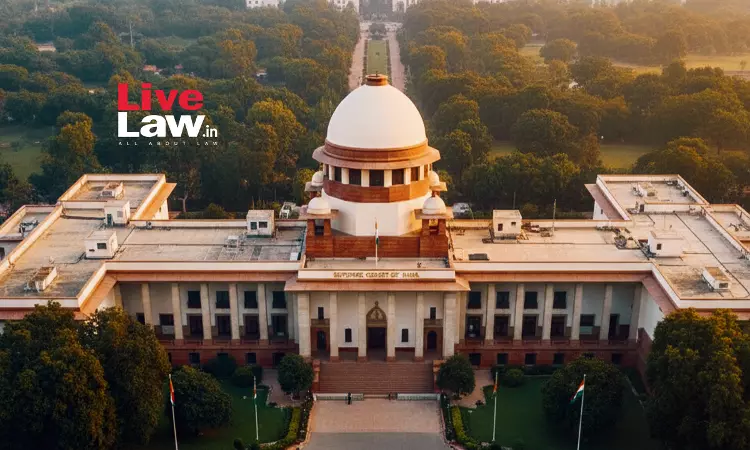
The Supreme Court on August 19 issued notice on a plea challenging the inclusion of the District Police Chief in the State of Kerala's procedure for appointing Public Prosecutors under Section 18 of the Bharatiya Nagarik Suraksha Sanhita (BNSS).The petitioner contends that Section 18(4) requires the District Magistrate to consult the Sessions Judge and does not permit the Police Chief, who...
This is a premium content
Available exclusively to
Our subscribers
Subscribe Premium 
INR 1099+GST
Your support helps us to bring you more content at
an affordable subscription scheme !!!
All payment options available
The Supreme Court on August 19 issued notice on a plea challenging the inclusion of the District Police Chief in the State of Kerala's procedure for appointing Public Prosecutors under Section 18 of the Bharatiya Nagarik Suraksha Sanhita (BNSS).
The petitioner contends that Section 18(4) requires the District Magistrate to consult the Sessions Judge and does not permit the Police Chief, who heads the investigating agency, to be part of the consultative process.
The petitioner has also challenged the State's procedure of allowing the District Collector to prepare an initial list of eligible advocates before consulting the Sessions Judge.
A bench of Justice Vikram Nath and Justice Sandeep Mehta issued notice returnable in 4 weeks on a petition filed by advocate Vishnuprasad Nair against the judgment of the Kerala High Court approving the mechanism for appointment of Public Prosecutors in Kerala.
During the hearing, Senior Advocate PB Suresh Kumar for Nair submitted that Section 18(4) of the BNSS provides only for consultation between the District Magistrate and the Sessions Judge in preparing the panel of Public Prosecutors.
Justice Vikram Nath questioned how the additional consultation would affect the process if it was only consultative. He asked, “The Rule or the provision says that the District Judge and the District Magistrate, correct? So if they want to have some further inputs, what is wrong in that?”
Kumar contended that the Supreme Court had held that where a statute requires an authority to make an appointment in consultation with a particular person, the prescribed procedure cannot be expanded by consulting an additional person. He also stressed that the District Police Chief heads the investigating agency and argued that the office of the prosecutor has to remain independent of the investigating agency.
He referred to Clause 2 of the circular, which provides that after preparation of a list containing the names of eligible persons, the District Collector shall convene a joint meeting with the District Judge and District Police Chief. He argued that the District Police Chief should not be part of this consultation because of the requirement that the Public Prosecutor's office remain independent of the investigating agency.
The Court ultimately issued notice. Justice Nath indicated that there was no need to expressly record that appointments made during the pendency of the case would be subject to the outcome of the proceedings, observing that any such appointments would automatically be subject to the final outcome.
Background
The Kerala High Court initiated a suo motu writ petition in 2021 after it noting serious lapses in the conduct of criminal trials by prosecutors. In its April 9, 2025 judgment, the High Court held that the Kerala Government Law Officers (Appointment and Conditions of Service) and Conduct of Cases Rules, 1978 did not govern the appointment of Public Prosecutors.
It held that such appointments were governed by Section 18 of the BNSS and directed the State Government to frame internal administrative guidelines in conformity with the provision, while giving primacy to the opinion of the District Judge.
The State Government subsequently issued a circular on September 3, 2025 authorising the District Collector to invite applications and prepare a preliminary panel of eligible advocates after examining their qualifications, experience, integrity, reputation and antecedents.
On December 3, 2025, the State Government issued a circular laying down guidelines for preparation of panels for appointment of Public Prosecutors. The petition challenges the circular on the ground that it permits the District Collector to prepare a panel before consultation with the Sessions Judge under Section 18(4) of the BNSS.
Nair approached the High Court challenging the circular as being contrary to Section 18 of the BNSS and the directions issued in the April 2025 judgment.
During the proceedings, the State produced a revised draft circular on July 6, 2026. Nair objected to three aspects of the draft. First, it provided for consultation by the District Collector with both the Sessions Judge and the District Police Chief, although Section 18(4) contemplates consultation with the Sessions Judge. Second, it retained the provision allowing the District Collector to prepare an initial panel before consultation. Third, it used the expression "due regard" instead of "primacy" in relation to the opinion of the District Judge.
The Kerala High Court approved the draft circular with one modification. It replaced the expression "due regard" with "due primacy". It rejected the challenge to the participation of the District Police Chief, holding that the Police Chief's inputs could assist in understanding the antecedents of candidates and that the opinion of the Police Chief was not conclusive. The High Court also did not accept the petitioner's objection to preparation of the preliminary panel by the District Collector before judicial consultation.
Thus, Nair filed the present SLP challenging the HC judgment. The petition contends that Section 18(4) of the BNSS provides for consultation between the District Magistrate and the Sessions Judge while preparing the panel of Public Prosecutors. According to the petitioner, permitting the District Police Chief to participate introduces an authority that is not contemplated by the statute.
The petition relies on the Supreme Court's judgment in Chandra Mohan v. State of Uttar Pradesh to contend that when a statute requires an appointment to be made in consultation with a specified authority, the prescribed process cannot be expanded by adding another authority.
The petition also argues that participation of the District Police Chief affects the independence of the prosecutorial system because the Police Chief heads the investigating agency. It relies on S.B. Shahane v. State of Maharashtra, in which the Supreme Court stressed the need for prosecutors to remain independent of the police department and officers responsible for investigation.
“By permitting an executive functionary heading the investigating agency to participate in the selection of Public Prosecutors, the Impugned Judgment compromises the institutional independence of the prosecutorial system and dilutes the statutory consultative mechanism contemplated by Parliament. The inclusion of the District Police Chief in the process of appointing the public prosecutor is contrary to the settled position that the prosecutor office should be independent of the police department as categorically held by this Hon'ble Court in S,B. Shahane and Ors. v5. State of Maharashtra and Ors. (AIR 1995 SC 1628)”, the plea contends.
The petition further argues that allowing the District Collector to prepare the initial panel before consultation with the Sessions Judge makes the judicial consultation ineffective. According to the petitioner, the Sessions Judge is reduced to commenting on candidates already shortlisted by the executive instead of participating in the identification of candidates at the initial stage.
The petition contends that the statutory consultative mechanism must be followed and that appointment of Public Prosecutors must involve meaningful judicial participation and remain insulated from executive interference.
Appearance –
For Petitioner: Mr. P.B Suresh Kumar, Sr. Adv. Mr. Pranav Krishna, AOR Mr. Akhil Suresh, Adv. Mr. S. K Adithyan, Adv. Mr. Asher Revi Job, Adv. Mr. Pattathil Pranav Menon, Adv. Mr. Naduvilaparambil Sebastian, Adv
Case no. – Special Leave to Appeal (C) No(s). 28482/2026
Case Title – Vishnuprasad Nair v. State of Kerala & Ors.
Tags

Amisha Shrivastava
Amisha Shrivastava is a Senior Correspondent with LiveLaw, covering the Supreme Court of India. She can be reached at amisha@livelaw.in

