Supreme Court Issues Notice On Plea To Finalise Judges' Appointment MoP, Bring Collegium Minutes Under RTI
Amisha Shrivastava
18 Nov 2026 7:58 PM IST
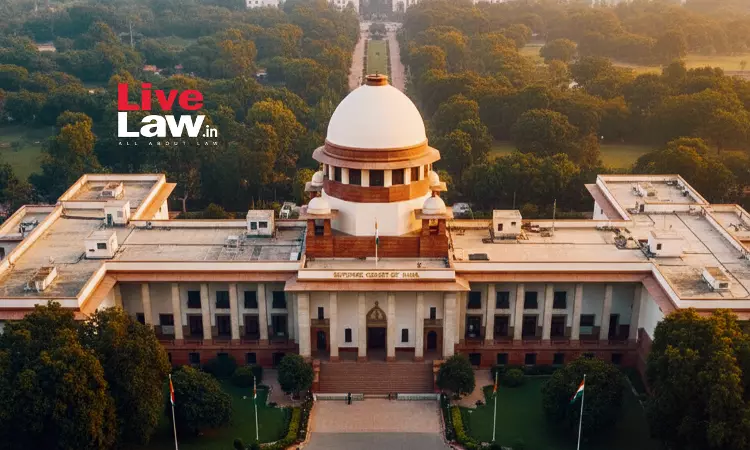
The Supreme Court on Wednesday (November 18) issued notice on a petition filed by NGO Lok Prahari seeking directions to the Union Government and the Chief Justice of India (CJI) to finalise the Memorandum of Procedure (MoP) governing the appointment of judges to the Supreme Court and High Courts, which has remained pending for nearly 11 years.
A bench of Justice MM Sundresh and Justice PB Varale issued notice to the respondents, including the Union Government and the Secretary General of the Supreme Court. The bench also permitted the petitioner to file an amended petition.
Senior Advocate Sanjay Hegde appeared for Lok Prahari.
The Memorandum of Procedure lays down the process for the appointment, elevation and transfer of judges to the higher judiciary under the Collegium system. It was first framed in 1999 following the Supreme Court's judgment in the Second Judges case.
The petition highlights the delay of nearly 11 years in finalising the revised MoP governing the appointment of judges to the Supreme Court and High Courts.


The petition states that subsequent to the 2015 judgment striking down the National Judicial Appointments Commission (NJAC), a five-judge Constitution Bench had directed that the existing MoP could be supplemented and finalised by the Government of India in consultation with the Chief Justice of India. It identified important areas requiring improvement, including eligibility criteria for judicial appointments, transparency in the selection process, establishment of a permanent secretariat and a mechanism for dealing with complaints against prospective judges.
The petition has also sought directions to make the minutes of meetings of the Supreme Court and High Court Collegiums concerning judicial appointments accessible under the Right to Information Act, 2005 (RTI Act).
Lok Prahari has sought a direction to the CJI, on the administrative side, to make necessary changes to the existing MoP in accordance with the unanimous view of the Collegium, taking into consideration the factors identified by the Supreme Court's Constitution Bench in its December 16, 2015 order in the NJAC case.
It has further sought a direction to the Union Government to finalise the revised MoP within one month, in consultation with the CJI, after the latter takes a decision on the proposed changes.
The plea argues that the existing procedure lacks transparency and objectivity in the selection of candidates for appointment to constitutional courts. It seeks consideration of additional suggestions made in the petition while revising the MoP, including measures to ensure greater transparency and accountability in judicial appointments.
The petition has also sought that the selection of judges be guided by the considerations identified by the Constitution Bench, and that the minutes of Collegium meetings at both the High Court and Supreme Court levels be brought within the ambit of the RTI Act.
Background
In October 2015, a five-judge Constitution Bench struck down the National Judicial Appointments Commission (NJAC) Act, thereby retaining the Collegium system for judicial appointments. While disposing of the matter on December 16, 2015, the Court invited suggestions for improving the existing system and directed that the MoP be revised after consultations between the Union Government and the CJI.
The proposed revision is intended to address concerns relating to the appointment process, including eligibility criteria, transparency, a permanent secretariat and a mechanism for dealing with complaints against prospective candidates. However, the revised MoP has not been finalised despite the passage of nearly 11 years.
The petition had earlier come up before a bench of Justice PS Narasimha and Justice Alok Aradhe on November 2. Justice Narasimha recused himself from hearing the matter, stating that he had appeared in a connected matter at an earlier stage. Thus, the matter has come before the present bench led by Justice Sundresh.