



- Home
- /
- Top Stories
- /
- 'Never Dare To Do It' : CJI Surya...
'Never Dare To Do It' : CJI Surya Kant Slams Man For Contacting His Brother Over Child's Case
Debby Jain
25 March 2026 2:50 PM IST
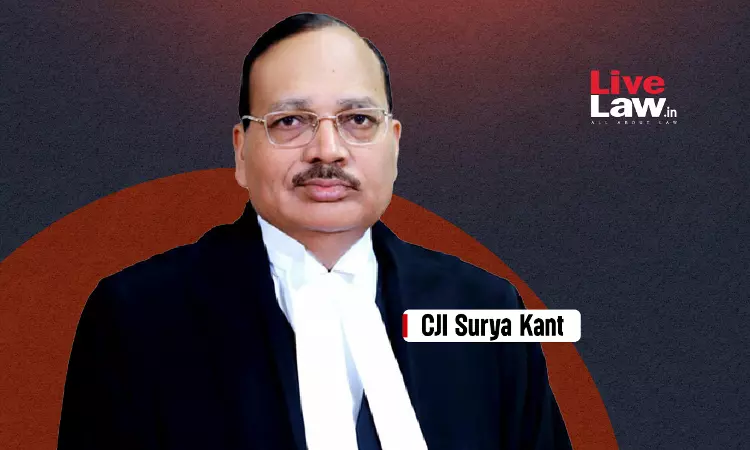
"Even if he hides out of India, I know how to deal with these kinds of people," CJI said.
In a medical admission-related matter, Chief Justice of India Surya Kant today slammed a person for telephoning his brother in connection with an order passed by him. The CJI questioned why contempt proceedings should not be initiated against the petitioner's father, who apparently made the call.The curious development took place in a case where two General Category candidates were...
This is a premium content
Available exclusively to
Our subscribers
Subscribe Premium 
INR 1099+GST
Your support helps us to bring you more content at
an affordable subscription scheme !!!
All payment options available
In a medical admission-related matter, Chief Justice of India Surya Kant today slammed a person for telephoning his brother in connection with an order passed by him. The CJI questioned why contempt proceedings should not be initiated against the petitioner's father, who apparently made the call.
The curious development took place in a case where two General Category candidates were seeking admission in minority quota in a Buddhist medical college on the ground that they had converted to Buddhism. A bench led by the CJI, in January, had expressed doubts about the bona fides of the conversion and had ordered an inquiry into the minority certificates of the petitioners.
Today, when the matter was taken, CJI told the petitioner's counsel :
"Why should there not be contempt against the father of your client? Are you aware what he has done, or should I disclose in open court? He dares to call my brother on phone and telling how CJI has passed this order? He will dictate me? You verify, and then as a counsel, first you should withdraw! If the client is misconducting. Even if he hides out of India, I know how to deal with these kind of people. [You're] threatening me! Never ever dare to do it. Sometimes you think I'll transfer the case. I have dealt with these kind of elements for last 23 years", CJI said to the person' counsel.
The counsel said he was not aware of the conduct by the petitioners' father and apologized. The matter was re-listed, with the CJI observing that Haryana authorities were also being tried to be manipulated.
The case was filed by two persons from Haryana seeking directions to admit them in medical Post Graduate course under the Buddhist minority quota in the Subharti Medical College, in Uttar Pradesh, which is declared to be a Buddhist minority educational institution.
The petitioners claimed that they had converted to Buddhism, and produced certificates issued by a Sub Divisional Officer stating that they belonged to Buddhist minority community.
In January this year, the Court expressed serious doubts over the conversion of the 2 (upper-caste) candidates to Buddhism, observing that the move appeared to be an attempt to secure admission under the minority quota for postgraduate medical courses. The CJI in particular noted that the petitioners belonged to "Punia" caste.
Case Title: NIKHIL KUMAR PUNIA AND ANR v. UNION OF INDIA AND OTHERS | W.P.(C) No. 21/2026

Debby Jain
Debby Jain is a Correspondent with LiveLaw, covering the Supreme Court of India

