



- Home
- /
- Top Stories
- /
- Supreme Court Quashes Cheating Case...
Supreme Court Quashes Cheating Case Against Hospital Over Rs 2500 Billing Error
Debby Jain
18 May 2026 10:08 AM IST
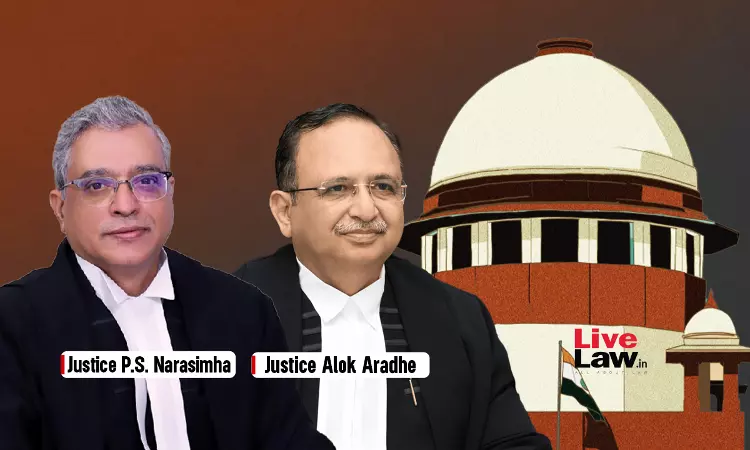
The Supreme Court has quashed criminal proceedings initiated against Narayana Health, its hospital in Kolkata, and senior officials over allegations arising from a ₹2,500 billing discrepancy, holding that the complaint disclosed no criminal offence and was essentially a service-related grievance better addressed through civil or statutory remedies.A bench of Justices PS Narasimha and...
This is a premium content
Available exclusively to
Our subscribers
Subscribe Premium 
INR 1099+GST
Your support helps us to bring you more content at
an affordable subscription scheme !!!
All payment options available
The Supreme Court has quashed criminal proceedings initiated against Narayana Health, its hospital in Kolkata, and senior officials over allegations arising from a ₹2,500 billing discrepancy, holding that the complaint disclosed no criminal offence and was essentially a service-related grievance better addressed through civil or statutory remedies.
A bench of Justices PS Narasimha and Alok Aradhe delivered the judgment, allowing the hospital and its staff's appeal against a Calcutta High Court decision whereby the Magistrate's summoning order was set aside but the matter remanded for reconsideration on complicity of the entity running the hospital (appellant No.1) and its Chairman.
Briefly put, the case arose out of a complaint by respondent No.2 following his mother's treatment at Narayana Health hospital (appellant No.1), Barasat, in February 2021. After his mother was discharged, the complainant approached the hospital pointing out certain discrepancies in the billing and seeking medical documents/records. Subsequently, the hospital issued a revised bill, which reflected an adjustment in the charges of a test amounting to Rs.2500.
The said test was proposed to be conducted, but was eventually not conducted; as such, the revised bill showed that Rs.2500 were liable to be refunded to the complainant and the hospital called on him to collect the refund. He however initiated a case raising grievances about the faulty billing, non-supply of medical documents in a prompt manner and improper behavior/threats by the hospital staff when relevant information was sought.
On the basis of the allegations, offences under Sections 406, 420 and 120B of the IPC along with Section 34 of the West Bengal Clinical Establishments (Registration, Regulation and Transparency) Act, 2017 were invoked against the accused. The Magistrate issued process, aggrieved whereby, the appellants moved the High Court.
Vide the impugned decision, the High Court set aside the summoning order but remanded the matter for reconsideration of the complicity of accused persons in separate territorial jurisdictions. It further made a comment in passing that the offence was made out.
When the appellants filed the present case before the Supreme Court, further proceedings before the Magistrate were stayed (while issuing notice). After a careful analysis of the subject provisions, the top Court recently observed that the allegations in the complaint did not prima facie disclose the commission of a criminal offence.
“For criminal breach of trust under Section 405 IPC, there must be entrustment of property… dishonest misappropriation…in the absence of entrustment, dishonest misappropriation, or violation of a fiduciary obligation, foundational ingredients of the offence of criminal breach of trust as enshrined in Section 405, IPC are not satisfied...Once the issue of wrong charge was raised by the complainant, the hospital communicated its decision to refund the amount. The discrepancy in billing appears to be more of an inadvertence, than a case of dishonest intention on part of the hospital. We are of the opinion that the allegation of cheating is completely misplaced.
Since the allegations regarding offences of criminal breach of trust and cheating are virtually nonexistent, the incidental allegation of criminal conspiracy is unsustainable...There is nothing in the complaint indicating a prior agreement, concerted plan, or meeting of minds among the accused persons to commit an unlawful act", the Court stated.
Regarding the allegations of improper behaviour by the hospital staff, the Court noted that the complaint only alleged statements discouraging the complainant from pursuing the matter further. Neither the complaint, nor the summoning order, referred to commission of an offense under Section 503 of IPC. The High Court made its own observation that an offense was made out.
"The High Court while remanding the matter, on its own makes an observation that, "the aforesaid act of the two accused persons prima facie do make out an offence under Section 504 of the Indian Penal Code" and that "offence has been made out". We are of the opinion that there was no occasion for the High Court to construe the general averments and elevate them to the commission of an offence under Section 504 and then observe that offence has been made out."
It was concluded that the allegations, even if taken to be completely true and accepted at face value, did not disclose commission of the subject offenses. Insofar as the allegation of non-supply or delay in supply of medical records, the Court observed that the allegation did not amount to a criminal offense and at best, it gave rise to a claim in civil law.
Examining provisions of the 2017 Act, it was held that the legislative scheme distinguished between penalties for discrepancies and criminal liability for declared offenses. It was added that the scheme contained in the Act established that disputes concerning billing practices, supply of medical records and service-related grievances were intended to be treated as deficiencies for which compensation was payable (if found to be true).
"Without even indicating as to how and in which manner the criminal offence has been committed, it is not permissible for the complainant to proceed with prosecution by just mentioning Section 34 in the complaint. We do not deny the fact that that complainant may have certain service-related grievances and these could be addressed under Section 29 of the 2017 Act."
The Court held that the appellants' was a fit case for the High Court to exercise its quashing power under Section 482 CrPC, but it failed to do so. Allowing the appeals, it further said that the decision would not have bearing on any statutory or civil remedy that the complainant may choose to avail.
Appearance: Mr. Gagan Gupta, Sr. Adv. (Amicus Curiae); Mr. Nidhesh Gupta, Sr. Adv., Mr. Shivendra Singh, AOR, Mr. Bikram Dwivedi, Adv., Ms. Prakriti Rastogi, Adv., Ms. Aryama Singh Rajput, Adv. (for appellants); Mr. Kunal Mimani, AOR and Mr. Parag Chaturvedi, Adv. (for respondents)
Case Title: NARAYANA HEALTH & ORS. VERSUS THE STATE OF WEST BENGAL & ORS., SLP (CRL.) NOS. 10379-10380 OF 2023
Citation : 2026 LiveLaw (SC) 512
Tags

Debby Jain
Debby Jain is a Correspondent with LiveLaw, covering the Supreme Court of India

