



- Home
- /
- Top Stories
- /
- Supreme Court Questions Laws...
Supreme Court Questions Laws Barring Persons With More Than 2 Kids From Local Elections, Cites Declining Fertility Rates
Gursimran Kaur Bakshi
15 July 2026 10:23 AM IST
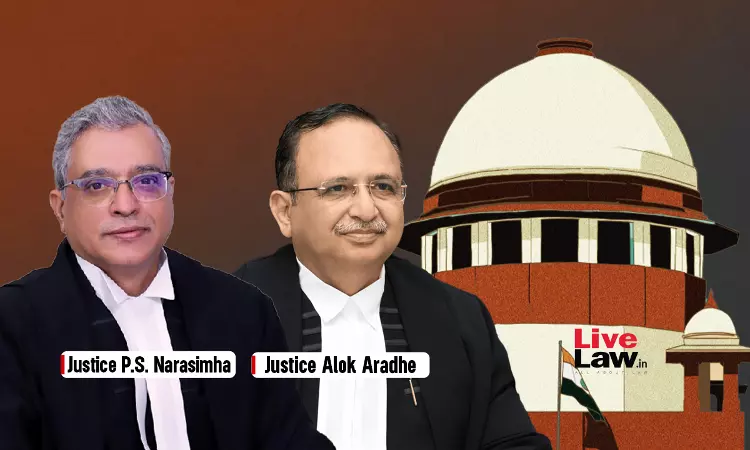
The Supreme Court yesterday (July 15) questioned the rationale of the policy barring of persons having more than two children from contesting elections to the Panchayat and other local bodies in Maharashtra.A bench comprising Justice PS Narasimha and Justice Alok Aradhe was hearing a matter regarding disqualification incurred by a former Sarpanch at the Kakoda Gram Panchayat, Mangala...
This is a premium content
Available exclusively to
Our subscribers
Subscribe Premium 
INR 1099+GST
Your support helps us to bring you more content at
an affordable subscription scheme !!!
All payment options available
The Supreme Court yesterday (July 15) questioned the rationale of the policy barring of persons having more than two children from contesting elections to the Panchayat and other local bodies in Maharashtra.
A bench comprising Justice PS Narasimha and Justice Alok Aradhe was hearing a matter regarding disqualification incurred by a former Sarpanch at the Kakoda Gram Panchayat, Mangala Bhimrao, under Section 14(1)(j-1) of the Maharashtra Village Panchayat Act, 1959, on the birth of her third child. The 1959 Act imposes a bar on having more than two children from September 13, 2000, when the amendment to the legislation was enforced.
The bench orally stated that the judgment upholding a similar State law in Haryana, the Haryana Panchayati Raj Act, 1994, needs reconsideration. In Javed v State of Haryana(2003), the Supreme Court upheld the constitutional validity of the 1994 Act, which disqualified candidates with more than two living children from contesting local elections.
Justice Narasimha orally commented that in a country like India where the fertility rate is declining, whether such State laws are justified and constitutional.
The bench expressed its willingness to go into the larger issue and appointed State of Maharashtra's counsel, Advocate Rukmini Bobde as an amicus curiae to explore all seven States' laws having such a two-child bar policy. Justice Narasimha asked Bobde to look at The Economist article on declining fertility rate in India.
The Court also asked the petitioner's counsel, Advocate Pratik Bombarde, to research this issue. Both counsels have been asked to file a compilation.
A complaint against Mangala was filed before the Additional Collector, based on which the proceedings were initiated and an order was passed of disqualifcation. She appealed before the Additional Commissioner, which came to be rejected, against which he approached the Bombay High Court.
By an order dated August 5, 2025, the High Court found that the petitioner tried to distance herself from the birth certificate of her third child, but the document can't be discarded as it mentions the names of both parents. Considering that there was no material to show otherwise, the High Court upheld the disqualification. Against this order, she filed a special leave petition before the Supreme Court.
On November 4, 2025, the Court had stayed the operation of the impugned judgment of the High Court.
Case Details: MANGALA BHIMRAO INGLE PRATIK v THE ADDITIONAL COMMISSIONER, AMRAVATI DIVISION AND ORS.|SLP(C) No. 30772/2025
Tags
Gursimran Kaur Bakshi
Gursimran is the Principal Correspondent with LiveLaw for the Supreme Court. She can be reached out at: simrankaurbakshi@livelaw.in

