



- Home
- /
- Top Stories
- /
- Supreme Court Refers Plea To...
Supreme Court Refers Plea To Increase State Bar Councils' Strength To Attorney General
Amisha Shrivastava
25 Sept 2026 3:20 PM IST
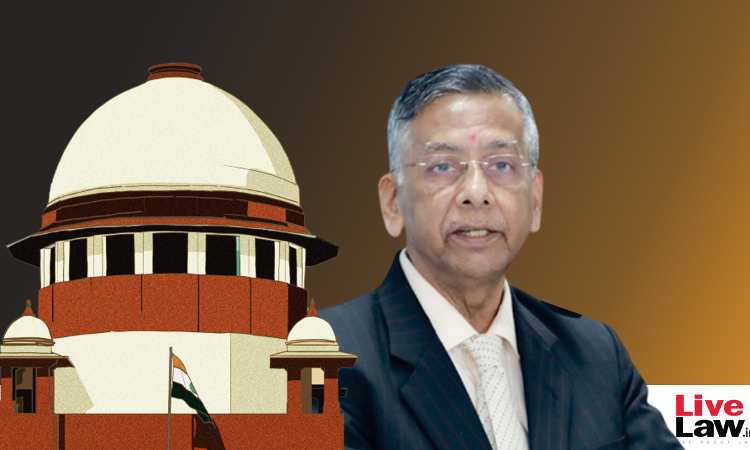
The petitioner sought the increase of the Bar Councils' strength so that women's representation can be accommodated without displacing any candidate.
The Supreme Court today directed that its September 2 order requiring the issue of increasing the strength of a State Bar Council to be considered by the Attorney General for India will apply across the country.The direction came while hearing a plea seeking an increase in the maximum strength of the Bar Council of Tamil Nadu from 25 to 32 to accommodate 30% representation for women. A bench...
This is a premium content
Available exclusively to
Our subscribers
Subscribe Premium 
INR 1099+GST
Your support helps us to bring you more content at
an affordable subscription scheme !!!
All payment options available
The Supreme Court today directed that its September 2 order requiring the issue of increasing the strength of a State Bar Council to be considered by the Attorney General for India will apply across the country.
The direction came while hearing a plea seeking an increase in the maximum strength of the Bar Council of Tamil Nadu from 25 to 32 to accommodate 30% representation for women.
A bench of CJI Surya Kant, Justice Joymalya Bagchi and Justice V Mohana held that the September 2 order concerning the Bar Council of Maharashtra and Goa would have a pan-India application.
On September 2, while considering a similar plea concerning the BCMG, the Supreme Court had observed that the question of increasing the strength of a State Bar Council involved a policy decision. Thus, the Court had requested the Attorney General for India to treat the writ petition as a representation and take an appropriate decision in consultation with the State Bar Council.
Today, Senior Advocate Sanjay Hegde told the Court a similar issue was likely to be raised regarding the Bar Council of Punjab and Haryana and said that the order concerning BCMG be applied to all Bar Councils. He highlighted that legislative intervention may be required and that is why the issue had been referred to the Attorney General.
The Court was hearing a plea concerning the implementation of its directions for 30% representation of women in State Bar Councils. The petition seeks implementation of the July 21, 2026 resolution of the Bar Council of India (BCI) without reducing the statutory strength of elected members under Section 3(2)(b) of the Advocates Act, 1961.
The petitioners seek that the maximum strength of the State Bar Councils be increased to 32, where required, so that the 30% representation for women can be accommodated without displacing candidates elected on merit.
The petitioners have also sought revision of the election results dated July 21 of Tamil Nadu Bar Council and consequential gazette notification dated July 24 to include candidates who secured the top 25 positions and accommodate the shortfall in women representation through additional seats.
Background
The issue arises from the Supreme Court's December 8, 2025 order by which it directed that women should have 30% representation in State Bar Councils where elections had not been notified. The Court had directed that 20% of the seats be filled through election and 10% through co-option. Section 3(2)(b) of the Advocates Act provides for 15, 20 or 25 elected members in a State Bar Council depending on the size of its electorate, with 25 being the statutory strength where the electorate exceeds 10,000 advocates.
On July 19, the BCI resolved to retain the existing statutory elected strength under Section 3(2)(b) and create additional seats wherever necessary to meet the 30% representation requirement. Subsequently, the Supreme Court indicated that if the strength of the State Bar Councils was increased, women's representation would also have to increase proportionately.
However, the High-Powered Election Supervisory Committee stayed the implementation of the BCI resolution. The Committee held that the proposal could not be implemented for the ongoing election cycle and directed the election committees and Returning Officers not to act upon the resolution without appropriate approval.
Regarding the mechanism for filling the 10% co-option component, the Supreme Court on August 4 directed that the two women members to be co-opted to State Bar Councils could be nominated by the Chief Justice of the concerned High Court from among former women High Court judges or senior women advocates with a fair standing at the Bar.
The present petition seeks implementation of the BCI's July 21 resolution by increasing the maximum strength to 32, while preserving the statutory 25 elected seats and accommodating the shortfall in women's representation through additional seats.
Case no. – W.P.(C) No. 1173/2026 Diary No. 56056 / 2026
Case Title – Chandramohan. K v. Union of India
Tags

Amisha Shrivastava
Amisha Shrivastava is a Senior Correspondent with LiveLaw, covering the Supreme Court of India. She can be reached at amisha@livelaw.in

