



- Home
- /
- Top Stories
- /
- Supreme Court Refers To Larger...
Supreme Court Refers To Larger Bench 'Perceived Conflict' In Judgments On UAPA Bail When Trial Is Delayed
Gursimran Kaur Bakshi
22 May 2026 4:02 PM IST
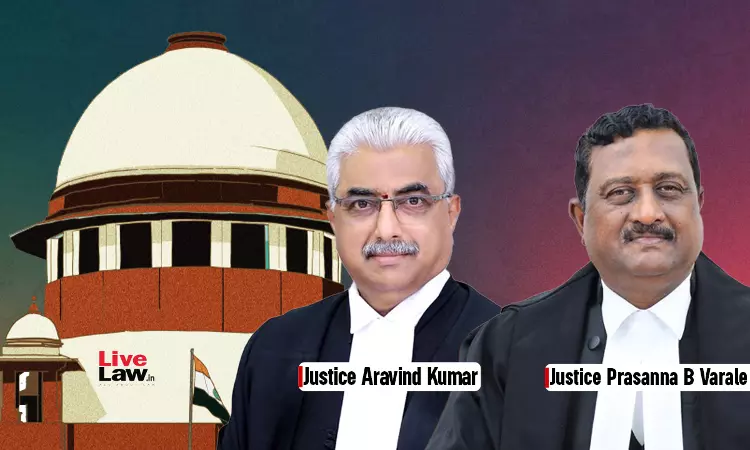
The reference has arisen after a 2-judge bench expressed disapproval of the judgment denying bail to Umar Khalid.
Observing that there was a "perceived conflict" among different benches regarding the understanding of the 3-judge bench judgment in Union of India v KA Najeeb - which held that long incarceration can be a ground to grant bail in cases under the Unlawful Activities Prevention Act, regardless of the statutory rigours - a two-judge bench of the Supreme Court referred the issue to a...
This is a premium content
Available exclusively to
Our subscribers
Subscribe Premium 
INR 1099+GST
Your support helps us to bring you more content at
an affordable subscription scheme !!!
All payment options available
Observing that there was a "perceived conflict" among different benches regarding the understanding of the 3-judge bench judgment in Union of India v KA Najeeb - which held that long incarceration can be a ground to grant bail in cases under the Unlawful Activities Prevention Act, regardless of the statutory rigours - a two-judge bench of the Supreme Court referred the issue to a larger bench.
While referring the matter, the Court also granted interim bail to Tasleem Ahmed and Khalid Saifi for six months in the Delhi riots larger conspiracy case. It has imposed bail conditions, including that they must not interact with the media and speak about their case.
A bench comprising Justice Aravind Kumar and Justice PB Varale referred the matter, considering the arguments made by the Delhi Police in the petitions filed by Tasleem Ahmed and Khalid Saifi seeking bail in the Delhi riots UAPA case.
The request for reference was made in the context of a judgment delivered by a two-judge bench early this week in Syed Ifthikar Andrabi, which criticised the judgments in Gulfisha Fatima and Gurwinder Singh (both authored by Justice Aravind Kumar) saying that they took a narrow view regarding bail in UAPA cases. The bench in Andrabi took the view that Gulfisha Fatima and Gurwinder Singh departed from the KA Najeeb verdict.
In the reference order passed today, the bench observed that KA Najeeb was not a mathematical command to mechanically grant bail if there was a delay in trial in a UAPA case. The bench observed that Gulfisha Fatima understood KA Najeeb as a principled safeguard and not as a mathematical formula. The bench further observed that in Gulfisha Fatima, bail was granted to five accused, and was denied to two others (Umar Khalid and Sharjeel Imam), upon an individualised assessment of their roles.
The bench also noted that the present petitioners (Tasleem Ahmadi and Khalid Saifi) are also relying upon Gulfisha Fatima to seek bail, and this demonstrated that Gulfisha Fatima did not dilute the principle laid down in KA Najeeb.
''Andrabi' Bench should have referred the matter if there was doubt
The bench observed that it did not propose to adjudicate on the correctness of the critical observations in Andrabi. The doubts expressed by a coordinate bench cannot be answered through counter-observations, Justice Kumar observed, saying that the matter needs to be resolved by a larger bench.
"Judgments of this Court are not to be answered by counter-observations from another bench of equal strength. The discipline of precedence demands a higher institutional method. Where a coordinate bench entertains a reservation about an earlier judgment of another coordinate bench, particularly on the application of a binding 3-judge bench decision, the proper course is well settled. The matter must ordinarily be placed before the Chief Justice of India for the constitution of an appropriate bench. A coordinate bench cannot, by strong observations, effectively unsettle the ratio of another coordinate bench while continuing to sit on equal strength."
While observing that disagreements between coordinate benches were "neither unusual nor undesirable", the bench stated that the proper recourse in such situations is to refer the matter to the larger bench, rather than just making critical comments.
At the same time, given that Andrabi has expressed "emphatic doubts" about the correctness of two earlier judgments, a need for reference has arisen. The bench observed that otherwise, institutional uncertainty would be created if a bench merely expressed doubt about a judgment of another coordinate bench. Hence, the law needs to be clearly settled.
"If a coordinate bench has expressed reservation about the manner in which KA Najeeb was followed by another coordinate bench, the proper answer is not further reservation but authoritative resolution," Justice Kumar observed.
Justice Kumar's bench observed that the obligation to maintain judicial discipline is not discharged by merely criticising another judgment of a coordinate bench. The appropriate course is to refer the matter to a larger bench.
The bench also observed that an unqualified application of the proposition that delay will grant bail can have dangerous consequences in terrorism cases, when other material factors touching upon national security are not considered. At the same time, an unqualified application of statutory rigour can also lead to a violation of rights. The bench said that neither of the extreme positions is desirable.
The question is how Article 21 is to be applied when Parliament has introduced restrictions on bail in matters concerning national security, the bench observed.
"The present reference is necessitated because KA Najeeb deserves application with clarity, consistency, and institutional fidelity which a binding 3-judge bench commands," the bench observed, saying that it was necessary to settle the correct approach for bail in special statutes.
Accordingly, the matter was placed before the Chief Justice of India for the constitution of an appropriate bench "to clarify or expound the position of law laid down in KA Najeeb, particularly in the backdrop of rigour of Section 43D(5)."
Earlier today, Additional Solicitor General SV Raju, appearing for the Delhi Police, contended that the recent ruling in Syed Iftikhar Andrabi v. National Investigation Agency does not lay down the correct position of law on bail under the UAPA. He argued that the Court's judgment in the Gulfisha case, which examined the nature of allegations against Umar Khalid, Sharjeel Imam, Gulfisha Fatima and others, and refused bail to Khalid and Imam, followed the correct legal position.
Raju submitted that in statutes prescribing twin bail conditions, prolonged incarceration alone cannot be treated as a blanket ground for the grant of bail.
In Syed Iftikhar Andrabi v. National Investigation Agency, a bench of Justices B.V. Nagarathna and Ujjal Bhuyan held that bail remains the rule even in UAPA cases and expressed reservations about earlier judgments adopting a narrower approach to bail under the anti-terror law.
In Andrabi, Justice Bhuyan specifically questioned the correctness of the rulings in Gulfisha Fatima and Gurwinder Singh. The judgment observed that the denial of bail to Khalid and Imam appeared to have overlooked the three-judge bench decision in Union of India v. K.A. Najeeb, which held that prolonged incarceration and the improbability of an early conclusion of trial can justify grant of bail even in UAPA cases.
“A judgment rendered by a bench of lesser strength is bound by the law declared by a bench of greater strength. Judicial discipline mandates that such a binding precedent must either be followed or, in case of doubt, be referred to a larger bench. A smaller bench cannot dilute, circumvent or disregard the ratio of a larger bench,” Justice Bhuyan had observed.
Headnote
Precedent & Judicial Discipline – Conflict between Coordinate Benches – Reference to Larger Bench: The Supreme Court was faced with a perceived divergence of views between coordinate Benches regarding the manner in which the three-Judge Bench decision in Union of India v. K.A. Najeeb (2021) is to be applied in UAPA cases - In Gulfisha Fatima v. State (Govt. of NCT of Delhi) (2026), a two-judge Bench held that the inquiry into delay must be contextual and cannot be a mechanical override based on time alone - Conversely, a later coordinate Bench in Syed Iftikhar Andrabi v. National Investigation Agency (2026) expressed serious reservations, observing that Gulfisha Fatima adopted a narrower reading that hollowed out the constitutional force of K.A. Najeeb - Held: A coordinate Bench cannot, by strong observations, effectively unsettle the ratio of an earlier coordinate Bench while continuing to sit in equal strength - When a doubt goes to the root of the legal principle applied, the matter cannot be left at the stage of criticism, as it introduces uncertainty in the administration of justice -To protect the authority of the Court and establish clarity across pending trials under special statutes, the proper course is reference - The Registry was directed to place the papers before the Chief Justice of India for the constitution of an appropriate Bench. [Relied on Union of India v. K.A. Najeeb, (2021) 3 SCC 713; Gulfisha Fatima v. State (Govt. of NCT of Delhi), (2026 INSC 2); Paras 10-25]
Interim Relief – Grant of Interim Bail Pending Reference - Recognizing that the determination of the legal issues by a larger Bench may consume further time, the Supreme Court noted that the appellants cannot be made to suffer continued incarceration merely because an important question of law has arisen for authoritative settlement - Without expressing any opinion on the merits, the Supreme Court granted interim bail to the appellants for a period of six (6) months subject to stringent safeguards. [Paras 27 - 30]
Case Details: TASLEEM AHMED v STATE GOVT. OF NCT OF DELHI|Diary No. 5434-2026 and ABDUL KHALID SAIFI @ KHALID SAIFI v STATE (NCT OF DELHI)|SLP(Crl) No. 3867/2026
Citation : 2026 LiveLaw (SC) 533
Appearances: Mehmood Pracha, Adv, R. H. A. Sikander, AOR, Jatin Bhatt, Sanawar, Kshitij Singh, Sikander Raza, Nujhat Naseem, Kumail Abbas, Chirag Verma(for Tasleem) and Senior Advocate Rebecca John, advocates Rajat Kumar and Anushka Baruah appearing filed by Yash S Vijay AOR(for Saifi)
Gursimran Kaur Bakshi
Gursimran is the Principal Correspondent with LiveLaw for the Supreme Court. She can be reached out at: simrankaurbakshi@livelaw.in

