



- Home
- /
- Top Stories
- /
- Supreme Court Refuses To Stay...
Supreme Court Refuses To Stay Contempt Proceedings Against Law Secretary For 'Outburst' In Bombay HC Over Judicial Vacancies
Amisha Shrivastava
11 Sept 2026 8:32 AM IST
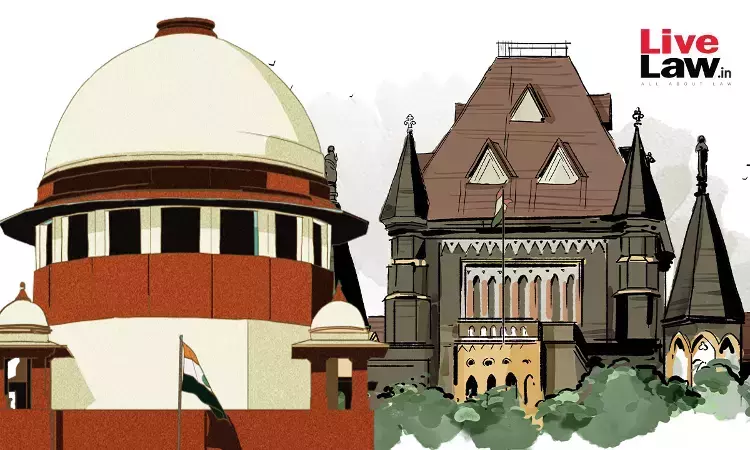
The Law Secretary, also a judicial officer, allegedly blamed the High Court for judicial vacancies.
The Supreme Court refused to stay the contempt proceedings initiated by the Bombay High Court against the Maharashtra Law Department Secretary and senior judicial officer Dilip S. Ghumare for his alleged outburst before the High Court. The Court, however restrained the High Court from passing a final order in the contempt proceedings until September 28.A bench of Justice Vikram Nath and...
This is a premium content
Available exclusively to
Our subscribers
Subscribe Premium 
INR 1099+GST
Your support helps us to bring you more content at
an affordable subscription scheme !!!
All payment options available
The Supreme Court refused to stay the contempt proceedings initiated by the Bombay High Court against the Maharashtra Law Department Secretary and senior judicial officer Dilip S. Ghumare for his alleged outburst before the High Court. The Court, however restrained the High Court from passing a final order in the contempt proceedings until September 28.
A bench of Justice Vikram Nath and Justice Sandeep Mehta issued notice on Ghumare's plea against the High Court's contempt proceedings and listed it on September 28, 2026. Ghumare faced the contempt action after he allegedly blamed the High Court for the delay in filling up of judicial vacancies, when he appeared before it in his capacity as the Law Department Secretary.
In the Supreme Court, Senior Advocate Vikas Singh, appearing for Ghumare, submitted that the issue arose because judicial posts had been sanctioned but had not been filled by the High Court. Singh submitted that there were 1,101 sanctioned posts in Maharashtra but only 385 had been filled.
He denied that Ghumare had shouted at the High Court and repeatedly asked the Supreme Court to call for and examine the audio-video recording of the proceedings. He claimed that Ghumare was not standing in front of the microphone and had raised his voice only to be heard.
The Bombay High Court described the conduct as an “aggressive, high-pitched tone (bordering to shouting)” rather than recording that Ghumare had actually shouted, Singh highlighted.
Singh argued that Ghumare had not accused the High Court in the manner alleged, but was explaining the vacancy position and pointing out that the posts had been sanctioned, with the required funds and infrastructure available. He argued that the High Court could not take offence at Ghumare for pointing out the vacancy position.
Justice Sandeep Mehta, however, questioned Ghumare's conduct. “An officer can't come and shout at the court,” he said. He observed that Ghumare's affidavit before the HC itself borders on the verge of telling the High Court that it is in error.
Singh maintained that Ghumare had not said that the High Court was in error. He urged the Court to read the affidavit and consider the vacancy position.
Justice Mehta described Ghumare's conduct as “gross indiscipline” and remarked, “Let him repent for his words used in the High Court.” He noted that the High Court may have faced difficulties in filling the posts. He shared his experience in Rajasthan HC, where a demand for establishing 1,200 courts had remained pending with the State Government for 10 years.
Singh contended that this was not the position in Maharashtra and reiterated that the posts have already been sanctioned there.
Even if the High Court was responsible for delays, the judicial officer was in the wrong, Justice Nath remarked. “Howsoever the High Court might be responsible for any delays or something, the judicial officer had no business to tell the High Court in court when he's called upon to answer an affidavit that it is you who is responsible”, he said.
Justice Nath advised Singh that the proper course for a judicial officer would be to tender an unconditional apology before the High Court, and the High Court would consider it appropriately. He added that if the High Court ultimately passed an adverse order against Ghumare, he could return to the Supreme Court.
Singh pointed out that Ghumare had already tendered an unconditional apology, but the High Court had rejected it. He also sought liberty to withdraw Ghumare's resignation and pressed for a stay on the HC order.
Singh submitted that consequential action had already followed the contempt proceedings and Ghumare was transferred the very next day to a place around 1,000 kilometres away in a Naxalite area. He submitted that though Ghumare had tendered his voluntary resignation, he was required to remain in service for three months.
Singh also argued that the action against Ghumare and rejection of his apology was demoralising the lower judiciary. He said, “I have already filed a detailed affidavit giving my unconditional apology. It is already on record. With great respect, my lord, it is demoralising the lower judiciary…If you don't interfere in matters like this my lords, it gives a wrong signal.”
The Court remarked that the transfer remained within the administrative domain of the government. It nevertheless agreed to protect Ghumare against a final decision in the contempt proceedings for the time being, in order to balance the interests of the judicial officer and the High Court.
Background
The contempt proceedings arose in a public interest litigation before the Bombay High Court concerning the creation of Fast Track Courts.
In the impugned order, the High Court noted that an Additional Affidavit dated August 27, 2026 stated that 179 new posts for Fast Track Courts had been created. The High Court had questioned why these posts had not been filled.
Ghumare, who was then Secretary and Senior Legal Advisor in the Law and Judiciary Department and had earlier served as Principal Secretary and RLA, was present in court. When the government lawyer could not give a clear answer on the relevant averments, the High Court asked Ghumare to point them out.
According to the High Court, Ghumare responded in an "aggressive, high-pitched tone (bordering to shouting)" and, among other things, said that "the High Court Administration was responsible for not filling up the 179 posts" before a packed courtroom.
The High Court viewed the response as an attempt to blame its administration for the vacancies. It held that Ghumare's conduct scandalised the Court and undermined its authority, amounting to contempt ex facie under Article 215 of the Constitution read with Section 2(c) of the Contempt of Courts Act, 1971.
The High Court also observed that the expectation of maintaining decorum in court becomes imperative when the person concerned is himself a judicial officer.
Advocate General did not defend Ghumare's conduct before the High Court but urged the Court to accept his apology since he was present in court. The High Court, however, held that the conduct was "wholly unpardonable" and could not be countenanced.
The High Court further held that a judicial officer could not behave in such a manner in open court and later expect to be pardoned through an apology.
It consequently issued notice returnable on September 11, 2026 to Ghumare asking why contempt proceedings should not be initiated against him. Ghumare has challenged this order in the present SLP.
Case no. – Diary No. 55144 / 2026
Case Title – Dilip S Ghumare v. High Court of Judicature at Bombay
Tags

Amisha Shrivastava
Amisha Shrivastava is a Senior Correspondent with LiveLaw, covering the Supreme Court of India. She can be reached at amisha@livelaw.in

