



- Home
- /
- Top Stories
- /
- Supreme Court Seeks BCI Response On...
Supreme Court Seeks BCI Response On Plea To Regulate Advocates' Use Of Social Media For Advertising And Solicitation
Amisha Shrivastava
14 July 2026 8:26 PM IST
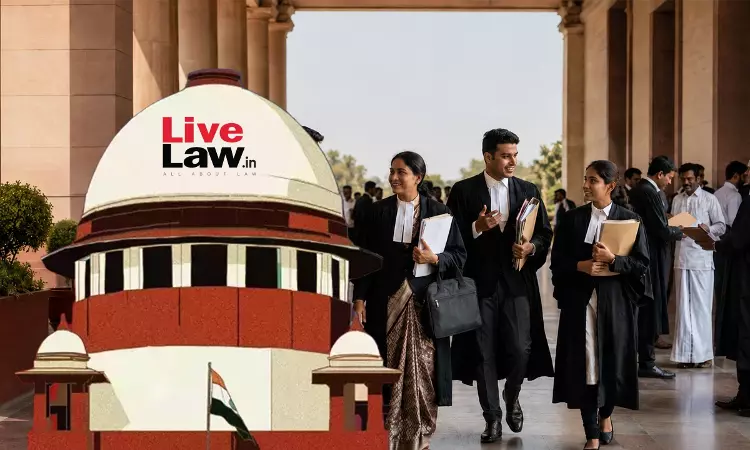
The plea also seek the formulation of a digital ethics code for lawyers.
The Supreme Court on Tuesday issued notice on a PIL seeking directions to the Bar Council of India (BCI) to take action against advocates allegedly engaging in digital solicitation, social media advertisements, influencer collaborations and creation of promotional content in violation of the Advocates Act, 1961 and the Bar Council of India Rules.A bench of CJI Surya Kant, Justice Joymalya...
This is a premium content
Available exclusively to
Our subscribers
Subscribe Premium 
INR 1099+GST
Your support helps us to bring you more content at
an affordable subscription scheme !!!
All payment options available
The Supreme Court on Tuesday issued notice on a PIL seeking directions to the Bar Council of India (BCI) to take action against advocates allegedly engaging in digital solicitation, social media advertisements, influencer collaborations and creation of promotional content in violation of the Advocates Act, 1961 and the Bar Council of India Rules.
A bench of CJI Surya Kant, Justice Joymalya Bagchi and Justice V Mohana issued notice returnable on 15th September.
“The Petitioners seek this Hon'ble Court's intervention against the rampant and unchecked proliferation of digital solicitation, the commercialisation of advocacy, and the flagrant misuse of judicial precincts by certain members of the Bar. These actions, manifested through social media platforms, represent a systematic subversion of the Advocates Act, 1961, and the Bar Council of India Rules, thereby threatening the very dignity and integrity of the administration of justice)”, the plea states.
The petition contends that the legal profession is witnessing an unchecked rise in digital solicitation and commercialisation through social media platforms. It alleges that advocates are creating promotional reels, monetised legal content, paid collaborations and other forms of digital publicity on platforms such as Instagram, YouTube and Facebook to attract clients, undermining the dignity of the profession.
According to the petition, a substantial portion of such content is recorded within court premises while advocates appear in full court attire. The petition alleges that these videos often contain contact details, claims of expertise, client testimonials, portrayals of criminal proceedings and sensational legal commentary intended to attract prospective litigants. It argues that such conduct amounts to indirect solicitation prohibited under Rule 36 of the Bar Council of India Rules and that the use of advocates' robes and court premises for digital content violates the rules governing professional dress and conduct.
The petition states that describing such content as legal awareness, educational videos or know your rights campaigns cannot defeat the prohibition on advertisement where the dominant purpose is self-promotion, acquisition of clientele or enhancement of commercial visibility. It further contends that court attire is an institutional symbol representing the dignity of judicial proceedings and cannot be converted into an instrument of branding or commercial promotion.
The plea contends that the growing reliance on social media popularity has eroded professional standards by encouraging advocates to compete for digital visibility instead of professional competence. The petition argues that legal services are increasingly being projected as commodities capable of being marketed through social media.
The petition highlights that the Bar Council of India issued a press release on March 17, 2025 warning advocates against promotional activities through influencers and celebrities and cautioning that disciplinary action could follow. It also refers to a resolution of the Supreme Court Bar Association prohibiting videography and creation of reels within the Supreme Court premises, as well as the Madras High Court's July 3, 2024 judgment recognising the illegality of lawyer rankings, digital solicitation and lead-generation mechanisms.
The petition also relies on an AIIMS circular prohibiting creation of reels and social media content within hospital premises. It argues that constitutional courts require even greater protection to preserve their sanctity and decorum.
It states that the petitioners had submitted a representation on July 2, 2026 to the Chief Justice of India and the Chairman of the Bar Council of India seeking immediate intervention, nationwide digital ethics guidelines, and action against unethical digital solicitation, but no comprehensive regulatory framework has been evolved.
The petition seeks directions to the Bar Council of India to strictly enforce the Advocates Act, 1961 and the Bar Council of India Rules, including Rule 36 prohibiting solicitation and advertisement and the provisions regulating professional dress.
It also seeks disciplinary action under Section 35 of the Advocates Act against advocates engaging in digital solicitation through social media, promotional reels, influencer collaborations, monetised legal content and other forms of prohibited advertising.
Further, it seeks declarations that such promotional digital content constitutes professional misconduct and that the use of advocates' robes and bands for social media promotion is impermissible.
The petition also seeks a nationwide prohibition on creation of promotional digital content within court premises, directions to the BCI to frame comprehensive Digital Ethics Guidelines and a Code of Digital Professional Conduct for advocates under Section 49 of the Advocates Act, and constitution of a National Expert Committee on Digital Ethics in the Legal Profession to prepare a model code.
Appearance –
For Petitioners: Mr. Ashutosh Dubey, Adv. Mr. Anjan Datta, Adv. Dr. Manish Aggarwal, Adv. Mr. Ravi Shanker Jha, Adv. Ms. Pooja, Adv. Ms. Ishita Srivastava, Adv. Mr. Amit Ambawat, Adv. Ms. Archana Chaudhary, Adv. Ms. Shilpa Kumari, Adv. Ms. Namrata Sharma, Adv. Mr. Azad Singh, Adv. Mr. Udit Jain, Adv. Ms. Deepali Goel, Adv. Ms. Archie Garg, Adv. Mr. Anil Kumar, AOR
Case no. – Writ Petition (Civil) No. 817/2026
Case Title – Anil Pandey and Anr. v. Bar Council of India
Tags
Amisha Shrivastava
Amisha Shrivastava is a Senior Correspondent with LiveLaw, covering the Supreme Court of India. She can be reached at amisha@livelaw.in

