



- Home
- /
- Top Stories
- /
- Supreme Court Seeks Union, NCERT &...
Supreme Court Seeks Union, NCERT & CBSE Responses On Plea Challenging 3-Language Mandate In Class 9
Gursimran Kaur Bakshi
27 May 2026 3:05 PM IST
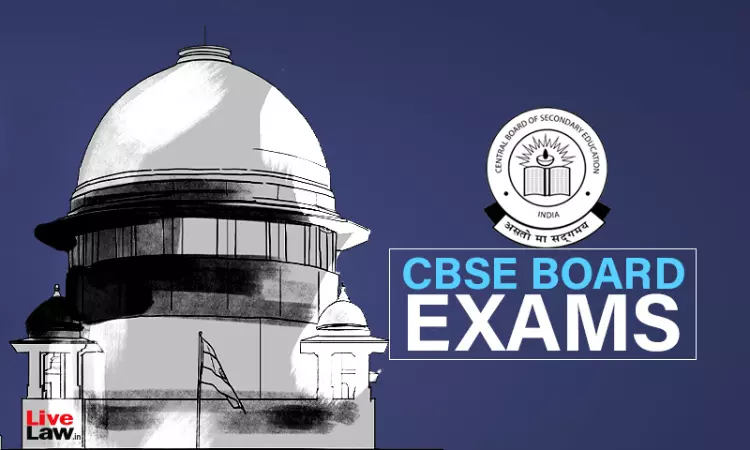
The Supreme Court today sought a "comprehensive response" from the Union Government, Central Board of Secondary Education and the National Council of Educational Research and Training(NCERT) in a Public Interest Litigation challenging the decision of the CBSE to make a third language compulsory for Class 9 students from 2026-27 academic year.A bench comprising Chief Justice of India Surya...
This is a premium content
Available exclusively to
Our subscribers
Subscribe Premium 
INR 1099+GST
Your support helps us to bring you more content at
an affordable subscription scheme !!!
All payment options available
The Supreme Court today sought a "comprehensive response" from the Union Government, Central Board of Secondary Education and the National Council of Educational Research and Training(NCERT) in a Public Interest Litigation challenging the decision of the CBSE to make a third language compulsory for Class 9 students from 2026-27 academic year.
A bench comprising Chief Justice of India Surya Kant, Justice Joymalya Bagchi and Justice Vipul M Pancholi issued notice on the petition challenging the CBSE's decision, and kept the matter in the second week of July (when the Court re-opens after the summer vacation).
The bench told Additional Solicitor General Aishwarya Bhati that it wanted a report on the logistical preparedness to implement the decision.
Senior Advocate Mukul Rohatgi, for the petitioner, submitted that as per the circular, the students have to study three languages from the very next academic year. Rohatgi submitted that even textbooks are not available.
Senior Advocate Kapil Sibal, appearing in a connected matter, submitted that the matter raised important constitutional issues, and it was a "federal issue" as well. Langauge was a matter of choice, and cannot be imposed, he submitted.
The bench initially proposed to put the matter on June 15. However, after the ASG's request, the bench postponed it to the second week of July. The petitioners requested that the CBSE be asked not to implement the decision from July 1, when the next academic year starts. However, the bench did not pass any interim direction. "We will see," CJI said.
Details of the petition
The writ petition under Article 32 has been filed by a group of 19 petitioners comprising parents and teachers from Delhi, Gurugram, Noida and Chennai, against the Union of India, the Central Board of Secondary Education (CBSE), and the National Council of Educational Research and Training (NCERT). The petition challenges CBSE Circular No. Acad-33/2026 dated May 15, 2026.
According to the petition, the impugned circular mandates that with effect from July 1, 2026, Class IX students must study three languages (R1, R2 and R3), with at least two being native Indian languages. Students wishing to study a foreign language may do so only as a third language, provided the other two are Indian languages, or alternatively as an additional fourth language.
The plea additionally alleges violation of Article 19(1)(g), contending that foreign language teachers and institutions offering internationally recognised language instruction may be adversely affected by the effective displacement of foreign languages from the mainstream three-language structure.
The petitioners argue that the circular is contrary to the National Education Policy, 2020, which emphasises flexibility and expressly states that no language shall be imposed on any State or student. They also rely on the National Curriculum Framework for School Education, 2023, and the CBSE's own earlier notifications to contend that the revised mandate is inconsistent with the phased implementation framework previously communicated.
Citing media reports and parent representations annexed to the petition, the plea claims the move has triggered confusion among schools and families. It refers to at least one school communication reflecting implementation of the revised structure, offering Hindi, Sanskrit and French as language options for Grade IX.
The petition seeks quashing of the May 15 CBSE circular, restoration of the position declared in CBSE's April 9 notification deferring compulsory implementation for Class IX until 2029-30, and interim protection against enforcement of the revised policy for existing students.
The Petition was filed by Shraddha Deshmukh, Advocate on Record, along with Advocates Charanya Lakshmikumaran, Sarthak Gupta and Kaustubh Khanna.
Case : Yashica Bhandari Jain and others v. Union of India and others. W.P.(C) No. 694/2026
Gursimran Kaur Bakshi
Gursimran is the Principal Correspondent with LiveLaw for the Supreme Court. She can be reached out at: simrankaurbakshi@livelaw.in

