



- Home
- /
- Top Stories
- /
- Supreme Court Sets Aside NGT Order...
Supreme Court Sets Aside NGT Order Holding 'Art Of Living' Liable For Yamuna Riverplain Damage; Directs Rs 5 Crore Refund
Gursimran Kaur Bakshi
22 Aug 2026 5:56 PM IST
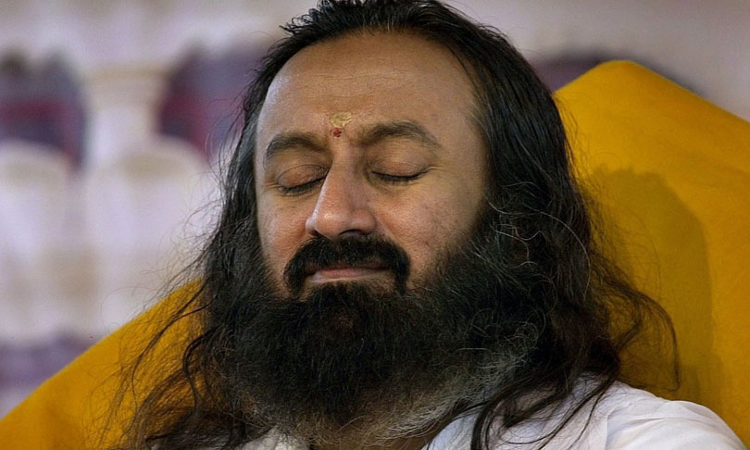
The Supreme Court today(August 22) set aside an order of the National Green Tribunal, which directed Sri Sri Ravi Shankar's Art of Living International Centre to pay Rs. 5 crore for the damage caused to the river Yamuna floodplains due to its World Culture Festival organised by Vyakti Vikas Kendra in March 2016.A bench comprising Justice Satish Chandra Sharma and Justice NK Singh, allowed...
This is a premium content
Available exclusively to
Our subscribers
Subscribe Premium 
INR 1099+GST
Your support helps us to bring you more content at
an affordable subscription scheme !!!
All payment options available
The Supreme Court today(August 22) set aside an order of the National Green Tribunal, which directed Sri Sri Ravi Shankar's Art of Living International Centre to pay Rs. 5 crore for the damage caused to the river Yamuna floodplains due to its World Culture Festival organised by Vyakti Vikas Kendra in March 2016.
A bench comprising Justice Satish Chandra Sharma and Justice NK Singh, allowed the appeal filed by Vyakti Vikas Kendra, an entity running the Art of Living International Centre, against the order passed by NGT in December 2017. The Bench held that there is no direct evidence that the cultural festival caused damage to the River Yamuna's fragile ecosystem.
The bench directed the Delhi Development Authority (DDA) to refund the fine of Rs 5 crore paid by Vyakti Vikas Kendra.
The case arose from the World Culture Festival, held from March 11 to 13, 2016, on about 25 hectares of the Yamuna's active floodplain upstream of the DND flyway. The event had received permissions from the concerned authorities, including the Delhi Development Authority (DDA).
Alleging that the festival caused extensive damage to the floodplains, one Manoj Misra, the convener of campaign Yamuna Jiye Abhiyaan, and two others, Pramod Tyagi, and environmental activist Anand Arya, approached the NGT.
The NGT had initially imposed an environmental compensation of ₹5 crore shortly before the festival, after an expert committee reported that the floodplain had been severely tampered with during preparations. The tribunal subsequently held the organisers responsible for restoration and rehabilitation and directed that the ₹5 crore deposit be used for the work.
The Supreme Court, however, found significant shortcomings in the basis on which the NGT attributed the damage to the organisers. It noted that the floodplain was already in a damaged condition before the event site was handed over. Earlier reports had recorded deterioration and non-implementation of restoration directions, while the organisers themselves had informed the DDA about construction debris already lying at the site and obtained permission to remove it.
The Court was particularly critical of the reliance placed on a September 5, 2015 satellite image and the expert committee's assessment of the pre-event condition. It observed that the image appeared inconsistent with other contemporaneous material showing the floodplain in a damaged state. The Court also noted that a later government officials' committee found grass and water at the site, no debris, no significant wetland or water body within the allotted area, and no significant difference between pre- and post-event imagery.
Another key issue was the distinction between restoration and rehabilitation. The Supreme Court held that the two concepts could not be treated as interchangeable. Restoration seeks to return an affected area to its original state, whereas rehabilitation aims to make an ecosystem fully functional and capable of providing optimum ecological services. According to the Court, the NGT erred by imposing a broader rehabilitation obligation on the appellant when the proceedings concerned alleged damage attributable to the event.
The Court also found that the expert committee itself had acknowledged that the ecological condition of the site before the event could not be reliably determined. Despite this limitation, the committee went on to recommend broader rehabilitation measures, including ecological restoration works. The Supreme Court held that the committee had exceeded its mandate and that the NGT had relied on those recommendations in a manner that expanded the dispute beyond the question of damage caused by the event.
The Bench further criticised the NGT for effectively treating its March 9, 2016 interim order as final. The Supreme Court observed that the interim order had been passed on the basis of an initial visual inspection and without a complete appreciation of the competing evidence. Since the NGT had itself subsequently clarified that the order was interim and without prejudice to the parties' rights, the findings in that order ought to have been reconsidered during the final adjudication.
At the same time, the Supreme Court stressed that the DDA remained responsible for the broader rehabilitation of the Yamuna floodplains. The Court observed that the authority had duties arising from the public trust doctrine and was required to take preventive measures to avoid further deterioration of the active floodplain. However, it clarified that the legality of the DDA's permission for the 2016 event was not an issue before the Court.
As a consequence of its ruling, the Supreme Court ordered the ₹5 crore environmental compensation deposited by Vyakti Vikas Kendra India to be refunded by the DDA within four weeks. The Court also made clear that the DDA must continue with the rehabilitation of the Yamuna floodplains in accordance with the plans and directions already issued by the NGT.
Headnote
National Green Tribunal Act, 2010 — Section 15 and Section 17 — "Restoration" vs. "Rehabilitation" — Scope of Tribunal's jurisdiction under Section 15 — Distinction between ecological restoration and ecological rehabilitation - Held, the National Green Tribunal fell into error by equating the distinct legal and ecological concepts of "restoration" and "rehabilitation" - Restoration refers to a process whereby an affected area is simply brought back to its original pre-existing state, irrespective of how optimum that original state was - In contrast, rehabilitation refers to complete reparation of the affected area to make it fully functional and capable of rendering optimum ecological services - While rehabilitation is an ideal end goal, its execution falls squarely upon the State under the Public Trust Doctrine and the principle of intergenerational equity - The statutory mandate under Section 15 of the NGT Act is confined to relief, compensation, and restitution/restoration of the environment to its original state - Where the expert committee itself admitted that the pre-event ecological status of the site could not be ascertained and original baseline conditions were unknown, ordering full-scale ecological "rehabilitation" and directing the project proponent to bear the cost of constructing a public biodiversity park amounted to burdening the appellant with developing something it never destroyed, thereby exceeding the Tribunal's statutory jurisdiction under Section 15. [Paras 44–48]
National Green Tribunal Act, 2010 — Section 17(3) — "No-Fault Liability" and "Polluter Pays Principle" — Essential preconditions for invocation — Causation and establishment of a causal link - Held, the NGT erroneously applied the principle of "no-fault liability" under Section 17(3) of the NGT Act - Section 17(3) applies strictly to accidents involving environmental hazards (such as gas leaks or chemical spills) - While the "Polluter Pays Principle" is a permanent facet of Indian environmental jurisprudence and finds legislative manifestation in Section 17, its application is fundamentally contingent upon: (i) proof of actual, real damage, and (ii) the establishment of a direct causal link between the actions of the project proponent and the resultant environmental degradation - A person must first be proven to be a "polluter" before absolute liability can be fastened - In the absence of evidence demonstrating that the appellant caused damage beyond the pre existing dilapidated condition of the site, the reversal of the burden of proof and holding the appellant liable on a no-fault basis was wholly unsustainable. [Paras 51 53]
Civil Procedure / Environmental Adjudication — Interim Orders — Nature and binding effect — Erroneous treatment of interim findings as final - Held, interim orders are by their very nature provisional and not based on a comprehensive appreciation of evidence - When an interim order is passed "without prejudice to the rights and contentions of the parties," a court or tribunal is legally bound to re test its preliminary findings after affording parties full opportunity to lead counter material and rebut allegations - The NGT committed a grave procedural error by treating its prima facie interim order (which imposed Rs. 5 crores environmental compensation) as conclusive and binding on the sole ground that the appellant complied with it and did not prefer an appeal against it - Compliance undertaken two days prior to an event under compelling circumstances cannot operate as an estoppel or confer finality upon an unreasoned interim order - Treating interim findings as final without independent enquiry vitiated the entire subsequent proceedings. [Paras 33–36]
Environmental Law — Evidence and Expert Reports — Evidentiary value of solitary satellite imagery vs. contemporaneous material - Held, expert committee reports and visual inspections cannot be accepted uncritically when they suffer from patent contradictions and somersaults - A solitary satellite image obtained from Google Earth cannot override independent, contemporaneous evidence and previous official inspection reports demonstrating that the river floodplains were already in a dilapidated and degraded state with accumulated construction debris prior to allotment - Judicial bodies must critically evaluate expert reports against surrounding contemporaneous record rather than according them mechanical acceptance. [Paras 30–50]
Environmental Law — Role of Public Authorities — Precautionary Principle & Public Trust Doctrine — River Yamuna Floodplains - The Supreme Court deprecated the conduct of the Delhi Development Authority (DDA) in granting permissions to hold large-scale events on the active floodplains of River Yamuna - Held, DDA acted in breach of the Precautionary Principle and the Doctrine of Public Trust reposed in it as the custodian responsible for the conservation and ecological maintenance of the river floodplains - since the event had concluded and general directions for floodplain rejuvenation were already operating under prior judgments, DDA was directed to carry out rehabilitation from its own funds and refund the ₹5 crores compensation to the appellant. [Relied on Manoj Misra v. Union of India & Ors. (NGT Original Application No. 06 of 2012; Paras 40–56]
Case Details: VYAKTI VIKAS KENDRA INDIA v MANOJ MISRA (DEAD) AND ORS.|C.A. No. 683/2018
Citation : 2026 LiveLaw (SC) 847
Click here to read the judgment
Appearances
For the Appellant(s): Mr. Nikhil M. Sakhardande, Senior Advocate; Ms. Rohini Musa, Advocate-on-Record; Ms. Shubhra Swami, Advocate; Mr. Nipun Katyal, Advocate; Mr. Manan Sharma, Advocate; and Mr. Dhananjay Kumar, Advocate.
For the Respondent(s): Mr. Sanjay Parikh, Senior Advocate; Mr. Rahul, Advocate; Ms. Srishti Agnihotri, Advocate; Ms. Tara, Advocate; Ms. K. V. Bharathi Upadhyaya, Advocate-on-Record; Mr. Kailash Vasdev, Senior Advocate; Mr. Nitin Mishra, Advocate-on-Record; Ms. Mitali Gupta, Advocate; Ms. Neoma Vasdev, Advocate; Mr. Umrao Singh Rawat, Advocate; Ms. Anushka Mamgain, Advocate; Ms. Shivani Sethi, Advocate; Mr. Mukesh Kumar Maroria, Advocate-on-Record; Mrs. Aishwarya Bhati, Additional Solicitor General; Mr. Annirudh Sharma II, Advocate; Mr. Merusagar Samantaray, Advocate; Ms. Suhasini Sen, Advocate; Mrs. Chitrangda Rastaravara, Advocate; Mr. S. N. Terdal, Advocate-on-Record; Mr. Gurmeet Singh Makker, Advocate-on-Record; Mr. Ishaan Sharma, Advocate; Mr. Rohan Gupta, Advocate; Mr. T. S. Sabrish, Advocate; Mr. Sudarshan Lamba, Advocate-on-Record; Mr. Sabarish Subramanium, Advocate; Mr. Kamlendra Mishra, Advocate-on-Record; Mr. Rajeev Kumar Dubey, Advocate; Mr. Ashiwan Mishra, Advocate; Ms. Vaidruti Mishra, Advocate; Ms. Aditi Mishra, Advocate; Mr. Vinod Kumar, Advocate; Mr. Suraj, Advocate; Mr. Manoj K. Mishra, Advocate; Mr. Rahul Choudhary, Advocate; Ms. Tara Elizabeth Kurien, Advocate; Ms. Itisha Awasthi, Advocate; Mr. D. P. Singh, Advocate; and Ms. Anchal Kanthed, Advocate.
Tags
Gursimran Kaur Bakshi
Gursimran is the Principal Correspondent with LiveLaw for the Supreme Court. She can be reached out at: simrankaurbakshi@livelaw.in

