Victim Also Has Right To Seek Speedy Trial Like Accused : Supreme Court
Yash Mittal
9 Oct 2026 10:48 AM IST
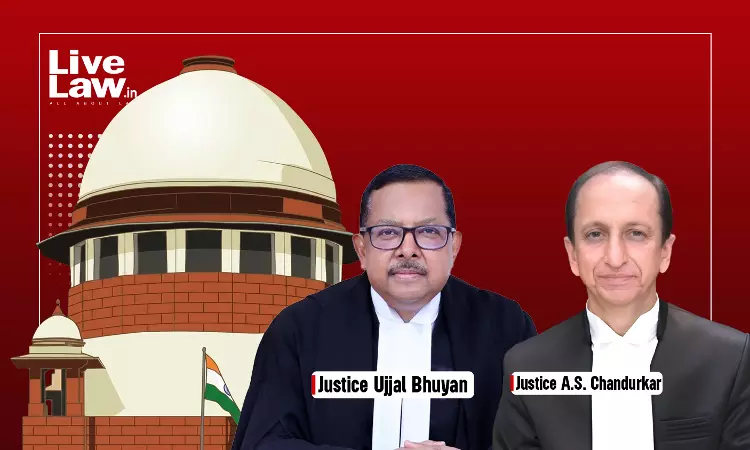
The Supreme Court has held that a victim of an offence has the locus standi to approach the High Court seeking expeditious disposal of a criminal trial, ruling that the right to a speedy trial is not the exclusive prerogative of the accused but is equally available to the victim.
A Bench of Justice Ujjal Bhuyan and Justice Atul S. Chandurkar set aside a Delhi High Court order that had dismissed a complainant's petition seeking an expedited trial as frivolous and imposed costs of ₹10,000 on her.
“to say that the role of the victim is limited to being a witness, is not correct. A victim or the legal guardian of the victim is a definite stakeholder in the criminal justice system. Like the accused, she has also a vested right to insist on a speedy trial and also for a fair trial. Therefore, on a reading of the statutory scheme as enumerated supra, certainly a victim has locus standi to seek a speedy trial. She can certainly bring a petition under Section 528 B.N.S.S. seeking a direction from the High Court to the Trial Court to expedite the trial proceedings.”, the court observed.


The court emphasised that victim is not a stranger to a criminal proceeding, but the one who suffered the loss or injury at the hands of the accused, therefore entitled to bring the petition seeking speedy trial.
Reliance was placed on a recent judgment of Keshvendra Singh vs. Shankar Singh 2026 LiveLaw (SC) 815, where the Court highlighted that the right to speedy trial is not only the prerogative of the accused but is also a valuable right of the victim.
The appellant was the de facto complainant in FIR registered under Section 420 of the Indian Penal Code, 1860.
Following the investigation, a charge sheet was filed and the case was registered before the Judicial Magistrate First Class.
Aggrieved by the delay in the trial, the Appellant had earlier approached the Delhi High Court.
The High Court directed the trial court to conclude the proceedings within two years after the framing of charges.
As the trial made little progress, she again approached the High Court under Section 528 of the Bharatiya Nagarik Suraksha Sanhita, 2023 (BNSS), seeking directions for expeditious disposal.
The prosecution questioned her locus standi to institute such proceedings.
Accepting the prosecution's objection, the High Court held that, in a State prosecution, the complainant's role was limited to being a witness and that only the State or the accused could institute such a petition. It dismissed her plea as frivolous and a drain on the court's already overflowing docket, imposing costs of ₹10,000.
The Supreme Court found the High Court's approach to be legally unsustainable, holding that a victim or the victim's legal guardian is a definite stakeholder in the criminal justice system.
Accordingly, it held that a victim has the locus standi to approach the High Court under Section 528 of the BNSS seeking a direction to the trial court to expedite proceedings.
Imposition of cost on appellant set aside
The Court said that the High Court was not justified in describing the complainant's plea as frivolous or as a drain on the judicial system.
It observed that the impugned decision was based on a complete misreading of the relevant legal and constitutional provisions and could not be sustained.
“we are unable to agree with the view taken by the High Court castigating the victim for bringing a petition before the Court seeking a speedy trial as being completely frivolous and a drain on the overflowing dockets of the Court. It is based on a complete misreading of the legal and constitutional provisions and cannot be sustained.”, the court said.
Taking note of the State's submission that the prosecution had cited 22 witnesses, one of whom had been deleted, the Bench recorded that 21 prosecution witnesses remained and that PW-1 was undergoing cross-examination.
The Court directed the trial court to conclude the proceedings expeditiously and within an outer limit of one year from September 24, 2026.
The appeal was allowed.
Appearance:
For Petitioner(s) :Ms. Fauzia Shakil, AOR Ms. Shivangi Nanda, Adv. Ms. Nazmeen Ahmed, Adv. Mr. Khalid Ali, Adv. Mr. Aanand Kumar Vashistha, Adv.
For Respondent(s) :Mr. Davinder Pal Singh, A.S.G. Mr. Akshat Aggarwal, Adv. Ms. Vidhi Gupta, Adv. Mr. Sanjay Tyagi, Adv. Mr. Ishaan Sharma, Adv. Ms. Disha Thakkar, Adv. Dr. N. Visakamurthy, AOR Dr. Sushil Balwada, AOR Mr. Vikash Sharma, Adv. Mr. Noor Alam, Adv. Mr. Dhananjaya Kumar Tyagi, Adv.