BREAKING| Supreme Court Stays Criminal Defamation Trial Against Rahul Gandhi For Comments Against PM Narendra Modi
Amisha Shrivastava
13 Oct 2026 11:08 AM IST
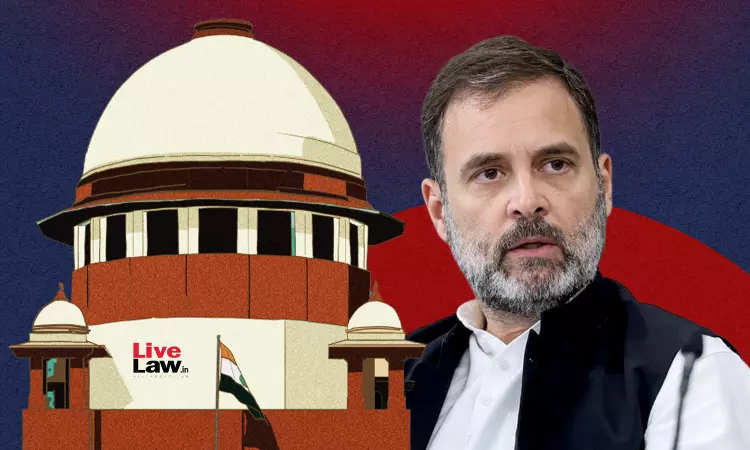
The Supreme Court has temporarily stayed the trial proceedings in the criminal defamation case against Congress leader Rahul Gandhi over his alleged remarks describing Prime Minister Narendra Modi as “Choro Ke Sardar” and “Commander-in-Thief”.
A bench of Justice Vikram Nath and Justice Aparesh Kumar Singh issued notice returnable in 4 weeks on Gandhi's plea against the Bombay High Court's September 8 order refusing to quash the criminal defamation case.
“Issue notice returnable in 4 weeks. In the meantime, further proceedings before the trial court shall remain stayed”, the Court ordered.
Senior Advocate Abhishek Manu Singhvi appeared for Gandhi.
Background
Before the High Court, Gandhi had challenged Magistrate court summons in the case and argued that the complaint filed by a BJP worker was not maintainable. He claimed that he had not named the party and that no “identifiable or definite class” had been targeted, in the absence of which there is no clearly aggrieved person or group having locus standi to prosecute the case.


"Case of the complainant that he has been active member of BJP for two decades. On a prima facie reading of the statment describing the PM, who is member of BJP as a commander in theif therefore at this stage, it cannot be said that the impugned comment is limited only to the senior leadership of the party. Whether the imputation was in substance and what impact it will have on members of the party will have to be considered at the stage of trial. Therefore, this court finds no illegality in the order passed by the Ld Magistrate," the judge said.
The HC had reserved the matter for orders in February this year, after hearing the complainant, Gandhi and also the Maharashtra Government over the plea filed by the Congress leader.
The complaint was instituted by one Mahesh Shrishrimal, a worker of the Bharatiya Janata Party (BJP), before a Metropolitan Magistrate, who had issued summons to Gandhi. The complainant contended that the remarks were aimed at the Prime Minister and, by extension, the ruling party and its members, thereby lowering their reputation. According to him, referring to Modi as “Choro Ke Sardar” effectively portrayed all BJP members as “thieves”, giving party workers the right to initiate defamation proceedings.
The principal issue before the Court, thus, was whether the impugned remarks amount to criminal defamation and whether a political party worker can maintain a complaint when neither the party nor its members are expressly named.