



- Home
- /
- Top Stories
- /
- Supreme Court Upholds Delhi High...
Supreme Court Upholds Delhi High Court Ruling That Bar Association Is Not Amenable To Writ Jurisdiction
Amisha Shrivastava
1 Jun 2026 3:53 PM IST
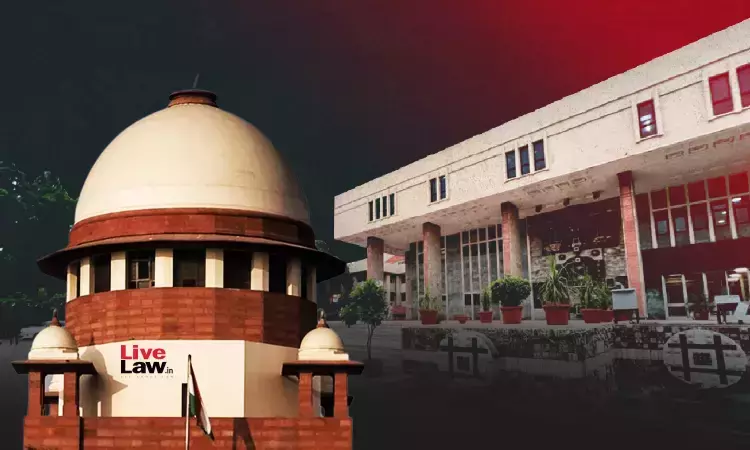
The Supreme Court today refused to interfere with a Delhi High Court judgment holding that that a bar association is not a “State” or an instrumentality of the State under Article 12 of the Constitution as it is a private body of advocates that does not perform public functions.A bench of Justice PS Narasimha and Justice Aravind Kumar dismissed an SLP filed by advocate Sangita Rai...
This is a premium content
Available exclusively to
Our subscribers
Subscribe Premium 
INR 1099+GST
Your support helps us to bring you more content at
an affordable subscription scheme !!!
All payment options available
The Supreme Court today refused to interfere with a Delhi High Court judgment holding that that a bar association is not a “State” or an instrumentality of the State under Article 12 of the Constitution as it is a private body of advocates that does not perform public functions.
A bench of Justice PS Narasimha and Justice Aravind Kumar dismissed an SLP filed by advocate Sangita Rai challenging the judgment of the Delhi High Court.
The Court criticised Rai for filing a writ petition over a dispute regarding the occupation of a chamber. Justice Narasimha observed, “Just because you have a privilege of being a lawyer, not every one of your actions will be a matter of right. We would not have entertained even any other client. Lawyers have to take two steps below, two steps behind, in the sense that you are using the privilege of being a lawyer. Therefore, there is a great responsibility on your shoulder.”
The matter arose from a dispute concerning Chamber No. 279A at the Patiala House Courts complex. Rai claimed that she had been using the chamber since 2013 after taking it on rent from its allottee, advocate Asgar Ali. She alleged that Ali and others forcibly entered the chamber, dispossessed her and removed her belongings. She also alleged that office-bearers of the New Delhi Bar Association placed a lock on the chamber, preventing her from accessing files relating to matters she was handling.
Rai approached the Delhi High Court seeking restoration of possession of the chamber and directions to the New Delhi Bar Association and the Bar Council of Delhi to take action against advocates whom she accused of committing criminal trespass. She later gave up the prayer relating to possession and confined her challenge to the prayer seeking action against the advocates concerned.
The Delhi High Court held that the New Delhi Bar Association, being a society registered under the Societies Registration Act, 1860, is a body of private lawyers formed for the welfare of its members and does not perform public functions. It had therefore concluded that the association is neither a “State” nor an instrumentality of the State under Article 12 and is not amenable to a writ of mandamus. Aggrieved by this, she approached the Supreme Court.
During the hearing today, counsel for the petitioner argued that the Kerala High Court and Karnataka High Court had taken the view that a writ of mandamus could be issued, whereas the Delhi High Court had proceeded on the basis that the Bar Association was not a State.
Justice Narasimha, however, questioned the petitioner for filing a writ petition over a dispute regarding occupation of a chamber. He repeatedly asked what legal right could be asserted by a person who had merely been permitted to use a chamber allotted to another advocate.
The petitioner's Counsel responded that the petitioner had already given up her prayer seeking restoration of possession of the chamber before the High Court and that the surviving issue related only to a direction to the Bar Association and the Bar Council of Delhi to take action against advocates alleged to have committed criminal trespass.
However, the Court was not persuaded. Justice Aravind Kumar pointed out that the petitioner had already set the criminal law in motion, and the case can proceed there. Ultimately, the Court dismissed the SLP.
Though the Court orally directed in the order that a cost of Rs. 25,000 would be imposed, the final uploaded order omitted the cost.
Case no. – SLP(C) No. 18940/2026
Case Title – Sangita Rai v. New Delhi Bar Association
Tags

Amisha Shrivastava
Amisha Shrivastava is a Senior Correspondent with LiveLaw, covering the Supreme Court of India. She can be reached at amisha@livelaw.in

