



- Home
- /
- Top Stories
- /
- The More Judges Realise Courts'...
The More Judges Realise Courts' Duty To Enforce Accountability, The Better Our Country Will Be : Sr Adv S Muralidhar
Sebin James
3 Jun 2026 9:46 AM IST
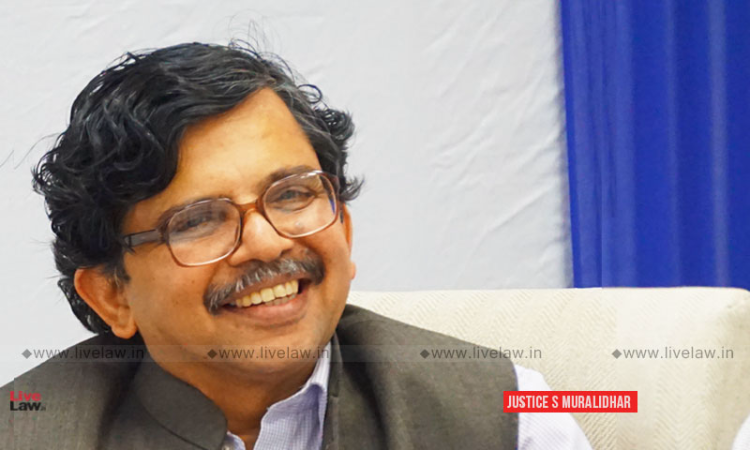
It's important to ask questions to those in power to enforce accountability in law, Dr Muralidhar said.
Dr. S. Muralidhar, Senior Advocate and former Chief Justice of the Orissa High Court, said that the stronger the judiciary's commitment to enforcing accountability, the better it would be for the country, stressing that constitutional courts play a vital role in ensuring that those in power answer questions raised by citizens.Speaking at a book launch event in Bengaluru on June 2, Muralidhar...
This is a premium content
Available exclusively to
Our subscribers
Subscribe Premium 
INR 1099+GST
Your support helps us to bring you more content at
an affordable subscription scheme !!!
All payment options available
Dr. S. Muralidhar, Senior Advocate and former Chief Justice of the Orissa High Court, said that the stronger the judiciary's commitment to enforcing accountability, the better it would be for the country, stressing that constitutional courts play a vital role in ensuring that those in power answer questions raised by citizens.
Speaking at a book launch event in Bengaluru on June 2, Muralidhar said democratic accountability is deeply dependent on the institutional accountability of the judiciary, noting that courts and the Right to Information (RTI) mechanism often serve as avenues through which citizens can obtain answers that the State may otherwise be unwilling to provide.
Responding to a question on the role curiosity has played in democracy and in his own public life, Muralidhar underscored the importance of questioning those in power to uphold the rule of law.
“…. It's important to ask questions to those in power to enforce accountability in law…. I think that is a very important aspect of democracy… As a lawyer and later as a judge, you will realise that the only way you can enforce accountability is to ensure there is a strong judiciary that will lend its hand to people wanting answers. The more and more the judges realize this fundamental duty of a constitutional court, the better our country will be…”.
Justice Muralidhar also noted how the state machinery only responds when forced by the judiciary in the course of case proceedings.
“…In court, as a lawyer, you keep filing petitions…you don't get responses from the government otherwise… the government is forced to come to the court and answer these questions and respond in the court…”, said Dr. S Muralidhar.
The former judge was speaking during the launch of 'Ready for the Law Challenge', a law quiz book written by Raghav Chakravarthy and published by Juggernaut. The formal book launch was followed by a panel discussion on 'curiosity, democracy, and the law' led by Dr. S. Muralidhar (Sr. Adv, Supreme Court), Ms. Uma Mahadevan Dasgupta (Addl. Chief Secretary, Govt. of Karnataka), and Mr. M.N. Anucheth, IPS (DIGP Recruitment, Karnataka).
Dr. Muralidhar also explained how demanding answers is the most potent tool against unaccountable power by citing the advent of the RTI movement itself.
“…The best example we should give here just to see the power of the people would be the Mazdoor Kisan Shakti Sangathan (MKSS) movement in Rajasthan. People were asking a simple question about their own panchayats. Money was allocated to projects in this area…What has happened to that money…Show us the accounts…That's how the entire movement began. It's one of the most powerful tools, RTI movement followed by RTI Act…it came through small legions of protest of this nature, asking questions to the local administration…”, Dr S. Muralidhar illustrated further.
Sharing a personal anecdote from his association with the Safai Karmachari Andolan, beginning in 2003, Dr. Muralidhar recounted the struggle behind bringing to the fore the eye-opening aspects of manual scavenging through litigation:
“…On a very personal level, since Safai Karmachari Andolan… movement started in 2003, 3 years before I became a judge…what we did not get through the RTI, we were able to get responses from states across the country…those responses were of denial of manual scavenging happening…we then produced videos, personal testimonies to make them accept that it was happening[before the court]…it was a long journey. It has not been entirely successful but that is a fight which will go on.”
The discussion, centred on Raghav Chakravarthy's quiz book, also explored why legal quizzing is essential for the fraternity. Dr. Muralidhar, who was a pioneer of legal quizzing at the Delhi High Court 15 years ago, was also asked why he saw a necessary connection between law and quizzing. He reasoned that the law is too vast an ocean for the traditional litigation practice alone to navigate.
“Lawyers, with their training, get to realise very soon that all the learning happens in courts. But you can't get exposed to all branches of law. There are so many disciplines….it's a vast ocean…you join a law office; your senior colleague does a particular kind of case… you can sit in the court and watch other lawyers perform…its only so much of a learning …there are so many developments that you can't keep up with. There must be some avenue where you aren't taxed for being the best performer, you are learning to enjoy it and you are also gaining knowledge….”
“…Quizzes break down hierarchies. The brightest minds could be the youngest, or a combination of senior and junior working together, breaking barriers and learning about society. Law is an exciting field for conducting quizzes”, Dr. S Muralidhar concluded.
The video of the event can be watched here.
Sebin James
Sebin James is a Correspondent with LiveLaw, covering the Karnataka High Court

