



- Home
- /
- Top Stories
- /
- 'Trauma Care Part Of Right To Life'...
'Trauma Care Part Of Right To Life' : Supreme Court Directs To Integrate Emergency Helplines Into 112, Implement PM RAHAT & Good Samaritan Scheme
Gursimran Kaur Bakshi
28 May 2026 12:33 PM IST
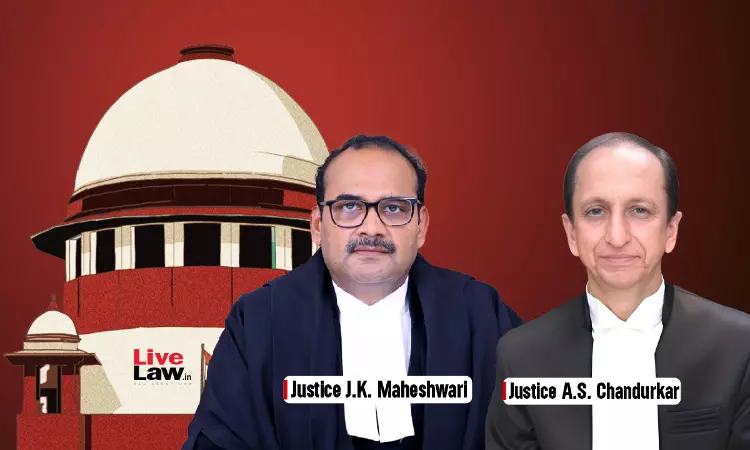
Recognising that the trauma care of citizens is an integral part of the right to life under Article 21 of the Indian Constitution, the Supreme Court recently passed interim directions, including to operationalise one common helpline number '112' for emergency response throughout the country. The Court issued a series of interim directions to all States and Union Territories to create a...
This is a premium content
Available exclusively to
Our subscribers
Subscribe Premium 
INR 1099+GST
Your support helps us to bring you more content at
an affordable subscription scheme !!!
All payment options available
Recognising that the trauma care of citizens is an integral part of the right to life under Article 21 of the Indian Constitution, the Supreme Court recently passed interim directions, including to operationalise one common helpline number '112' for emergency response throughout the country.
The Court issued a series of interim directions to all States and Union Territories to create a uniform and robust trauma care system across the country, including integration of all emergency helplines into 112, operationalisation of the PM RAHAT cashless treatment scheme and establishment of Good Samaritan grievance redressal systems.
A bench comprising Justice JK Maheshwari and Justice Atul S. Chandurkar passed the judgment in an Article 32 writ petition by the organisation SaveLife Foundation, seeking to improve road safety and provide emergency medical care in cases of road accidents, also known as 'trauma care'.
The bench took note of various factors, including the need to act swiftly in cases of road accidents, the hesitation a common man feels to call emergency services in fear of being embroiled in legal proceedings, etc.
It said: "A robust mechanism for trauma care, therefore, must take a bottom-up approach, which accounts for various stakeholders. The common man who is a bystander to such an incident has the responsibility to call emergency services and give them accurate descriptions, make an attempt to control bleeding, keep the victim still, calm and warm. Usually, however, no matter how strong the urge to be a Good Samaritan is, the bystander hesitates: suffers a reactive paralysis, sometimes due to fear of legal proceedings, of getting summoned to the police station as a witness; and sometimes due to the psychological weight of the situation itself, the sight of blood or a person crying out in pain."
The Court added that to address these barriers, what is required is a systemic intervention, creation of a uniform framework for trauma care, building public awareness, standardisation of first aid skills and proper Good Samaritan laws; since the "right to trauma care of citizens is an integral part of right to life enshrined under Article 21 of the Constitution of India".
The Court sought compliance from the States, and based on the affidavits, it deemed it fit to issue interim directions. A copy of these directions has also been sent to the Chief Secretaries of all States/UTs to issue general directions for compliance. The Court has given four months for the compliance status and further directions:
These are as follows:
a) All States / UTs shall complete full technical and operational integration of all emergency / ambulance helplines (100, 101, 108, 102, 1033, 1091, etc.) into helpline 112 within a period of three months and undertake concurrent mass-media publicity of helpline 112, and report compliance;
b) All States / UTs shall establish functional (physical and digital) Good Samaritan Grievance Redressal Systems, with designated nodal authorities at State and District level, within three months, and furnish periodic compliance reports by organizing monthly meetings and uploading the minutes on the concerned portals;
c) The Union of India (Ministry of Health and Family Welfare/Ministry of Road Transport and Highways) is permitted to issue a medical rescue protocol for trauma cases in a period of three months and all States / UTs are directed to operationalize the same at State / UT level upon its issue within three months thereof;
d) All States / UTs shall ensure full Automative Industry Standard - 125 (AIS-125) compliance across all registered ambulances (public and private); mandate Global Positioning System (GPS) / Vehicle Location Tracking Device (VLTD) fitment and real-time integration with helpline 112; and conduct periodic structured audits (response times, quality of care, equipment, outcomes) with compliance reporting to a designated Union-level authority, within a period of three months;
e) In respect of Prayer E, as the curriculum already stands notified by the National Commission for Allied and Healthcare Professionals (NCAHP), all States / UTs shall adopt and implement the NCAHP-notified EMT curriculum, and to align their training institutions and personnel certified, within a period of three months;
f) The Union of India (Ministry of Health and Family Welfare) shall issue guidelines prescribing the requisite data format for a Trauma Registry within eight weeks and all States / UTs are directed to establish State Trauma Registries in conformity, covering all medical facilities and linking the same to a Coordinated Trauma Registry within a period of four months;
g) All States / UTs shall undertake grading and designation of all medical facilities (public and private) in accordance with the said Ministry of Health and Family Welfare guidelines, with geographic scope extended beyond National Highways to State Highways, Major District Roads and Urban / Peri-Urban areas, within a period of three months and report compliance;
h) In respect of Prayer I, as the Union of India has already framed a uniform national scheme answering this prayer, i.e., the PM RAHAT scheme, all States / UTs (Respondent Nos. 2 to 37) shall take steps to fully operationalize PM RAHAT scheme within eight weeks – designation of hospitals, on-boarding of State Health Agency (SHA) on Transaction Management System (TMS), district-police deployment on electronic Detailed Accident Report (eDAR), opening of DC sub-agency accounts within a period of three months. It is clarified that non-implementation of the above would amount to a violation of the MV Act;
i) The Union and States / UTs shall undertake sustained, structured, multi-lingual mass-media campaigns covering helpline 112, the Good Samaritan protections under Section 134A of Motor Vehicles Act, 1988 and the grievance redressal system, and the cashless treatment scheme (PM RAHAT) with defined obligations and compliance reporting within a period of one month.
In addition to these directions, States and UTs that have not adopted the Cashless Treatment of Road Accident Victims Scheme, 2025-PM Rahat, shall take necessary steps to fully operationalise the scheme within 3 months in terms of direction (h).
Headnote
Constitution of India, 1950 — Article 21 — Right to Life — Right to Trauma Care and Road Safety — The right to trauma care of citizens is an integral part of the right to life enshrined under Article 21 of the Constitution of India - A robust, uniform, and swift mechanism for emergency trauma care is critical to recognizing and responding to road accident situations to save human lives - Bystanders often hesitate to act due to fear of legal proceedings or police harassment - Systemic interventions, uniform frameworks, and proper Good Samaritan laws are required to eliminate these barriers.
Interim Directions for Uniform Trauma Care System — The Supreme Court issued comprehensive time-bound interim directions to the Union and all States/UTs i. Full technical and operational integration of all emergency helplines (100, 101, 108, etc.) into the universal helpline 112 within three months; ii. Establishment of functional physical and digital Good Samaritan Grievance Redressal Systems within three months; iii. Notification of a medical rescue protocol by the Union within three months, to be operationalized by States/UTs within three months thereafter; iv. Mandatory Automotive Industry Standard 125 (AIS-125) compliance and GPS/Vehicle Location Tracking Device (VLTD) fitment in all public and private ambulances, integrated with helpline 112 within three months; v. Adoption of the National Commission for Allied and Healthcare Professionals (NCAHP) notified Emergency Medical Technician (EMT) curriculum within three months; vi. Establishment of State Trauma Registries within four months; vii. Grading and designation of all medical facilities across National/State Highways and urban areas within three months; viii. Full operationalization of the PM RAHAT cashless treatment scheme for road accident victims within three months, failing which it would amount to a violation of the Motor Vehicles Act; ix. Execution of multi-lingual mass-media campaigns within one month. [Relied on Savelife Foundation v. Union of India, (2016) 7 SCC 194; Paras 5-12]
Case Details: SAVELIFE FOUNDATION AND ANOTHER v UOI|WRIT PETITION (CIVIL) NO. 726 OF 2024
Citation : 2026 LiveLaw (SC) 556
Gursimran Kaur Bakshi
Gursimran is the Principal Correspondent with LiveLaw for the Supreme Court. She can be reached out at: simrankaurbakshi@livelaw.in

