



Tribunal Reform 2026: Old Wine, New Label, Same bottle?
Rajasekhar V.K
19 Aug 2026 10:00 AM IST
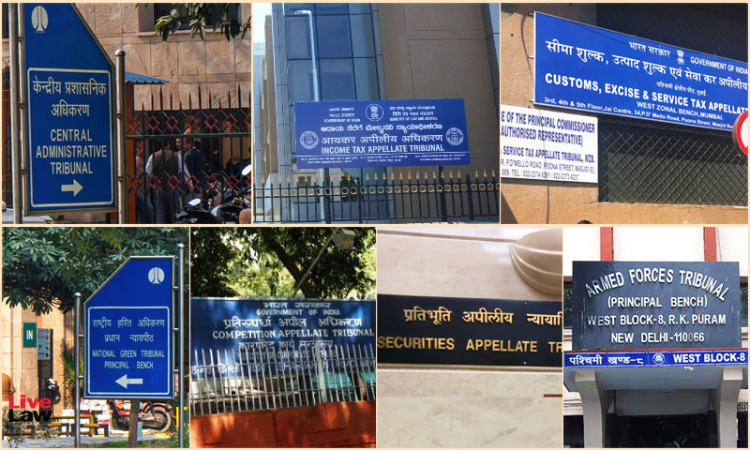
Plus ça change, plus c'est la même chose, as the French critic Jean-Baptiste Alphonse Karr put it in Les Guêpes. The more things change, the more they remain the same. And in the case of NCLT, they haven't changed at all.
There is something faintly Sisyphean about tribunal reform in India. Every few years, the Government rolls the stone up the hill, gives it a new name, changes a few provisions and sends it back down towards the Supreme Court. The bottle is old, the label is new. The real question is whether the cork has changed. And in the tribunal business, the cork is the appointment mechanism. That question is important because the Supreme Court has already spent three decades telling us what tribunal independence really requires.
The latest effort has now become law. The Tribunals Reforms Act, 2026, repeals the Tribunals Reforms Act, 2021 and replaces it with a new framework centred on the National Tribunals Commission, or NTC.
The new Act is undoubtedly more than a change of stationery. It introduces the NTC, increases the tenure of tribunal chairpersons and members from four years to five, removes the minimum age of fifty years, creates a National Tribunals Data Grid and gives the proposed Commission functions relating to selection, performance review and complaints. But the more interesting question is not whether the Act contains something new. It plainly does. The question is how much of the old architecture remains. My answer is: quite a lot.


The 2025 judgment in Madras Bar Association v. Union of India brought that long constitutional conversation to a head. The constitutional parameters governing tribunalisation had by then been repeatedly articulated. The remaining challenge was to translate those principles into durable institutional practice. The 2026 Act is Parliament's answer to that challenge. The question is whether it is a convincing one.
1. A reform journey that has been going on for years
The Government began the process of rationalisation in 2015. The Finance Act, 2017 abolished or merged tribunals and reduced their number from twenty-six to nineteen. It also empowered the Central Government to prescribe the qualifications, selection, tenure and other service conditions for the remaining tribunals. That first experiment did not exactly age like fine wine.
The Supreme Court intervened in Rojer Mathew v. South Indian Bank Limited & others[1] and the subsequent Madras Bar Association v. Union of India & another[2] litigation. In Rojer Mathew, the Court recommended the constitution of an independent National Tribunals Commission to oversee the selection process, service conditions and infrastructural and financial requirements of tribunals. The subsequent Madras Bar Association judgment concerning the 2020 Rules converted that principle into a specific direction to the Union of India to constitute an NTC as an independent body to supervise the appointments and functioning of Tribunals, disciplinary proceedings and their administrative and infrastructural needs. The 2025 judgment, tracing this jurisprudential history, records that direction and its constitutional rationale.
Then came the Tribunals Reforms Act, 2021. It was, in part, a rationalisation statute, because it abolished five more tribunals and transferred their functions elsewhere. For the tribunals that remained, it created a common statutory framework for qualifications, appointment, tenure, salaries, removal and other conditions of service.
But it also contained the provisions that became the subject of the next constitutional battle. A person below fifty years could not be appointed. Tenure was limited to four years. And the Search-cum-Selection Committee had to recommend a panel of two names, with the Central Government to take the final decision.
One would have thought that, after years of litigation over precisely these questions, the lesson had finally been learnt. One would have thought wrong.
2. The Supreme Court's answer in 2025
In Madras Bar Association v. Union of India,[3] the Supreme Court struck down the offending provisions of the 2021 framework. The judgment is important because it did not treat the dispute as a quarrel over the appropriate number of years on an appointment order. The Court located the problem in the larger constitutional principles of separation of powers and judicial independence. It held that the 2021 Act reproduced provisions which had already been judicially rejected, including the fifty-year age bar, four-year tenure and two-name recommendation mechanism. The Court was particularly emphatic about the institutional issue. Tribunals exercise judicial functions. If the Executive controls the conditions under which their members are selected, appointed, retained and administered, the problem is a constitutional one, not just a bureaucratic inconvenience.
The Court consequently directed the Union of India to establish an NTC within four months. It said that the Commission must be independent from executive control, possess professional expertise, adopt transparent processes and have appropriate oversight mechanisms.
And so, after years, we finally have provision for an NTC. But then, here comes the awkward question. Did Parliament merely create the institution the Supreme Court asked for, or has it actually built the institution the Court had in mind?
3. Enter the National Tribunals Commission
The NTC is the centrepiece of the 2026 Act. And to be fair, it is not merely a new signboard outside an old office. The NTC is to consist of a chairperson, two judicial and two technical members. The chairperson must have been a Supreme Court judge or chief justice of a High Court. The judicial members must have been chief justices or judges of High Courts. The technical members require at least twenty-five years of relevant experience. Its remit is to conduct selections, review tribunal performance, oversee inquiries into complaints and maintain a National Tribunals Data Grid.
So far, so good. But the Supreme Court did not ask for a Commission merely so that tribunals could acquire another office, another secretariat and another annual report. It wanted independence. And that is where the 2026 Act becomes interesting. The chairperson and members of the NTC are appointed by the Central Government. The Government must consult the CJI before appointing the chairperson and judicial members, but the power of appointment remains with the Government. The secretariat is headed by a secretary to the Government of India.
That is not necessarily unconstitutional. Nor would it be fair to say that the NTC is merely a creature of the Executive. The Act has plainly built a substantial judicial component into it. But the constitutional question does not disappear because of this. The Supreme Court's demand was not merely for a centralised institution. And that brings us to the cork.
4. The cork: who actually gets appointed?
The Act provides that the NTC will constitute Search-cum-Selection Committees for the tribunals. For appointment of a chairperson of a tribunal, the Committee consists of the NTC chairperson, a technical member of the Commission, a retired chief justice of a High Court nominated by the NTC Chairperson, a secretary to the Government of India nominated by the Central Government, two expert members and the secretary to the Commission. The expert members and Commission Secretary do not vote, while the Committee Chairperson has a casting vote.
For appointment of members, the Committee is headed by a judicial member of the NTC and includes a technical member, a retired High Court judge, a Government secretary and experts. The Committee recommends one name, with one additional name for the waiting list.
And then comes the crucial provision. The Central Government appoints the chairperson or member on the recommendation of the Search-cum-Selection Committee. The Government must make the appointment within three months. Now, that is certainly an improvement over the 2021 position in one respect. The two-name panel has gone. The new mechanism is more judicially weighted. But the final appointment power remains with the Executive.
So here is the question which Parliament and the Government should answer: what happens if the Government does not appoint the person recommended by the Committee? What happens if it sits on the recommendation? What happens if it asks for another name? What happens if it disagrees with the recommendation altogether? These are not entirely theoretical questions. The Supreme Court has itself expressed concern over the Government keeping reiterated judicial recommendations pending, despite the settled position that, after reiteration, the appointment has to take place. If that is how recommendations for appointments to the High Courts can be treated, it would be naïve to assume that tribunal recommendations will automatically fare better merely because they now come through an NTC.
The three-month deadline is welcome. But a deadline without a corresponding obligation to appoint the recommended candidate is an invitation to delay, not a guarantee of compliance. This lack of a mandatory appointment obligation is the Achilles' heel of the entire NTC structure.
The Supreme Court has spent years warning against executive dominance in tribunal appointments. In the earlier Madras Bar Association jurisprudence, it specifically identified the need for judicial primacy in the selection process and directed a Search-cum-Selection mechanism with a stronger judicial component. Judicial primacy was a pre-requisite for adjudicatory neutrality. The 2026 Act has plainly moved in that direction. Whether it has moved far enough is another matter. The cork, in other words, has been changed. We now have to see whether it actually seals the bottle differently.
5. The five-year 'cure'
There is less ambiguity about tenure. The 2021 Act prescribed four years, subject to the age limits of seventy years for chairpersons and sixty-seven for members. The 2026 Act restores five years, subject to the same upper age limits.
The five-year tenure is not a cure; it is, in some respects, a cruel taunt. A tribunal member does not emerge fully formed from the statute books. The first years are spent learning the procedural peculiarities of the forum, understanding the registry, finding the rhythm of the docket and, above all, acquiring the institutional memory that comes only with experience. And just when that accumulated experience begins to yield results, the tenure ends. The member leaves, the learning curve begins again, and the institution loses precisely the experience it spent years acquiring. And the litigants lose the judge who understood their world.
I have sat on that bench. I know, firsthand, that the real loss is not merely the member who leaves, but the institutional wisdom that leaves with him. This is not institutional continuity. It is institutional amnesia dressed up as reform. Five years may be a statutory tenure, but it is a poor substitute for the security of tenure that judicial independence requires. And yet, we continue to pretend that this is progress.
6. And what about the sixteen?
Here the déjà vu is almost complete. The 2021 Act's First Schedule contained sixteen tribunals and authorities, including NCLAT. It did not contain NCLT. The 2026 Act again contains sixteen. NCLAT is again there. But NCLT is again not there.
The inconsistency becomes more striking because the 2026 Act expressly amends section 417A of the Companies Act, 2013, to provide that the qualifications, selection, appointment, salaries, removal and other conditions of service of the chairperson and members of NCLAT will be governed by the new legislation. There is no corresponding provision bringing NCLT within the framework. This is a historical blunder. The 2026 Act repeals the 2021 Act and replaces it with an entirely new statutory framework. One would have thought that given this second opportunity, Parliament would address the anomaly. It chose not to do so. Most notably, the Statement of Objects and Reasons does not bother to explain the exclusion. If the omission in the 2021 framework was inadvertent, reproducing it in a law intended to repeal and replace that framework is difficult to justify. A legislation intended to create uniformity in tribunal governance should not reproduce an unexplained distinction between a tribunal and its appellate tribunal.
This is not a drafting oversight. This is a legislative choice – one that Parliament has now made twice, without explanation. If the Government has a substantive reason for excluding NCLT, it should state it. If it does not, then Parliament has created an unexplained distinction between a tribunal and its appellate tribunal, both exercising judicial power under the same statutory framework. The constitutional absurdity of leaving the NCLT outside while bringing the NCLAT within the framework is difficult to ignore.
I say this not as an academic observer, but as one who has sat on that bench and knows, firsthand, the difference between a tribunal that is institutionally secure and one that is administratively dependent. The 2026 Act does not bridge that gap. It merely papers over it, and leaves NCLT out of the room entirely. GSTAT, too, has been left outside the First Schedule, without any explanation in the Statement of Objects and Reasons.
7. The larger problem: reform by replacement
There is another feature of the Act worth noticing: the 2026 legislation is not just about amendments to a few provisions of the 2021 Act. It repeals it and recreates the governing framework in a new statute. The resemblance to what went before is rather striking.
The First Schedule remains at sixteen. The common framework for qualifications, selection, appointment, salaries, removal and service conditions remains. Search-cum-Selection committees remain. The parent statutes are again amended so that the new legislation overrides inconsistent provisions. The Central Government remains the ultimate appointing authority.
There is nothing inherently wrong with a common statutory regime. Indeed, uniformity is one of the attractions of a central framework. We have, after all, developed quite a taste for the formula: One Nation, One Tax; One Nation, One Election; One Nation, One Ration Card; One Nation, One Grid; One Nation, One Mobility Card. It was perhaps only a matter of time before the tribunals got their turn: One Nation, One Tribunal Framework. It has a certain ring to it.
But there is just a small constitutional complication. Tribunals are not electricity grids or ration cards. They exercise judicial power. Uniformity may simplify administration, but it cannot substitute for judicial independence. And after the Supreme Court's repeated interventions, the Government has to do more than just change the nameplate.
The 2025 judgment is a useful reminder of why. Where a statutory framework governing tribunals has been found constitutionally defective, the legislative task is to cure the defect identified, not merely to reproduce the same architecture in another form. Constitutional infirmities do not disappear because the offending provision has been given a new statutory address. That principle matters here.
The 2026 Act undoubtedly addresses some of the defects identified in the 2021 framework. The tenure has been increased. The minimum age has gone. The two-name recommendation mechanism has been replaced. The NTC has been created and judicial participation in the selection process has been strengthened. But a cure is not the same thing as a cosmetic procedure. The real question is whether the 2026 Act has addressed the underlying institutional concerns identified by the Supreme Court, particularly the need to protect tribunal appointments and functioning from excessive executive influence.
The NTC may be new, but its constitutional worth will ultimately be measured by what it does with the appointment process, how much judicial primacy it secures, and how much executive influence it actually removes.
8. The NTC should not become another office between the tribunal and justice.
There is also a practical dimension. India's tribunal problem has never been confined to the text of the appointment provisions. There are vacancies. There are infrastructure problems. There are administrative delays. There are questions about funding and dependence on parent ministries. And there is the basic problem of getting a functioning adjudicatory institution to actually function.
The Supreme Court has repeatedly connected these administrative questions with judicial independence. A tribunal that has to depend upon its sponsoring department for its basic infrastructure is not institutionally independent merely because its chairperson happens to be a retired judge. I have sat in tribunals where the infrastructure was abysmal, and where the registry functioned on the goodwill of officers who knew they would be transferred back the moment they displeased their bureaucratic masters. That is judicial sufferance. And the 2026 Act does not change a single one of those realities.
The 2026 Act at least recognises this wider institutional problem by giving the NTC performance, complaints and data functions. The National Tribunals Data Grid could also become useful if it is actually used to measure vacancies, pendency, disposal, age of cases and institutional performance, rather than becoming another impressive acronym in a Government presentation. The same applies to performance review. A tribunal's performance cannot sensibly be measured only by disposal numbers. Judicial quality, complexity of cases, reversals on appeal, vacancies and administrative support all matter. Therefore, the NTC has an opportunity to become something more than an appointments clearing house. It could become the institutional mechanism through which the constitutional promise of tribunal independence is translated into everyday administration. But that will depend upon how independently it actually functions.
9. So, is this old wine?
Yes, but with a qualification. Calling the 2026 Act simply “old wine in a new bottle” would be unfair to the genuine changes. The NTC is new. Five-year tenure is new to this statutory framework. The fifty-year minimum age is gone. The selection mechanism has been substantially rearranged. The data grid and performance and complaints functions add institutional features that the 2021 Act did not contain.
But the bottle is still recognisably of 2021 vintage. The same basic statutory strategy remains. The same broad tribunal universe remains. The Executive remains deeply entrenched in the appointment structure. And the unexplained NCLT omission has survived the journey from 2021 to 2026.
Perhaps the better metaphor is this: the bottle is old, the label is new. The cork has been changed. Now we have to see whether it actually works.
And that brings us back to the constitutional purpose of tribunal reform. Tribunals exercise judicial power. Therefore, their members must be capable of doing something that is uncomfortable for every Government, irrespective of political colour. They must be able to say “no” if the law requires them to do so. That is the real test of tribunal independence.
If the NTC can help create tribunals that are secure enough to say “no,” competent enough to explain why, and institutionally independent enough to say it without looking over their shoulders, the 2026 Act will have achieved something important. But if it merely creates another layer through which appointments, administration and resources continue to depend substantially upon the Executive, then we will have done what India has become remarkably good at doing with tribunal reform: reforming the reform.
And perhaps, five years from now, somebody will be writing the next tribunal reform article. Hopefully, not me.
Author is Former Member (Judicial), National Company Law Tribunal. He continues to engage with insolvency, judicial process, and institutional reform through writing, research, and advisory work. Views are personal.


