Umar Khalid & Sharjeel Imam Should Have Been Granted Bail Long Ago: Justice Sudhanshu Dhulia
Gursimran Kaur Bakshi
18 Oct 2026 10:14 AM IST
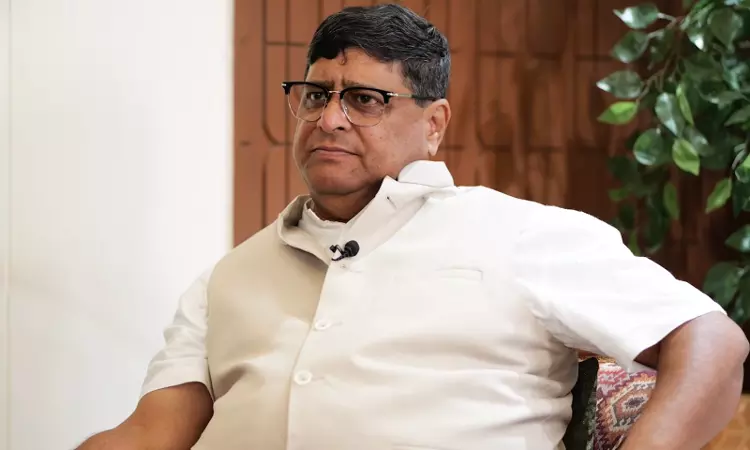
Former Supreme Court Judge Justice Sudhanshu Dhulia has expressed the personal opinion that Umar Khalid and Sharjeel Imam, who have been in jail for over six years as undertrial prisoners in the Delhi riots larger conspiracy case, should have been granted bail much earlier.
Justice Dhulia made the remarks during the Third Sir Syed Lecture on the topic 'Vision of Justice in the Indian Constitution', while responding to a question from an audience member on judicial independence.
The audience member questioned how the judiciary could be considered independent when Khalid and Imam continued to remain incarcerated, while several former judges had been appointed to the Rajya Sabha or as Governors after allegedly delivering judgments favouring the ruling BJP government.
"Umar Khalid or Sharjeel Imam ko jail main rakha gaya hai or ruling party ke dwara bahut saare judges ko Rajya Sabha bheja gaya hai or unko Governor bhi banaya gaya hai, kyunki unone ruling BJP government ke [favour] main faisle diye hain. Toh hum kaise keh sakte hain ki judiciary independent hai? [Umar Khalid and Sharjeel Imam have been kept in jail, while many judges have been sent to the Rajya Sabha or appointed as Governors by the ruling party because they have given judgments in favour of the ruling BJP government. In such a situation, how can we claim that the judiciary is independent?]" the audience member asked.


Responding to the question about post-retirement appointments, Justice Dhulia said the practice could not be attributed to any one government, adding that successive governments had appointed people associated with them to such positions.
"Jaha tak apka dusra sawal hai, main jawab pehle dedu. Ilzam kisi ek government ko [nahi de sakte]. Ye Congress ke time pe bhi hota tha, Janta Party sab jagah hota hai. Jo satta main hai, vo karta hai. Apne hi aadmi ko Governor banata hai or kya karta hai. Isme aap kisi ko single out nahi kar sakte. Ye hota raha hai, har jagah hota hai. Shayad aur bhi zyada hua ho pehle. [As for your second question, let me answer that first. You cannot pin the blame on any single government. This happened during the Congress era; it happened under the Janata Party; it happens everywhere. Whoever is in power does this; they appoint their own people as Governors; what else would they do? You cannot single anyone out in this regard. This has been going on; it happens everywhere. In fact, it might even have happened more frequently in the past."
Turning to the question of bail for Khalid and Imam, Justice Dhulia said:
"Mera apna opinion hai, Sharjeel Imam, or Umar Khalid ko bail milni chahiye, aaj nahi bahut pehle mil jaani chahiye thi. [In my opinion, Sharjeel Imam and Umar Khalid should have been granted bail a long time ago]."
'People Have To Get Engaged In Politics': Justice Dhulia
During the interaction, another audience member questioned whether justice was being delivered if it remained elusive for a particular community.
"One society has been criticised and is not getting justice. Then what was the vision for getting justice?" the audience member asked.
Justice Dhulia responded that the people themselves were the custodians of the Constitution and called for greater political awareness and participation among citizens.
"People have to work consciously. People have to get engaged in politics. Aa nahi rahe log politics main, aap aao aur satta badlo. [People are not joining politics anymore. People should be encouraged to join politics and change the government by democratic means]. I see people from very respected families say, 'I am not political' or 'I don't like politics'. Bahut garv ke saath kehte hain. Jabki vo ye nahi jante ki unke apolitical hone se cheezo ke daam badhte hain, galat aadmi satta main aate hain, corrupt politicians hote hain. Ye apko badalna padega. Aapko zyada sadchit hona padega. [They say it with great pride, unaware that their being 'apolitical' leads to rising prices, the ascent of the wrong people to power, and the rise of corrupt politicians. You must change this. You need to become much more conscious and aware."
'A Hungry Man Needs A Bread; He Doesn't Need Freedom'
Justice Dhulia also addressed a question on the relationship between Fundamental Rights and the Directive Principles of State Policy (DPSP), which he had emphasised during his lecture.
An audience member asked how citizens could be expected to protect the rights envisaged under the DPSP when their Fundamental Rights were themselves at stake.
In response, Justice Dhulia referred to Pandit Jawaharlal Nehru's distinction between Fundamental Rights and the Directive Principles, describing the latter as dynamic rights.
He acknowledged that a large section of the Indian population could not meaningfully enjoy the Fundamental Rights guaranteed under Part III of the Constitution without adequate economic means.
"Yes, it's true a great majority of Indians can't even enjoy rights given in Part III unless and until they are economically well-off. A hungry man needs a bread; he doesn't need freedom. As far as Part III rights to the vast majority are concerned, yes, I agree that 'aaj kal halat theek nahi hai. But halat toh badalte hai. Samay ki sabse achi cheez yehi hai ki vo badalta hai. Kuch din baad aap kahenge ki sab theek thak ho raha hai. [I agree that things are not in a good state right now. But circumstances do change. The best thing about time is that it changes. A while from now, you will be able to say that things are going just fine]."