



- Home
- /
- Top Stories
- /
- UNCITRAL Conference At Supreme...
UNCITRAL Conference At Supreme Court | CJI Says India Viewed As Fair Jurisdiction For International Disputes
Amisha Shrivastava
24 July 2026 7:33 PM IST
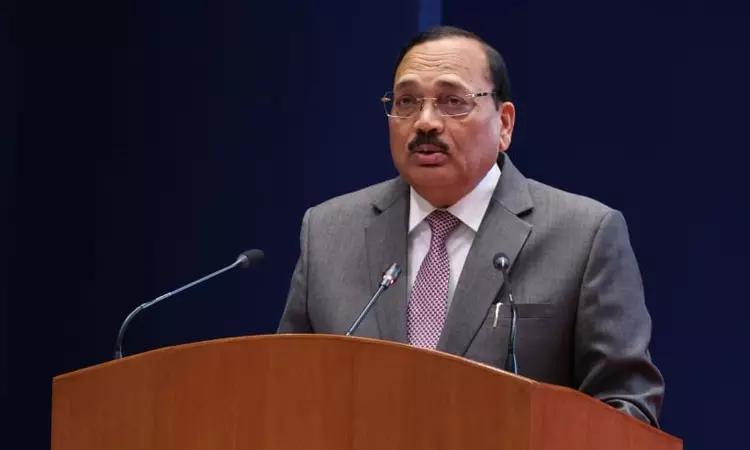
Courts do not compete with arbitration and mediation but safeguard their legitimacy by enforcing Rule of Law, the CJI said.
Chief Justice of India Surya Kant on Friday highlighted India's growing stature as a fair jurisdiction where international commercial disputes can be resolved efficiently, fairly and with global credibility, attributing the shift to legislative reforms, judicial support for arbitration and stronger dispute resolution institutions.“India's arbitration ecosystem has undergone a...
This is a premium content
Available exclusively to
Our subscribers
Subscribe Premium 
INR 1099+GST
Your support helps us to bring you more content at
an affordable subscription scheme !!!
All payment options available
Chief Justice of India Surya Kant on Friday highlighted India's growing stature as a fair jurisdiction where international commercial disputes can be resolved efficiently, fairly and with global credibility, attributing the shift to legislative reforms, judicial support for arbitration and stronger dispute resolution institutions.
“India's arbitration ecosystem has undergone a remarkable evolution. New institutions have emerged, established centres have expanded their international engagement, and the legal framework governing commercial dispute resolution has continued to mature through legislative refinement and judicial interpretation. Increasingly, India is being viewed as a fair jurisdiction where international commerce disputes not just arise, but can also be resolved efficiently, fairly, and with global credibility”, he said.
The CJI was delivering the inaugural address at the international conference marking the 60th anniversary of the United Nations Commission on International Trade Law (UNCITRAL), jointly organised by the Supreme Court, the Ministry of External Affairs, and UNCITRAL. External Affairs Minister S. Jaishankar, Attorney General for India R. Venkataramani and Union Law Minister Arjun Ram Meghwal were among the dignitaries present at the event.
He also lauded the work of the UNCITRAL National Coordination Committee for India, noting that it had strengthened the country's participation in the development of international trade law through sustained engagement with UNCITRAL working groups, contributions to the CLOUT programme, stakeholder consultations and institutional collaboration.
He noted that the committee had not only brought global legal developments to India but had also helped ensure that India's experience and jurisprudence contributed to the evolution of international legal norms.
The CJI described mediation and arbitration as indispensable pillars of the modern international trading system, offering parties neutral, flexible and internationally enforceable mechanisms for dispute resolution. He further emphasised that courts do not stand in opposition to arbitration and mediation but provide the constitutional and legal foundation on which both systems flourish.
He also observed that traditional court systems, constrained by territorial jurisdiction and differing procedural frameworks, are not always best suited to resolving complex cross-border commercial disputes.
“The enduring success of arbitration and mediation ultimately rests upon the confidence inspired by the Rule of Law. Courts do not stand in opposition to consensual dispute resolution, nor do they compete with arbitral tribunals. Rather, they provide the constitutional and legal foundation upon which both these systems flourish by respecting party autonomy while safeguarding fairness, by enforcing arbitral awards and mediated settlement agreements, and by intervening only where justice genuinely requires judicial oversight,” he said.
Drawing an analogy, the CJI remarked that courts perform a role “not unlike that of a lighthouse overlooking a busy harbour.” “They do not steer every vessel that enters the port, but their presence gives every navigator the confidence to undertake the voyage,” he added.
Highlighting that mediation and arbitration have assumed a central place in international trade law, the CJI observed that conventional court systems are not always suited to resolving complex cross-border commercial disputes. Arbitration and mediation, by contrast, provide parties with a neutral forum, flexibility and internationally enforceable outcomes.
To illustrate the point, he described a hypothetical dispute between an Indian manufacturer of specialised medical equipment and its distributor in Southeast Asia after global shipping disruptions delayed deliveries. While arbitration could efficiently determine the parties' legal rights, mediation could enable them to restructure delivery schedules, revise commercial terms, share losses and preserve a decade-long business relationship.
“Justice has been achieved not because one side prevailed, but because both sides remained in business,” the CJI observed, adding that mediation ensures commercial disputes become “mere interruptions to trade rather than obstacles to it.”
The CJI also highlighted recent changes in the judiciary, referring to the integration of the National Judicial Data Grid, live-streaming and real-time transcription of Constitution Bench proceedings and the introduction of draft AI regulations. These initiatives, he said, have brought greater transparency to judicial administration while opening the work of the Supreme Court to citizens, lawyers and scholars across the world.
Referring to the Court's efforts to promote consensual dispute resolution, the CJI noted that the Supreme Court, in coordination with the National Legal Services Authority and the Mediation and Conciliation Project Committee, has spearheaded initiatives such as the “Mediation for the Nation” campaign and the Special Lok Adalat initiative. These efforts encourage parties to resolve pending disputes through mediation, with settlements receiving judicial recognition through court decrees.
These initiatives, read alongside the Mediation Act, 2023 which for the first time provides a comprehensive legislative framework for domestic and international mediation, reflect a broader institutional commitment to embedding consensual dispute resolution within the justice delivery system, the CJI said.
The CJI traced India's commercial traditions to the Indus Valley Civilisation. Referring to the ancient dockyard at Lothal in present-day Gujarat, he highlighted that archaeological discoveries there demonstrate that merchants were engaged in international commerce nearly 5,000 years ago. He observed that even before modern commercial laws existed, trade was sustained by the confidence that promises would be honoured and agreements faithfully fulfilled.
The CJI observed that technological change, geopolitical uncertainty and evolving commercial practices continue to test legal systems. Yet, he said, the principles underpinning commercial justice remain unchanged, i.e., trust, neutrality, fairness and the ability to preserve commerce even in moments of disagreement.
Concluding his address, the CJI said the same challenge persists today, i.e., preserving trust when commercial disagreements arise. He observed that arbitration and mediation are two of the international legal order's most enduring answers to that challenge, ensuring that commercial disputes become interruptions to trade rather than barriers to it. He expressed hope that the conference would generate practical ideas to deepen cooperation across jurisdictions and strengthen the rules-based international trading system.
In his address, External Affairs Minister S. Jaishankar said that an increasingly volatile geopolitical environment and disruptions to global commerce had reinforced the need for a predictable, rules-based international legal order. He stressed that countries are seeking harmonised legal frameworks, efficient dispute resolution mechanisms and greater certainty in cross-border transactions to ensure global trade remained resilient amid disruptions. He highlighted UNCITRAL's role in fostering legal certainty and facilitating cross-border trade and investment amid growing global uncertainty.
Union Law Minister Arjun Ram Meghwal noted that judges were increasingly drawing upon internationally accepted principles alongside domestic statutes. He noted that India's justice reforms had focused on legislative modernisation, institutional strengthening and digital transformation. He highlighted that the government had also undertaken reforms to improve judicial efficiency, modernise the arbitration framework, strengthen mediation and enhance the ease of doing business.
Tags

Amisha Shrivastava
Amisha Shrivastava is a Senior Correspondent with LiveLaw, covering the Supreme Court of India. She can be reached at amisha@livelaw.in

