



- Home
- /
- Top Stories
- /
- 'Women In Delhi Must Feel Safe Even...
'Women In Delhi Must Feel Safe Even Walking Alone At Night; Men Should Fear Committing Sexual Offences' : Supreme Court To Police
Gursimran Kaur Bakshi
5 Oct 2026 3:27 PM IST
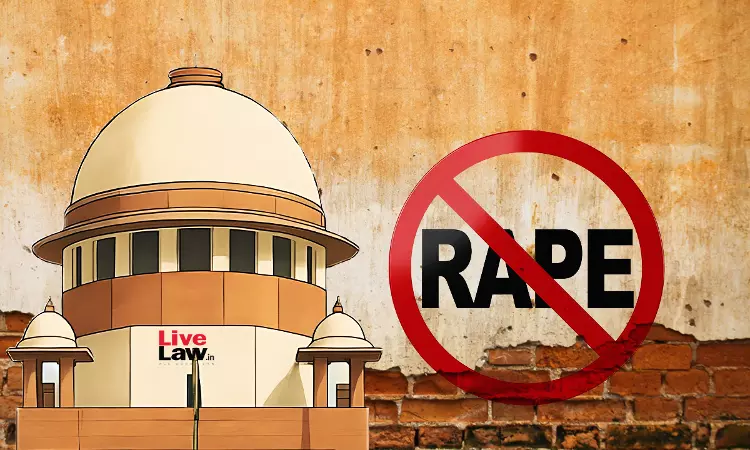
"As police, you must live up to the expectations of the people, and people shouldn't run away from you," the Court said.
Hearing the suo motu case taken on the rising sexual offences in the National Capital Region, the Supreme Court today(October 5) in the strongest terms expressed the need to take all preventive steps to prevent offences against women.While addressing the general feeling that women are not safe in Delhi, it ordered that all public places such as the metro, bus stands, railways stands must...
This is a premium content
Available exclusively to
Our subscribers
Subscribe Premium 
INR 1099+GST
Your support helps us to bring you more content at
an affordable subscription scheme !!!
All payment options available
Hearing the suo motu case taken on the rising sexual offences in the National Capital Region, the Supreme Court today(October 5) in the strongest terms expressed the need to take all preventive steps to prevent offences against women.
While addressing the general feeling that women are not safe in Delhi, it ordered that all public places such as the metro, bus stands, railways stands must be continuously monitored by beat patrolling units, and halting points of Delhi police control room vans must be strengthened. Additionally, it stressed that, given the festive season is approaching, the miscreants will be on the run, so the police need to ensure that the women are safe.
"You need to create a fright or fear in the mind of a man who is prone to commit offences. Unless and until you don't create that fright or fear in that goon or anti-social element that 'ab kuch kia toh mar jayenge', you will not be able to prevent commission of such crimes...Every girl molested is our sister, our mother. Huge challenge for NCT Delhi police. Don't allow such things to happen," the Court orally said.
A bench comprising Justice JB Pardiwala and Justice K Vinod Chandran recently took suo motu cognisance of repeated incidents of rape, including a gangrape of a minor in a park and the alleged sexual assault of a minor inside a moving sleeper bus in Delhi. Expressing distress over the news reports, the Court appointed Senior Advocate Liz Mathew as amicus and issued a slew of directions divided into two parts: immediate directions, such as intensified patrolling, and other long-term directions.
Today, the matter came up subsequent to the directions issued, in which the amicus was supposed to submit further suggestions. Solicitor General Tushar Mehta submitted that the government fully shared the Court's concern and informed that he had met the concerned authorities, including the Delhi Police, Government of the National Capital Territory of Delhi, Municipal Corporation of Delhi, the Ministry of Women and Child Development, and others, and had formulated certain suggestions which they will file accordingly.
"Mere system is not enough; we will have to show that it's functioning," SG Mehta submitted.
He requested that the Court may take up the matter after the authorities have filed the affidavit. Mehta stressed that the government doesn't consider this matter adversarial and will consider all suggestions that come from the Court and the amicus.
At the outset, Justice Pardiwala stated that it's high time for the authorities, especially the Delhi Police, to rise up to the occasion so that people can restore trust in them again.
He repeatedly stated that "fear or fright" must be invoked in the minds of the criminals so that it creates deterrence for them not to commit dastardly crimes. He particularly stressed that the need is to prevent the crimes from taking place.
He said: "Together, the Court, government, police department, and amicus, let us ponder over various issues. Let's try to make some difference. Let's try our best that these types of crimes are not committed repeatedly. The only concern with which we have taken suo motu is that there appears to be a feeling that women are not safe in the city, more particularly in some vulnerable pockets of the city. We need to deliberate a little, and this will take some time before we issue final directions, before you start working. But the only concern is the deficiency, if any should not facilitate the commission of a crime.
What is important is to prevent the crime, not what you do after the crime is committed. You did your best; the accused were apprehended, now you will proceed also, and they will be put to trial, but what is important is which are those areas where we should work."We must work together to ensure every young girl in the NCT of Delhi should feels safe even at 10 or 11'o clock at night, whether she is travelling by metro, whether she is walking on the streets."
SG Mehta submitted that the authorities will file the relevant statistics on the number of CCTV cameras, lighting, etc.
To this, Justice Pardiwala stated that vulnerable places such as parks, railway stations, subways etc. should be identified because there is neither enough security nor adequate lighting. This must be done on an immediate basis. He questioned how the CCTV cameras will work if there is no continuous monitoring of the movements.
He also spoke to a senior-level officer who was present during the hearing. Justice Pardiwala told him: "When we talk about surveillance through CCTV, tell us how far these CCTV cameras would be helpful if there is no continuous monitoring in different war rooms?"
He took an example and stated that a CCTV camera may capture who entered the park and whether they entered under suspicious circumstances; crime is committed within precincts, and when they come out, the issue remains: how do you prevent such crimes?
He added: "Crimes can be of different forms. Two individuals would fight one would have a knife. But rape is something which is not acceptable to any society. We just want to know if there any provision within NCT Delhi for war rooms? We have war rooms in different High Courts which indicate which Court is conducting which matter, whether the presiding officer is sitting or comfortably retired to chambers. Do you have any mechanism where you can continuously monitor movements at different pockets and quick response?"
Justice Pardiwala also mentioned tracking of Suspects on the National Database on Sexual Offenders, created by NCRB. He stated that a follow-up on this needs to be strengthened.
Illegal eateries and residences lack of confidence in police
Justice Pardiwala pointed out that there are various illegal eateries in the National Capital where liquor is served. He recalled that the 2012 Nirbhaya convicts had consumed liquor available at those eateries, which resulted in the heinous crime.
"We are also told that thousands of illegal and unauthorised eateries across NCT Delhi where all anti-social elements get together and even liquor is provided. They drink and consume. You know what happened in 2012? The record reveals all five had food and consumed liquor, boarded the bus, and committed the crime. Shouldn't you start identifying vulnerable pockets and focus on illegal eateries where many illegal things are being undertaken?," he asked a senior police officer.
He also questioned why the Delhi Police didn't take the residents seriously when they had brought it to the police's notice that some anti-social elements were creating nuisance in the park where a minor was allegedly assaulted.
The judge told the police officers present that as protectors of citizens' law and order, the police need to interact with the citizens and only then will they get to know what is happening in the area.
"What you should focus on now is to intensify surveillance in entire city, concentrate more on bus stands, bus stops, metros, railway stations where women are more vulnerable, outside schools, colleges, north and south campuses. You[the police] know best which are those areas where crime rate is high. Undertake regular surveys; ask the families what they are doing; you will find people coming here after committing crime. As police, you must live up to the expectations of the people, and people shouldn't run away from you."
Justice Pardiwala further asked the police officers and the authorities to work at a grassroots level because merely putting these schemes on paper will not work in preventing crimes like rape. Justice Chandran also suggested that while survelliance and quick response are the best solution to address immediate concerns, the police should ensure there are no excesses.
Amicus's suggestions
Amicus Mathew pointed out that the order is divided into two parts and, on the immediate directions, the authorities will have to put on record whether there is compliance. She pointed out that beat patrolling is a big administrative failure because although schemes are in place, it's not implemented properly.
For instance, the Shishtachar Anti-Eve teasing squad was put up by the Delhi Police, where the DCP is required to survey the area and identify vulnerable hot spots where crimes are regularly committed. She stated that whether there has been compliance or not, the police will have to tell.
She further pointed out that there is a 39% vacancy in the beat patrolling unit, which also needs to be addressed.
The Court ultimately said that it will pass short order and kept the matter to be heard on November 13.
Tags
Gursimran Kaur Bakshi
Gursimran is the Principal Correspondent with LiveLaw for the Supreme Court. She can be reached out at: simrankaurbakshi@livelaw.in

