


Trending
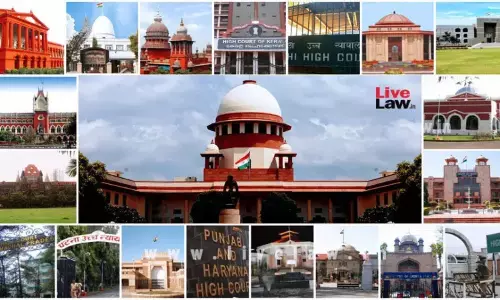
Supreme Court, High Courts and The Constitution
In the year 1946, the Constituent Assembly met for the first time at the Constitution Hall (later known as Central Hall), at New Delhi on 9th December 1946 to create a constitution for all. Legal historians referred to them as founders or architects. But they appeared to be more like artists. While the Constitution didn't start on a tabula rasa, each of the Assembly members brought to the canvass, their own unique perspective on how the Constitution should appear. This is evident ...
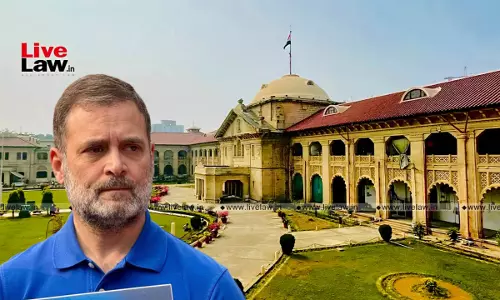
Remarks On Sikhs | Rahul Gandhi Projected Opposition's Views Abroad; Magistrate To Decide If Offences Made Out : UP Govt To Allahabad High Court
Opposing LoP Rahul Gandhi's plea concerning his alleged remarks on Sikhs, the Uttar Pradesh Government today argued before the Allahabad High Court that the magistrate must be allowed to apply his 'independent mind' to assess whether a cognizable offence is prima facie made out against him. Before a bench of Justice Sameer Jain, the state submitted that in revisional...
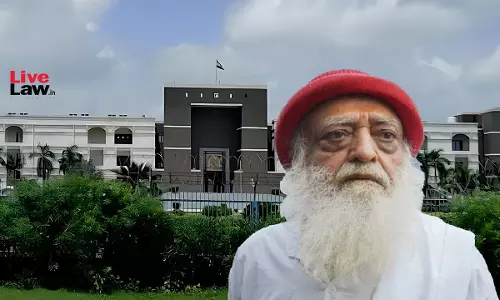
Gujarat High Court Adjourns Hearing In Asaram's Temporary Bail Extension Plea
The Gujarat High Court on Wednesday (September 3) adjourned the hearing of Asaram's plea for extension of temporary bail filed in a rape case.For context, the Rajasthan High Court had on August 27 dismissed the applicant's plea for interim bail (in a separate case) and had directed him to surrender by August 30. As per news reports, the applicant's had surrender himself before the Jodhpur...
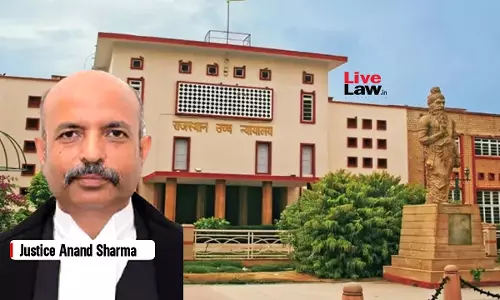
Acquittal In Criminal Case For Allegedly Submitting Forged Documents Doesn't Confer Eligibility For Service: Rajasthan High Court
The Rajasthan High Court upheld termination of the petitioner on allegations of submitting forged documents during appointment process, despite the petitioner being acquitted in a criminal case of forgery, fabrication and cheating instituted by the concerned department.Justice Anand Sharma said that just because the petitioner was acquitted, would not give rise to the presumption that...
Refund Of CVD & SAD Paid After GST Introduction Maintainable U/S 142(3) Of CGST Act: CESTAT
The Ahmedabad Bench of Customs, Excise, and Service Tax Appellate Tribunal (CESTAT) has stated that refund of CVD (Countervailing Duty) & SAD (Special Additional Duty) paid after GST introduction maintainable U/S 142(3) CGST Act. Dr. Ajaya Krishna Vishvesha (Judicial Member) was addressing the issue of whether refund claim is admissible under Section 142 (3) of CGST Act, 2017 in...
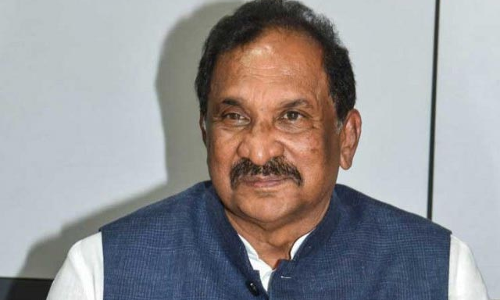
Defamation Law Insufficient To Deal With 'YouTube Menace': Karnataka HC Orally Remarks In Editor's Plea To Quash Defamation Case By Minister
The Karnataka High Court on Wednesday (September 3) orally remarked that the menace of Youtube was so much that the law of defamation was insufficient to tackle it. The court made these oral remarks while hearing a petition filed by Editor-in-Chief of Kannada Prabha–Ravi Hegde, seeking to quash the criminal defamation complaint lodged against him by Minister K J George with respect to...
NCLT Can Grant Ex-Post Facto Approval To Criminal Complaints Filed Against Former Management With Adequate Reasons: NCLAT
The National Company Law Appellate Tribunal (NCLAT) New Delhi bench of Justice Ashok Bhushan and Mr. Barun Mitra (Technical Member) has held that the Adjudicating Authority is empowered to grant ex-post facto approval of criminal complaints filed against the Ex-management by providing adequate reasons. The present appeal has been filed against an order passed by National Company...
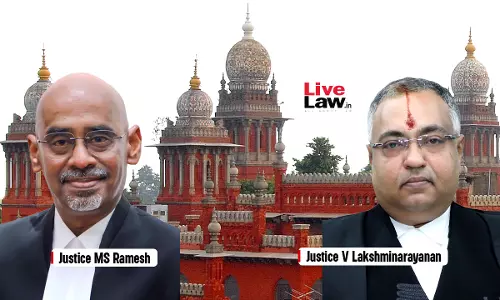
No Statutory Bar In Recognising More Than One Association: High Court Asks TN Bar Council To Consider Plea Of Nilgiris Women Lawyers Body
The Madras High Court has directed the Bar Council of Tamil Nadu and Puducherry to reconsider an application filed by the Women Lawyers Association of Nilgiris for recognition. The bench of Justice MS Ramesh and Justice V Lakshminarayanan held that the Bar Council's view, that only one association could be recognised in a district, was misconceived and contrary to the Welfare Fund...

Kerala High Court Seeks Clarity On Travancore Devaswom Board's Global Event At Sabarimala, Says Can't Use Devotees' Money
A lawyer has moved a PIL before the Kerala High Court seeking a direction restraining the State government and the Travancore Devaswom Board (TDB) from conducting an event titled 'Global Ayyappa Sangamam' in the premises of Sabarimala Shrine and Pampa from 16-20 September.According to the plea, the event is veiled as one related to devotion, tourism and secular promotion, but in reality, is...
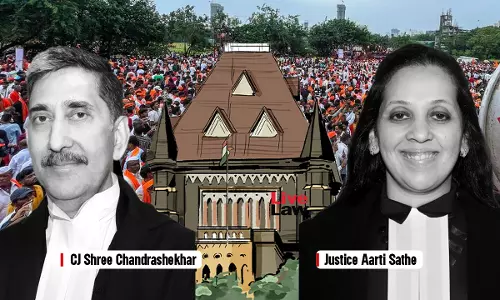
Did You Instigate Protestors Or Not? Bombay High Court Asks Manoj Jarange To Respond To Allegations Of Damage To Public Property In Mumbai
The Bombay High Court on Wednesday directed Manoj Jarange and organizers of the protest for Maratha Reservation in Mumbai to file an affidavit responding to allegations of large-scale damage caused to public properties in the city during the protest. The court said this while noting that the issue for which Jarange and his supporters protested in Mumbai had been resolved now. The development...

Special Judicial Magistrate Vacancy At Mirzapur District, Uttar Pradesh
The High Court of Judicature at Allahabad invites application for the post of Special Judicial Magistrate at Mirzapur District.Name of the Post: Special Judicial Magistrate Essential Qualification and Experience • A person shall not be qualified for appointment as a Special Judicial Magistrate unless he/she: (a) holds or has held any post under the Government; and (b) possesses the degree of law or otherwise is well experienced in relation to legal affairs to the satisfaction of the High...
Money Deposited By Borrower As Precondition For Sanction Of Guarantee Ceases To Be Corporate Debtor's Asset Upon Invocation Of Guarantees: NCLAT
The National Company Law Appellate Tribunal (NCLAT) New Delhi bench of Justice Ashok Bhushan and Mr. Barun Mitra (Technical Member) has held that Margin Money deposited by the borrower as a precondition for sanction of Bank Guarantees, being payable towards the Bank Guarantees invoked by the beneficiary, ceases to be the Corporate Debtor's asset once such guarantees are invoked....