


Arbitration
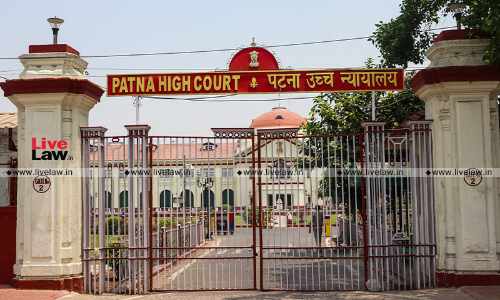
Reference Under NHAI Act Dismissed For Default, Party Should Challenge Award Under Section 34 , Not By Writ : Patna High Court
The Bench of Justice Rajiv Roy of Patna High Court has held that a writ petition is not maintainable to challenge an order of Arbitrator dismissing reference under NHAI Act for default. It held that the aggrieved party should challenge the award under Section 34 of the Act. Facts The respondent (NHAI) had acquired the land of the petitioner after classifying it as 'Developing...

Court Under Section 19 Of MSMED Act, 2006 Empowered To Allow Predeposit In Installments: Allahabad High Court
The Allahabad High Court division bench of Chief Justice Arun Bhansali and Justice Jaspreet Singh held that expression “in the manner directed by such court” in Section 19 of the Micro, Small And Medium Enterprises Development Act, 2006 gives the discretion to the court to allow the predeposit to be made, if felt necessary, in installments also. Section 19 of the...

When Plea Regarding Lack Of Jurisdiction Not Raised Before The Arbitrator, It Cannot Be Raised In Appeal: Madras High Court
The High Court of Madras has held that a plea regarding lack of jurisdiction or invalidity of the appointment of the arbitrator must be raised before the arbitrator during the arbitral proceedings. It held that if such a plea is not taken at the first instance or, the Court in appeal cannot entertain such an objection. The bench of Justices R. Subramanian and R. Sakthivel also held...
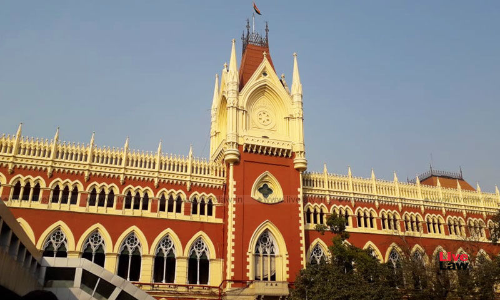
A Policy Circular Requiring Further Consent For Arbitration Cannot Be Construed As An Arbitration Clause: Calcutta High Court
The High Court of Calcutta has held that a policy circular issued by a parent company contemplating arbitration would not be an arbitration agreement if it requires fresh consent of the contractor to refer the dispute to arbitration. The bench of Justice Ravi Krishan Kapur held that when for existing contracts, the circular required consent of the contractor for reference to...

Baseless Allegations By Parties U/s 13(2), A&C Act Needlessly Tarnishes Reputation Of Arbitrators: Himachal Pradesh High Court
The Himachal Pradesh High Court single bench of Chief Justice M.S. Ramachandra Rao held that there is a tendency of the parties to impugn the motives of Arbitrators without affording them the opportunity under Section 13(2) of the Arbitration and Conciliation Act, 1996. It held that such baseless allegations and accusations could needlessly tarnish the reputation of Arbitrators...

Award By MSEF Council Cannot Be Challenged In Writ, Remedy Under Section 34 Of A&C Act Must Be Availed: Gujarat High Court
The bench of Justice Vaibhavi D. Nanavati of Gujarat High Court has held that an award passed by MSEF Council under Section 18 of the MSMED Act cannot be directly challenged in a writ petition and the aggrieved party has to challenge it under Section 34 of the A&C Act. The Court relied upon the judgment of the Supreme Court in India Glycols Ltd., Vs. Micro and Small...

Dispute Related Insolvency & Winding-Up Of Partnership Concerning Partners' Rights & Obligations Is Arbitrable: Telangana High Court Appoints Justice L. Nageswara Rao As Arbitrator
The Telangana High Court single bench of Chief Justice Alok Aradhe held that under Section 16(1) of the Arbitration and Conciliation Act, 1996 the arbitral tribunals have the power to rule on its own jurisdiction including deciding the non-arbitrability of a dispute. Further, the court held that disputes related to insolvency and winding-up of a partnership concerning partners'...
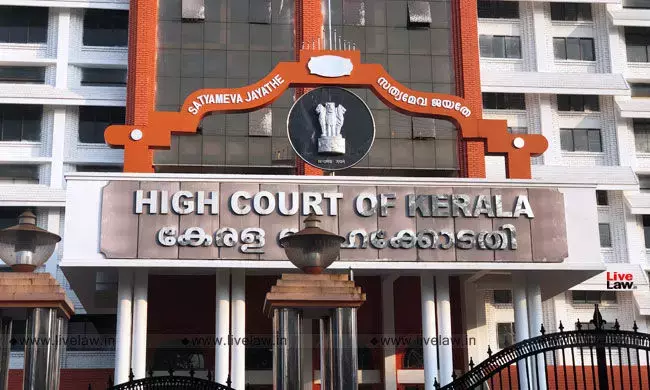
Appointment Of Arbitrator In Violation Of S. 12(5) Of A&C Act Is Void, Waiver Of This Provision Requires Explicit Written Agreement: Kerala High Court
The Kerala High Court single bench of Justice G. Girish held that the exemption provided for under the proviso of Section 12(5) of the Arbitration and Conciliation Act applies only in cases where there is a waiver explicitly agreed upon in writing by the parties involved. Section 12(5) provides that any person having a relationship with the parties, counsel, or subject matter of...
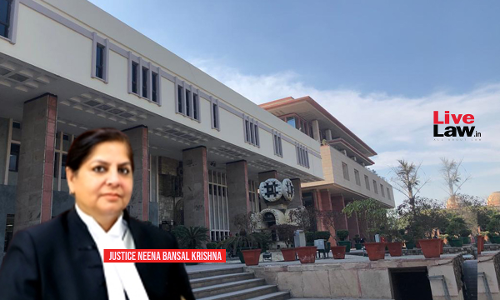
Court Has To Necessarily Extend Mandate Of The Arbitrator If No Ground For Its Substitution Is Made Out, No Need For A Separate Section 29A Application: Delhi High Court
The High Court of Delhi has held that a Court exercising powers under Sections 14 & 15 of the A&C Act can extend the mandate of the arbitrator if no ground for its substitution is made out in the application. The bench of Justice Neena Bansal Krishna held that once the Court is satisfied that there is no ground for substitution of the arbitrator, the Court can extend...

S. 9 Petition for Interim Relief in International Commercial Arbitration Not Classified as 'Arbitration Case', Must Be Filed as 'Miscellaneous Civil Case': Madhya Pradesh High Court
The Madhya Pradesh High Court division bench of Justice Sushrut Arvind Dharmadhikari and Justice Devnarayan Mishra dismissed a petition seeking interim relief under Section 9 of the Arbitration and Conciliation Act, stating it should have been filed as a 'Miscellaneous Civil Case' rather than an 'Arbitration Case' based on Chapter 2 of the Arbitration and Conciliation (Conduct of...
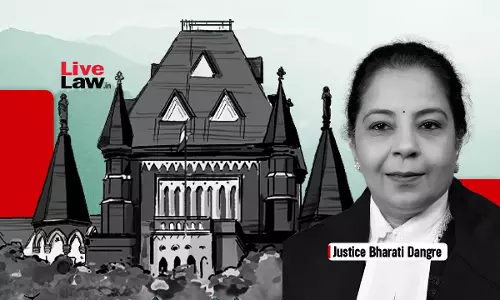
Arbitrator's Mandate Would Not Be Terminated When The Delays In Arbitral Proceedings Are Not Attributable To It: Bombay High Court
The High Court of Bombay has held that an arbitrator's mandate would not terminate when the proceedings are not completed within timelines agreed by the parties, if the delays in the conduct of the proceedings are attributable to the party seeking termination of the mandate. The bench of Justice Bharati Dangre held that generally, in an arbitration not governed by Section 29A,...
Arbitrator Failed To Deal With Material Contentions, Arbitral Award Would Not Satisfy The Requirement Of A Reasoned Award: Delhi High Court
The High Court of Delhi has held that when the arbitral tribunal fails to deal with submissions of a party on a contentious issue, the resultant award would not fulfil the requirements of a reasoned award as required under Section 31 of the A&C Act. It held that the tribunal cannot simply accept unquantified claims without assigning reasons and without dealing with the objections...