




Arbitration

Business Law Daily Round-Up: December 13, 2025
TAX GST | Non-Mentioning Vehicle Number In Part-B Of E-Way Bill Is Curable Defect: Karnataka High CourtGST Abolished Ad Tax, Doesn't Bar Municipal Licence Fees on Hoardings: Bombay High CourtDelhi High Court Flags Validity Of Reports In IGST Refund Denial On Export Of Mouth Fresheners/Pan Masala; Directs Expeditious ExaminationDelhi HC To Hear IndiGo's Plea For ₹900+ Crore IGST &...

Delay Attributable To State: Sikkim High Court Affirms Arbitral Award Of ₹5.88 Crore; Rejects State's Challenge
The High Court of Sikkim dismissed an appeal under section 37 of the Arbitration and Conciliation Act, 1996 (Arbitration Act) filed by the State of Sikkim and its Power Department challenging an arbitral award that granted escalation and interest to contractor for work executed on a 66/11KV sub-station project at Mangan. A Division Bench comprising Chief Justice Biswanath Somadder...
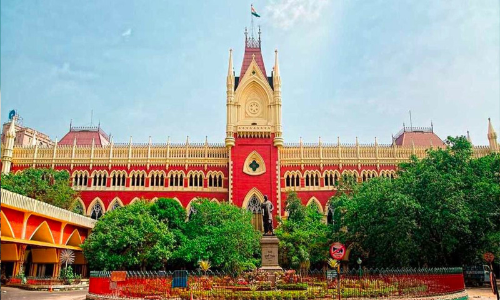
Power To Extend Mandate Of Arbitrator Appointed By HC Rests Exclusively With High Court: Calcutta High Court
The Calcutta High Court dismissed a revisional application filed by Cosmic MAPL JV challenging the Commercial Court's refusal to extend the mandate of an arbitrator under Section 29A(4) and 29A(5) of the Arbitration and Conciliation Act, 1996 (Arbitration Act). Justice Shampa Sarkar held that in cases where the referral court is the High Court under section 11, it also...
Writ Petition Filed To Bypass Pre-Deposit Requirement Under MSMED Act Is Not Maintainable: Calcutta High Court
The Calcutta High Court dismissed a petition filed under Article 227 of the Constitution challenging an award passed by the West Bengal Micro & Small Enterprises Facilitation Council (MSEFC), holding that the petition was not maintainable and was filed to evade pre-deposit requirement under section 19 of the MSMED Act, 2006. Justice Hiranmay Bhattacharyya held that the...

Business Law Daily Round-Up: December 12, 2025
TAXCustoms | Goods Cannot Be Confiscated Solely On Local Market Survey/Opinion Without Proof Of Smuggling: CESTAT AllahabadCENVAT Credit Rules | Storage Of Finished Goods Outside Factory Due To Space Constraints Covered Under Rule 2(l); Credit Cannot Be Denied: CESTATIncome Tax Disputes Before HCs Doubled In Value Over Past Four Financial Years: Govt Tells Rajya SabhaCustoms Act | Mens...

Section 36 After 2015 Amendment: Security As Price Of A Stay
It has been a decade since the Arbitration and Conciliation (Amendment) Act, 2015 (2015 Amendment) came into force and fundamentally altered arbitration in India. One of the most important changes the 2015 amendment brought in was the insertion of a new section 36, which removed automatic stays of awards upon the filing of a challenge under Section 34.Post the 2015 amendment, unconditional stays of arbitral awards are rare, especially when the award directs payment to the successful...
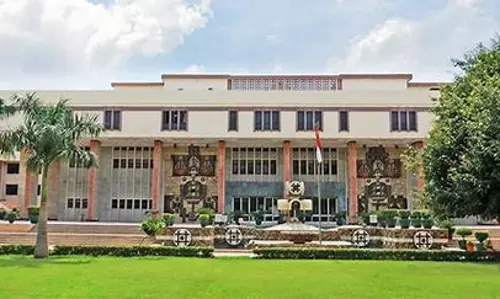
Delhi High Court Rejects DDA's Arbitration Appeal, Holds Revaluation Of Evidence Impermissible U/S 37 A&C Act
The Delhi High Court on December 11, 2025 upheld an Arbitral Award that favoured a contractor, M/s Harjinder Brothers, in a dispute over encashment of a bank guarantee and non-payment of "watch and ward" security expenses, dismissing an appeal filed by the Delhi Development Authority (DDA). The Court presided by Hon'ble Justice Chandrasekharan Sudha reaffirmed that the appellate courts are...

Question On Existence Of Arbitration Clause Cannot Be Re-agitated U/S 11 After Being Settled U/S 8 A&C Act: Delhi High Court
The Delhi High Court Bench of Justice Purushaindra Kumar Kaurav has observed that when a party invokes Section 11(6), Arbitration and Conciliation Act (“ACA”) after a judicial authority has declined a referral under Section 8, ACA, it is impermissible for the Court to appoint an arbitrator, owing to issue estoppel and also res judicata.FactsThe Petitioner i.e. JSW MG Motor India Pvt...

Business Law Daily Round-Up: December 11, 2025
TAXRailway Receipts & STTG Certificates Are Valid Documents For Availing CENVAT Credit Before 27.08.2014: CESTAT Kolkata'Did Not Apply Mind': Gujarat High Court Quashes Tax Authority's Order Refusing To Condone Delay In Filing Return Due To COVID Pandemic Customs Act | 'Prohibition Includes Restriction': CESTAT Chennai Holds S.111(d) Covers Both Complete & Partial Restricted...
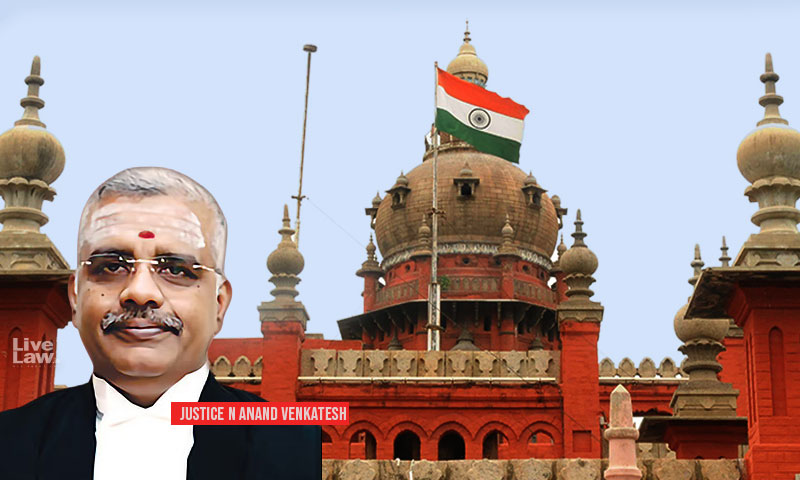
Seven-Year Delay Violates Public Policy: Madras High Court Quashes ₹51.48 Lakh Award Against TN Housing Board
The Madras High Court has set aside an arbitral award of ₹51.48 lakhs passed in favour of the contractor, M/s. N.C.C. Ltd., on the ground of an inexplicable and excessive seven-year delay in its decision.On December 8th, 2025, Justice N. Anand Venkatesh ruled that such a delay, which is "explicit and adversely reflects on the findings," renders the award in conflict with the public policy...
Award By Arbitrator Appointed By HC In International Commercial Arbitration Invalid Even If Parties Consent To Appointment: Madras HC
The Madras High Court bench of Justice N Anand Venkatesh has observed that appointment of arbitrator by a high court in case of an international commercial arbitration renders the award a nullity. Sections 4 and 11(6), Arbitration and Conciliation Act (“ACA”) are non -derogable and it is only the Apex Court which can appoint an arbitrator in an international...
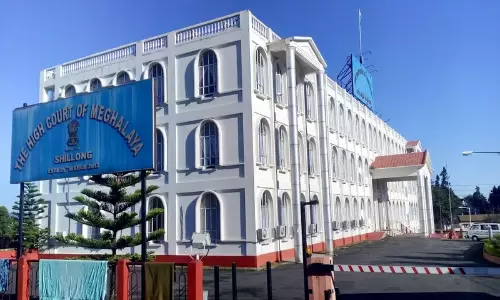
Non-Signatory, Non-Existent LLP Cannot Invoke Arbitration Protection Through Group Of Companies Doctrine: Meghalaya High Court
The Meghalaya High Court has dismissed an appeal filed by Suraksha Salvia LLP against the State Government's termination of a Public-Private Partnership (PPP) for a diagnostic centre in Shillong, ruling that a company that was not even in existence on the date of agreement execution cannot seek protection under section 9 of the Arbitration and Conciliation Act. The Division Bench comprising...