


Arbitration
ONGC V. Afcons By SC Will Not Affect Fee Already Fixed By Arbitration Tribunal : Delhi High Court
The Supreme Court in ONGC v. Afcons, 2022 LiveLaw (SC) 723 has held that maximum fees that an arbitrator can charge on a claim is Rs. 30 Lakhs. The High Court of Delhi was considering a situation wherein the fees was fixed in terms of the earlier law. The petitioner challenged the fees so fixed as violative of the Supreme Court order. The bench of Justice Neena Bansal Krishna...
‘Seat’ Of Arbitration Would Be Where Facilitation Council Under MSMED Act Conducted Arbitral Proceedings Delhi High Court
The Delhi High Court has ruled that the ‘Seat’ of arbitration would be the place where the Facilitation Council under the Micro, Small and Medium Enterprises Development Act, 2006 (MSMED Act) has conducted the arbitral proceedings as per the provisions of Section 18(4) of the MSMED Act. The bench of Justice Prateek Jalan remarked that since there was no arbitration agreement...

Saving The Claims: Excluding Time Spent In Pre-Arbitration Mechanisms From The Period Of Limitation
Pre-arbitration mechanisms refer to dispute resolution mechanism whereby the parties make an attempt to resolve their dispute or grievances without formally invoking the arbitration. It can be by way of mutual talks, mediation/conciliation, or through an internal dispute redressal body. It is now common practice for the parties to a commercial contract to provide for an attempt at amicable settlement of disputes before formally invoking the arbitration, thus, most of the contracts...
Talks Of Settlement Between Parties After Arbitrator Enters Upon Reference, Would Not Stop Limitation For Passing Award: Delhi High Court
The Delhi High Court has reiterated that since the the amended provisions of Section 29A (1) of the Arbitration and Conciliation Act, 1996 (A&C Act) are essentially procedural in character, they would apply even to arbitrations pending on the date the amended provision was brought into force. Section 29A (1) of A&C Act, as amended by the 2019 Amendment Act, w.e.f....
A Final Relief Cannot Be Granted Under Section 9 Of Arbitration And Conciliation Act, 1996: Delhi High Court
The High Court of Delhi has held that the Court cannot grant a relief which is final in nature in an application under Section 9 of the A&C Act. The bench of Justice Chandra Dhari Singh held that relief contemplated under Section 9 of the Act is only interim in nature I.e., ‘in the intervening time’ or ‘provisional’ and it has to be in aid of the enforcement of the...
Common Statement Of Claims For Separate But Interlinked Agreements, Can Be Filed Before Arbitral Tribunal: Delhi High Court
The Delhi High Court has upheld the arbitral reference made to a common Sole Arbitrator as well as a common State of Claims filed before the Arbitral Tribunal, with respect to a dispute arising under two separate agreements, considering the fact that the agreements were closely interlinked and contained identical Arbitration Clauses, stipulating same conditions. The bench...
No-Claim Certificate In Pre-Printed Form And Pre- Condition To The Release Of Payment Amounts To Coercion : Delhi High Court
The High Court of Delhi has held that the a no-claim certificate is given under coercion if it was in a pre-printed form and a pre-condition to the release of payment under the final bill. The bench of Justices Vibhu Bakhru and Amit Mahajan held dispute between the parties cannot be said to be settled by accord and satisfaction on account of no-claim certificate given by the...
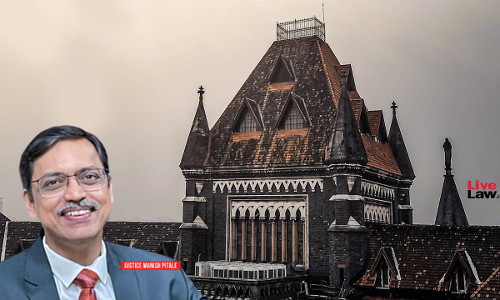
Court Not Powerless To Appoint Appropriate Arbitral Tribunal, Even If Party Forfeits Its Right Under Arbitration Clause: Bombay High Court
The Bombay High Court has ruled that even if a party’s right to appoint its nominee in the Arbitral Tribunal as per the arbitration clause, is forfeited because it failed to exercise its right within the statutory period after receiving the notice invoking arbitration, it would not render the Court powerless to appoint an appropriate Arbitral Tribunal, after considering the nature of...

Arbitration Cases Weekly Round-Up: 22 To 28 January, 2023
Bombay High Court: Award Debtor Failed To Take Recourse To S. 26 of Arbitration Act; Cannot Challenge Award Claiming Expert Was Not Examined: Bombay High Court Case Title: Zenobia Poonawala versus Rustom Ginwalla & Ors. The Bombay High Court has ruled that if an award debtor has failed to take recourse to the provisions of Section 26 of the Arbitration and Conciliation Act,...
Award Debtor Failed To Take Recourse To S. 26 of Arbitration Act; Cannot Challenge Award Claiming Expert Was Not Examined: Bombay High Court
The Bombay High Court has ruled that if an award debtor has failed to take recourse to the provisions of Section 26 of the Arbitration and Conciliation Act, 1996 (A&C Act), it cannot seek to set aside the award on the ground that the expert, whose report was relied upon by the arbitrator, was not examined by the opposite party. The bench of Justice Manish Pitale was dealing with...
Objections Under Section 47 Of CPC Cannot Be Considered In An Enforcement Petition Under Section 36 Of The A&C Act: Delhi High Court
The High Court of Delhi has held that objections available under Section 47 of CPC cannot be considered by a Court at the time of enforcement of an arbitration award under Section 36 of the A&C Act. The bench of Justice Vashwant Varma held though under the Arbitration Act, 1940, the Arbitral Award was required to be made a rule of the Court and a decree but Section 36 of...
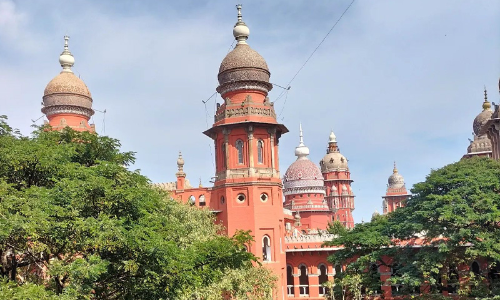
Non - Signatory Can Be Referred To Arbitration Under ‘Doctrine Of Alter Ego’: Madras High Court
The Madras High Court has ruled that non-signatories to arbitration agreement can be referred to arbitration by invoking the ‘doctrine of alter ego’ only in exceptional cases where there is convincing evidence that the non-signatory is the ‘alter ego’ of the signatory. The bench of Justice Senthilkumar Ramamoorthy remarked that the doctrine of alter ego is applied in...