


Arbitration

Arbitration Cases Weekly Round-Up: 27 November To 3 December, 2022
Bombay High Court: Participation In Arbitral Proceedings, Does Not Disentitle Party To Challenge Award On Ground Of Unilateral Appointment Of Arbitrator: Bombay High Court Case Title: Naresh Kanayalal Rajwani & Ors. versus Kotak Mahindra Bank Limited & Anr. The Bombay High Court has ruled that merely because a party participated in the arbitration proceedings, it is...
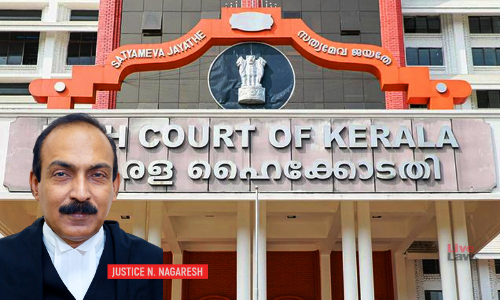
Arbitration Barred In Respect Of Matters Within Exclusive Jurisdiction Of TDSAT Under TRAI Act: Kerala High Court
The Kerala High Court recently held that arbitration under the Arbitration and Conciliation Act, 1996 is barred in respect of matters which are within the exclusive jurisdiction of Telecom Disputes Settlement and Appellate Tribunal (TDSAT) under the Telecom Regulatory Authority of India Act, 1997 (TRAI Act).Justice N. Nagaresh observed that TRAI Act is a special law and would prevail over...
Section 9 Of The A&C Act Is A Provision In Aid Of The Arbitration, Applies To Foreign Seated Arbitration Also: Calcutta High Court Reiterates
The High Court of Calcutta has held that Section 9 of the A&C Act that provides for interim relief by the Court applies to foreign seated arbitration as well. The bench of Justice Shekhar B. Saraf held that Section 9 is a provision that is in aid of the arbitration proceedings in contrast to other provisions of Part-I that relates to the conduct of the arbitration proceedings and...
Fresh Notice Under Section 21 Not Required To Be Issued For Appointment Of Substitute Arbitrator: Jharkhand High Court
The Jharkhand High Court has ruled that a party is not required to make a fresh request for appointment of substitute arbitrator by issuing a notice under Section 21 of the Arbitration and Conciliation Act, 1996 (A&C Act), if notice under Section 21 was issued for appointment of the arbitrator sought to be substituted. The bench of Justice Sujit Narayan Prasad held that once...
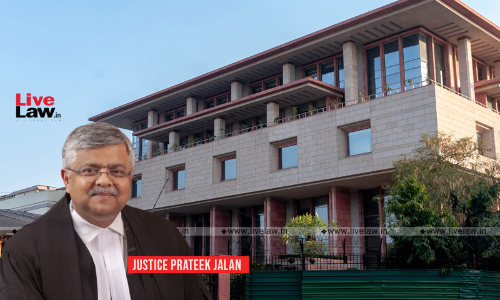
Requirement Of Notice Of Arbitration Is Not A Mere Technicality: Delhi High Court
The High Court of Delhi has held that a notice of arbitration is sine qua non for commencing an arbitral proceeding and invalidity of invocation goes to the very root of the matter and hits the jurisdiction of the Court to entertain applications arising out of the arbitration proceedings. The bench of Justice Prateek Jalan held that requirement of a notice of arbitration is not a...

Findings On Limitation, During Section 16 Proceedings, Can't Be Challenged Under Sec. 34 Of A&C Act: Gujarat High Court
The Gujarat High Court has ruled that the findings of the Arbitrator relating to the issue of limitation, arrived at while dealing with an application filed under Section 16 of the Arbitration and Conciliation Act, 1996 (A&C Act), challenging the jurisdiction of the Arbitrator on the ground that the claims raised by the claimant were barred by limitation, do not constitute an...

Arbitration Cases Monthly Round-Up: November 2022
Supreme Court: Issue Of Arbitrability Should Be Left To Arbitrator Unless On The Face It Is Found That Dispute Is Non- Arbitrable: Supreme Court Case Title: VGP Marine Kingdom Pvt Ltd versus Kay Ellen Arnold The Supreme Court reiterated that while considering application under Section 11(6) of the Arbitration and Conciliation Act, the dispute with respect to...

Participation In Arbitral Proceedings, Does Not Disentitle Party To Challenge Award On Ground Of Unilateral Appointment Of Arbitrator: Bombay High Court
The Bombay High Court has ruled that merely because a party participated in the arbitration proceedings, it is not disentitled from challenging the arbitral award on the ground that the arbitration proceedings were vitiated due to the unilateral appointment of the Arbitrator by the opposite party, falling foul of Section 12(5) read with the Seventh Schedule of the Arbitration...
Time Spent On Application Under Section 8 Of A&C Act, Not Excludable For Computation Of Limitation For Counter Claim: Delhi High Court
The Delhi High Court has ruled that in a suit filed by a party, the time spent by the opposite party in pursuing its application under Section 8 of the Arbitration and Conciliation Act, 1996 (A&C Act), cannot be excluded for the purpose of computation of the limitation period for filing the counter-claims by the opposite party before the Arbitral Tribunal. The bench of Justices...

Arbitrator's Fee ; An Analysis Of Indian And International Laws
Arbitration, Mediation and Conciliationare alternate dispute resolution mechanisms which are preferred over litigation for they are cost effective and time saving. Keeping in mind the high pendency of cases, arbitration and mediation are encouraged by the judiciary as it shares the burden of the courts in winding up the matter in a time-bound manner. The bench of the Tribunal comprises of an officer of the court who is well versed with the domain knowledge. The designated arbitrators have...

Arbitration Clause In An Agreement Can't Be Invoked For Another Agreement, Operating Independently: Bombay High Court
The Bombay High Court has ruled that mere reference to an Agreement containing an arbitration clause, in a subsequent Agreement, will not bring about a consequence envisaged under Section 7(5) of the Arbitration & Conciliation Act, 1996 (A&C Act), to the effect that the arbitration agreement would be incorporated into the subsequent Agreement. The Court added that...
Arbitration Cases Weekly Round-Up: 20 November To 26 November, 2022
Delhi High Court: Rights Under An Agreement Are Superseded By A Subsequent One? Arbitrator To Decide: Delhi High Court Case Title: PVR Limited versus Imperia Wishfield Private Limited The Delhi High Court has ruled that the arbitration clause relates to the resolution of disputes between the parties and not the performance of the contract and thus, the...