


Arbitration

Section 29A Of The A&C Act Applies Prospectively Does Not Apply To Arbitration That Commenced Before The 2015 Amendment: Bombay High Court
The High Court of Bombay has held that Section 29A of the A&C Act that provides a timeline of 12 months for passing an arbitral award would not apply to arbitration that commenced before the 2015 Amendment to the Act. The Bench of Justice G.S. Kulkarni held that provisions of Section 29A of the A&C Act, which was incorporated into the principal act via the 2015 Amendment...
Just Because Interlocutory Order Of Arbitral Tribunal Is Not Challengeable Under Section 34 Of A&C Act, Remedy Is Not Writ Under Article 226 And 227: Delhi High Court
The Delhi High Court has ruled that merely because an interlocutory order passed by the Arbitral Tribunal is not amenable to challenge under Section 34 of the Arbitration and Conciliation Act, 1996 (A&C Act), the remedy under Article 226 and Article 227 of the Constitution of India would not be available against the said order. The Single Bench of Justice C. Hari Shankar held that...
When The Main Relief Is Rejected By The Arbitral Tribunal, Which Included Interim Relief ,The Interim Relief Granted In Isolation Is Incorrect: Delhi High Court
The Delhi High Court has ruled that when the main relief claimed by the claimant has been rejected by the Arbitral Tribunal, the Arbitral Tribunal cannot award an interim or ancillary amount, which is included under the same claim, in favour of the claimant. The Single Bench of Justice Sanjeev Narula held that when the main relief is rejected by the Arbitral Tribunal, axiomatically,...
Sections 15 And 16 Of The MSMED Act Are Mandatory Provisions, Arbitrator Must Assign Reasons For Not Awarding Compound Interest: Delhi High Court
The High Court of Delhi has affirmed the order of the lower Court by which it had set aside an arbitral award for not awarding interest in terms of Sections 15 and 16 which are mandatory provisions of the MSMED Act. The bench of Justice Vibhu Bakhru and Justice Amit Mahajan held that once the arbitrator has held that MSMED Act applies to the dispute between the parties, it must...

Arbitration Clause Can Be Invoked Against Disputes Under Another Agreement, If Both Agreements Form One Composite Transaction: Karnataka High Court
The Karnataka High Court has ruled that a party can invoke the Arbitration Clause contained in an agreement with respect to the disputes arising with a third party under another agreement, if both the agreements refer to each other and form one composite transaction. The Single Bench of Justice Suraj Govindaraj held that where one of the necessary parties was not issued a legal notice,...

Arbitration Cases Weekly Round-Up: 17 July To 23 July, 2022
Supreme Court: There Cannot Be Two Arbitration Proceedings With Respect To Same Contract/ Transaction: Supreme Court Case Title: M/S Tantia Constructions Limited v. Union Of India Citation: 2022 LiveLaw (SC) 624 Observing that it is of the "firm opinion that there cannot be two arbitration proceedings with respect to the same contract/transaction", the Supreme Court...
There Cannot Be Two Arbitration Proceedings With Respect To Same Contract/Transaction: Supreme Court
Observing that it is of the "firm opinion that there cannot be two arbitration proceedings with respect to the same contract/transaction", the Supreme Court stated that when a dispute has earlier been referred to arbitration and an award was passed on the claims made, then it is "rightful" to refuse to refer to arbitration- in exercise of Section 11(6) of the 1996 Arbitration Act- a...

Constitution Of Arbitral Tribunal Does Not Restrict Application For Interim Relief If "Entertained" By The Court : Karnataka High Court Reiterates The Law
The Karnataka High Court has ruled that the restriction contained under Section 9(3) of the Arbitration and Conciliation Act, 1996 (A&C Act) would not apply once an application under Section 9(1) for interim measures has been "entertained" by the Court before the appointment of the arbitrator.The Single Bench of Justice Sachin Shankar Magadum observed that, as per the law laid down...
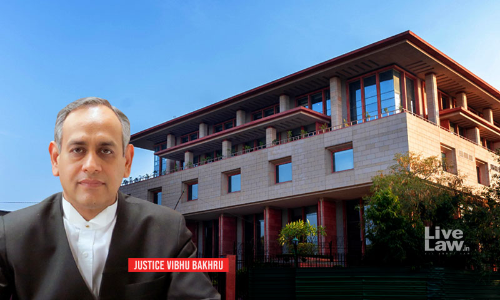
The Arbitrator Cannot Award A Lumpsum Amount As Against Specified Claims Without Adjudicating The Claims: Delhi High Court
The High Court of Delhi has held that an award wherein a lumpsum amount is awarded against the specified claims without adjudication of the claims is unsustainable. The Bench of Justice Vibhu Bakhru held that an arbitral tribunal cannot award a lumpsum amount against specified claims of a party merely to meet the ends of justice. The Court also held that an application under...
No Claim Certificate Is Invalid If It Is A Pre-Condition To The Release Of Final Payment: Calcutta High Court
The Calcutta High Court has held that a discharge voucher or No Claim Certificate would be invalid on account of 'Coercion' if it is submitted as a pre-condition to the release of final payment. The Bench of Justice Krishna Rao held that a situation where the employer denies the payment of dues to the contractor unless it submits an undertaking to the employer not to make any...

Similar Matters Pending Before The Facilitation Council Under The MSME Act; Parties Can Be Referred To Arbitration: Jharkhand High Court
The Jharkhand High Court has ruled that merely because one of the parties has approached the Facilitation Council under the Micro, Small and Medium Enterprises Development Act, 2006 (MSME Act) for adjudication of a similar dispute, the application for appointment of arbitrator cannot be held to be not maintainable. The Single Bench of Justice Sujit Narayan Prasad held that in view of...
A Party Can Withdraw Its Consent For Reference To Arbitration Under Section 89 Of The CPC Anytime Before The Court Acts Upon Such Consent: Gujarat High Court
The Gujarat High Court has held that a party can withdraw its consent for reference to arbitration under Section 89 of CPC anytime before the court has acted upon such a reference. The Bench of Justice Umesh A. Trivedi was dealing with a Special Civil Application under Article 227 against an order of the Civil Judge whereby the application jointly given by the parties to the...