


Arbitration
Arbitration Cases Weekly Round-Up: 8th May to 14th May, 2022
Supreme Court High Court Cannot Terminate The Mandate Of Arbitrator In Application Under Section 11(6) Of Arbitration Act : Supreme Court Case Title: Swadesh Kumar Agarwal versus Dinesh Kumar Agarwal Case Citation: 2022 LiveLaw (SC) 454 The Supreme Court has observed that a dispute/controversy on the mandate of the arbitrator being terminated on the ground mentioned in...
Mere Pendency Of An Insolvency Petition Is Not A Bar To The Appointment Of The Arbitrator: Delhi High Court
The High Court of Delhi has held that the mere pendency of an insolvency petition under Section 9 of the IBC is not a bar to the appointment of an arbitrator. The Single Bench of Justice Sanjeev Sachdeva has held that merely because an insolvency petition is pending, it cannot be an embargo on the power of the Court to decide arbitration applications. It is only when...
Condonation Of Delay | S.5 Limitation Act Not Applicable To Proceedings U/S 34 Arbitration & Conciliation Act: Rajasthan High Court
The Rajasthan High Court has observed that the provision of Section 5 of the Indian Limitation Act does not apply to the proceedings contained under Section 34 of the Arbitration and Conciliation Act, 1996.Justice Anoop Kumar Dhand, while dismissing an appeal preferred by the State government observed,"In view of the discussions made above, this Court of the opinion that the application...

Party Failing To Raise The Issue Of Jurisdiction At Section 11 Notice Stage Or During The Arbitral Proceedings, Ground Not Available Under Section 34: Gujarat High Court
The Gujarat High Court has ruled that the issue of jurisdiction of the Arbitrator ought to be raised at the first available opportunity, i.e., when the notice under Section 11 of the Arbitration and Conciliation Act, 1996 (A&C Act) is served for appointment of Arbitrator. The Single Bench of Justice A.G. Uraizee rejected the contention that the issue of jurisdiction being a...
High Court Cannot Terminate The Mandate Of Arbitrator In Application Under Section 11(6) Of Arbitration Act. : Supreme Court
The Supreme Court observed that a dispute/controversy on the mandate of the arbitrator being terminated on the ground mentioned in section 14(1)(a) of the Arbitration and Conciliation Act cannot be decided on an application filed under section 11(6) of the Act.Such a dispute has to be raised before the "court", defined under section 2(e) of the Act.In this case, the Madhya Pradesh...
Right To First Refusal Cannot Be Exercised After Making A Counter-Offer To The Seller: Delhi High Court
The High Court of Delhi has held that a party cannot demand its 'Right to First Refusal' after making a counter-offer to the seller. The Single Bench of Justice Anup Jairam Bhambhani has held that when the party that has been given the right to first refusal (RoFR) makes a counter-offer, the seller becomes entitled to sell the subject goods to the third parties. The Court...
Liquidated Damages Can't Be Imposed When The Engineer-In-Charge Holds That The Cause Of Delay Is Explained: Delhi High Court
The High Court of Delhi has held that liquidated damages can't be imposed when the Engineer-in-Charge holds that the cause of delay is explained. The Single Bench of Justice Vibhu Bakhru held that when the Engineer-in-Charge was entrusted with the task of examining the causes of delay, and it had analysed and accepted the justification provided by the contractor and...
An Unreasoned Arbitration Award Is Against The Public Policy: Orissa High Court
The High Court of Orissa has held that an unreasoned arbitral award would be against the public policy. The Court set aside the award as the arbitrator failed to give any reasons for reaching the conclusion in the award. The Single Bench of Justice Arindam Sinha has held that an award bereft of reasons, goes against the mandate of the Act and therefore is against the public...
Supplementary Agreement Rescinding Arbitration Clause; Whether Agreement Contrary To Law, To Be Decided By Arbitrator: Delhi High Court
The Delhi High Court has held that whether a supplementary agreement between the parties, rescinding the arbitration clause contained in the principal contract, is contrary to law or not in view of taking away the right of a party to invoke arbitration, is required to be decided by the arbitrator himself. The Single Bench of Justice Sanjeev Sachdeva ruled that the disputes raised by...
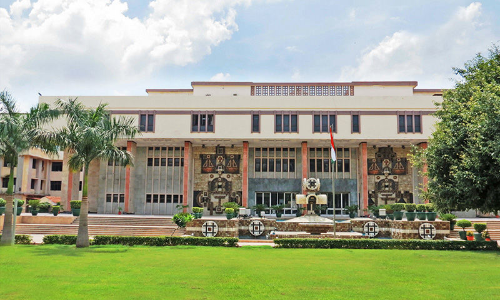
Mere Filing Of Written Statement Qua An Independent Transaction Would Not Amount To Waiver Of Right To Invoke Arbitration: Delhi High Court
The High Court of Delhi has held that a party cannot be deemed to have waived its right to invoke arbitration merely because it has filed a written statement in respect of disputes that are not covered under the agreement. The Single Bench of Justice Sanjeev Sachdeva held that a suit in respect of a dispute that is not governed by the arbitration agreement is not an impediment to...
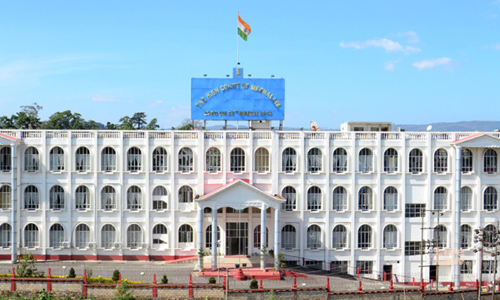
Arbitral Tribunal Framing An Issue Which Was Already Decided During Interim Award, Writ Maintainable :Meghalaya High Court
The High Court of Meghalaya has held that a writ petition is maintainable against an order of the arbitral tribunal framing issue in respect of a claim that has finally been decided in the interim award. The Single Bench of Justice H.S. Thangkhiew has held that an arbitrator would be acting without jurisdiction if it frames an issue qua a claim that has already been decided in...
Refusal To Delete Name Of A Party From The Arbitral Proceedings Is Not The Rarest Of Rare Case To Invoke Writ Jurisdiction : Orissa HC
The High Court of Orrisa has held that a writ petition is not maintainable against an order of the arbitral tribunal refusing to delete the name of a party from the arbitration. The Single Bench of Justice Arindam Sinha has held that to invoke the writ jurisdiction in an arbitration matter, the aggrieved party has to show that it is a 'rare of the rarest cases' and the interference...