




Arbitration
Words Are Not Enough: Every Clause Containing 'Arbitration' Is Not An Arbitration Agreement
Commercial Contracts are the reflection of the trust parties place in a legal framework to protect their interests. When this trust of parties breaks down, among the many clauses of the commercial agreement ('agreement'), the dispute resolution clause occupies a position of singular importance. In recent times, Arbitration has emerged as one of the most preferred mechanisms owing to its flexibility, confidentiality, procedural efficiency, and party-driven nature. The result has been the...

Arbitration | Article 227 Can't Be Ordinarily Invoked To Challenge Rejection Of S.16 Application By Arbitral Tribunal : Supreme Court
The Supreme Court on Tuesday (July 14) held that it is impermissible for the High Court to ordinarily interfere with, while exercising its supervisory jurisdiction, the decision of an Arbitral Tribunal rejecting the application under Section 16 of the Arbitration and Conciliation Act, challenging the jurisdiction of the tribunal.“…we hold that the High Court was not justified in...

Institution-Routed, Not Institution-Neutral: Arbitration's Quiet Return To Unilateral Control
There is a deeply troubling pattern emerging in India, particularly in the sphere of financial services arbitration, which, after appearing in several such matters over the past few months, I can no longer remain silent about.For nearly a decade, Indian arbitration jurisprudence has steadily evolved toward one foundational principle: a party interested in the outcome of a dispute cannot...
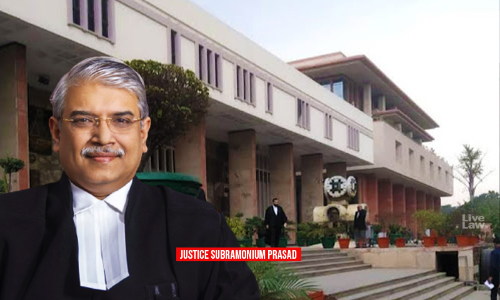
Whether Time Spent In Mediation Be Excluded While Computing Limitation For Filing Written Statement? Delhi High Court Larger Bench To Decide
The Delhi High Court has referred to a larger Bench the question of whether the time spent by parties in mediation should be excluded while computing the limitation period prescribed for filing a written statement or replication under the Delhi High Court (Original Side) Rules, 2018. [2026 LiveLaw (Del) 612]Justice Subramonium Prasad noted the existence of conflicting judicial opinions on...
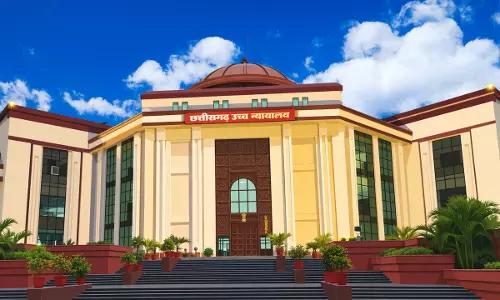
MSME Council Award Passed Without Terminating Conciliation & Following Arbitral Procedure Is A Nullity: Chhattisgarh High Court
The Chhattisgarh High Court has held that an order passed by a Micro and Small Enterprises Facilitation Council (MSEFC) without formally terminating conciliation proceedings and without conducting arbitration in accordance with the Arbitration and Conciliation Act, 1996, is a nullity in the eyes of law. Such an order can be challenged even at the execution stage as a...

Losing Side Finally Gets To Fight Back: How Supreme Court Rewrote Rules On Interim Relief In Arbitration
Imagine you have just lost arbitration. The award sits on the table, and the other side is already moving to enforce it. You believe the award is wrong – perhaps it was procured through fraud, or perhaps the arbitrator overlooked a decisive point of law. While you challenge the award under Section 34 of the Arbitration and Conciliation Act, 1996, a process that can take years, the...
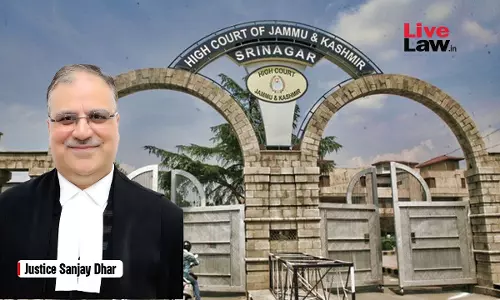
Plea Of Private Partition Pursuant To Arbitral Award Raises Triable Issue; Plaint Cannot Be Rejected Under Order VII Rule 11 CPC: J&K&L High Court
The High Court of Jammu & Kashmir and Ladakh has held that where a party specifically pleads that a property was partitioned privately pursuant to an arbitral award, the question whether such partition actually took place becomes a triable issue and cannot be decided while considering an application for rejection of plaint under Order VII Rule 11 of the Code of Civil Procedure.The Court...
Arbitration | Limitation For S. 34 Appeal Runs From Disposal Of S.33 Application Whether Allowed Or Rejected: Supreme Court
The Supreme Court on Tuesday (June 2) reiterated that the limitation period under Section 34(3) of the Act for filing an application seeking setting aside of an arbitral award would begin from the date on which a Section 33 application is disposed of. “Once proceedings under Section 33 are initiated and entertained by the Arbitral Tribunal, the award remains subject to the...
Courts Have Sometimes Failed Arbitration In India; Judicial Interference Often A Cure Without A Disease: Supreme Court
Uniformity in dispute resolution enhances ease of doing business and attract foreign investment, the Court said.

1940 Arbitration Act | Award In Arbitration Invoked During Pending Civil Suit Without Court's Leave Not Enforceable : Supreme Court
The Supreme Court has observed that during the pendency of the civil suit, an arbitral award secured by some parties under the 1940 Arbitration Act cannot be used to close the civil proceedings if the arbitration was initiated without the leave of the Court. A bench of Justice J.K. Maheshwari and Justice Atul S. Chandurkar heard the case where, during the pendency of a civil suit filed by...
Arbitration | Writ Jurisdiction Can't Be Invoked To Challenge Arbitrator's Decision Under Section 16 : Supreme Court
The Supreme Court has held that while exercising its Writ Jurisdiction, it is impermissible for the High Courts to interfere with the arbitral tribunal's order passed under Section 16 of the Arbitration & Conciliation Act, 1996. “It was not open for the learned Single Judge in exercise of writ jurisdiction to enter into the merits of the dispute while adjudicating the challenge to an...
S.33(1)(a) Arbitration Act Only To Correct Clerical Errors In Award; Can't Be Invoked To Change Nature Of Interest : Supreme Court
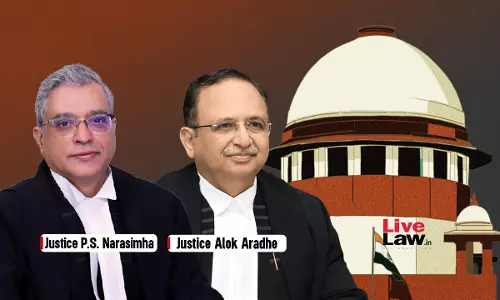
Holding that substance of an arbitral award cannot be altered under the guise of correcting errors, the Supreme Court has ruled that changing the nature of interest awarded from simple interest to compound interest amounts to a substantive modification that falls outside the limited scope of Section 33(1)(a) of the Arbitration and Conciliation Act, 1996.A bench of Justice PS Narasimha and...