


Arbitration
If Remedy For Cause Of Action Falls Within Scope Of Arbitration Agreement, Counter Party Cannot Be Compelled To Defend It In A Suit: Delhi HC
The Delhi High Court Bench of Acting Chief Justice Vibhu Bakhru and Justice Tushar Rao Gedela held that the scope of examination in an application under Section 8 of the Act is limited to prima facie examining the validity and existence of the arbitration agreement. Once it is accepted that a valid arbitration agreement exists between the parties, the court is necessarily required...
![Arbitration Weekly Round Up [9th December To 15th December 2024]](https://www.livelaw.in/h-upload/2024/05/24/500x300_541379-weekly-round-up-arbitration.webp "Arbitration Weekly Round Up [9th December To 15th December 2024]")
Arbitration Weekly Round Up [9th December To 15th December 2024]
Supreme Court S. 14 Limitation Act Applicable To Proceedings Under Arbitration & Conciliation Act : Supreme Court Case : Kirpal Singh Vs Government Of India Citation : 2024 LiveLaw (SC) 970 The Supreme Court has held that Section 14 of the Limitation Act, 1963 is applicable to the Arbitration and Conciliation Act, 1996. Section 14 of the Limitation Act provides...
Arbitration Can't Be 'Optional' When Agreement Provides Arbitration Clause : Supreme Court
The Supreme Court held that there cannot be an 'optional' arbitration, where parties are required to mutually agree to invoke the arbitration clause.Setting aside the MP High Court's decision, the Court said that there is nothing like 'optional arbitration' that could be invoked after both parties mutually agree to invoke the arbitration clause. According to the Court, arbitration is...
Findings Of Arbitrator U/S 34 Of Arbitration Act Cannot Be Scrutinised As If Court Is Sitting In Appeal: Chhattisgarh High Court
The Chhattisgarh High Court bench of Justices Smt. Rajani Dubey and Shri Bibhu Datta Guru has held that findings of the Arbitrator cannot be scrutinised under section 34 of the Arbitration Act as if the court is sitting in appeal. Brief Facts The claimant is a partnership firm and registered contractor with South Eastern Coalfields Ltd. (SECL). The claimant was awarded a contract...

Dispute Related To Infringement Of Copyright Is Arbitrable, Arbitrator Can Be Appointed U/S 11 Of Arbitration Act: Orissa High Court
The Orissa High Court bench of Chief Justice Chakradhari Sharan Singh has held that dispute related to infringement of copyright is arbitrable for which arbitrator can be appointed by the court under section 11 of the Arbitration Act. Brief Facts The present application has been filed under section 11(6) of the Arbitration Act, seeking appointment of an Arbitrator to resolve...

On Recusal Of Arbitrator Appointed By Court U/S 11 Of Arbitration Act, Substitute Arbitrator Can Be Appointed U/S 15(2): Uttarakhand HC
The Uttarakhand High Court bench of Acting Chief Justice Manoj Kumar Tiwari has held that on recusal of previously appointed Arbitrator appointed by the court under section 11 of the Arbitration Act , a substitute Arbitrator can be appointed by the court under section 15(2) of the Arbitration Act. Brief Facts The present application under section 11 read with section 15 of...
Specific Exclusion Clause In Agreement Renders Dispute Non-Arbitrable: Punjab & Haryana High Court
The Punjab and Haryana High Court bench of Justice Jagmohan Bansal has held that when there is a specific exclusion clause in the agreement, the matter shall not be referred to Arbitration. Brief Facts The applicant filed this application under section 11 of the Arbitration Act, seeking appointment of the Arbitrator. The present application was filed on the basis of an...
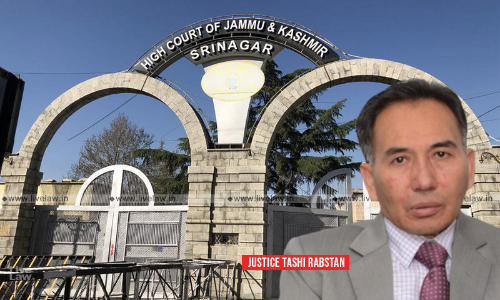
Appointment Of Managing Director/Chairman Of Party As Arbitrator Is Prohibited U/S 12(5) Of Arbitration Act: J&K High Court
The Jammu & Kashmir and Ladakh High Court bench of Chief Justice Tashi Rabstan has held that managing director or chairman of a party to the arbitration agreement cannot be appointed as Arbitrator in light of section 12(5) read with Seventh Schedule of the Arbitration Act. Brief Facts The petitioner has filed this application under section 11 of the Arbitration Act,...
Error In Order Passed By Court In Arbitration Proceeding Can Be Corrected Under Sections 152, 153 Of CPC: Delhi High Court
The Delhi High Court bench of Justice Chandra Dhari Singh has held that any error in an order passed by the court in the Arbitration Proceedings can be corrected under sections 152 and 153 of the CPC provided prejudice is not caused to the other party. Brief Facts The applicant under section 11 of the Arbitration Act filed an application seeking appointment of an Arbitrator...
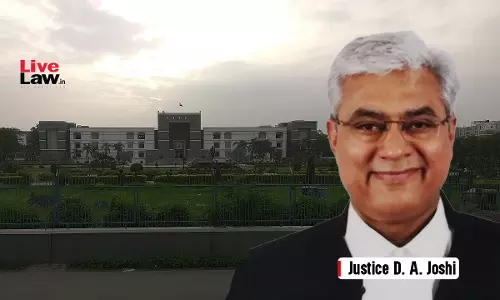
Mere Existence Of Arbitration Clause In Agreement Does Not Automatically Bar Jurisdiction Of Civil Court: Gujarat High Court
The Gujarat High Court bench of Justice Divyesh A. Joshi has held that mere existence of arbitration clause in the agreement does not bar jurisdiction of the civil court automatically. Brief Facts This Civil Revision Application under section 115 of the CPC has been filed against an order passed by the Additional Senior Civil Judge, Ahmedabad by which an application under section...
High Court Under Article 226/227 Can Examine Validity Of Interlocutory Orders Passed By Arbitrator: Bombay High Court
The Bombay High Court bench of Justices Shailesh P. Brahme and S.G. Mehare has held that the jurisdiction of the High Court under Article 226/227 of the Constitution is not excluded from examining the validity of the interlocutory orders passed by the Arbitrator. Brief Facts The respondent was selected through tender process by the petitioner for constructing building for ladies...
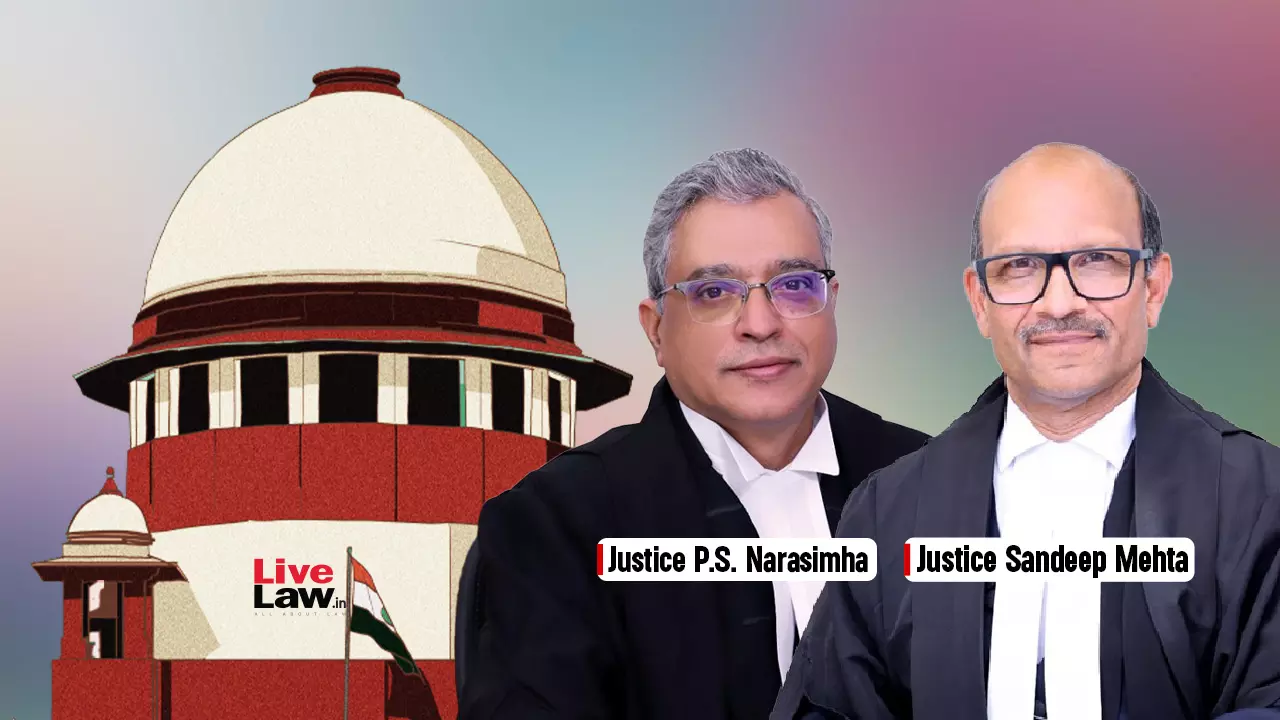
Disputes Falling Exclusively Within Jurisdiction Of Statutory Authorities Aren't Arbitrable : Supreme Court Reiterates
The Supreme Court recently reaffirmed that disputes falling exclusively within the jurisdiction of statutory authorities are not arbitrable.While holding so, the bench comprising Justices PS Narasimha and Sandeep Mehta ruled that the dispute related to wages and termination of an employee were non-arbitrable and would be exclusively dealt with by the statutory authorities established under...