


Arbitration

'Reasoned Order' Passed By Arbitrator/District Court Cannot Be Interfered With U/S 37 Of A&C Act: Karnataka High Court
The Karnataka High Court bench of Justice H.P. Sandesh has reiterated that when a reasoned order has been passed by the Arbitrator, the same cannot be interfered with. In the case, the court found that the District Court had properly considered sections 73 and 74 of the Indian Contract Act, as well as relevant provisions of the Sale of Goods Act in modifying the arbitral award. The...
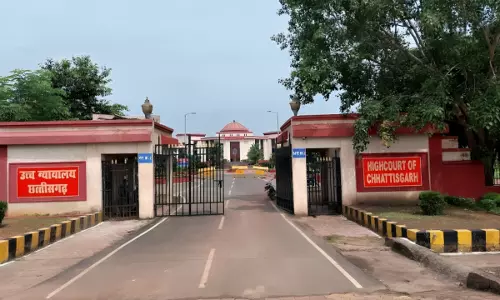
Court At Designated Seat Would Have Exclusive Jurisdiction To Entertain Applications Arising Out Of Arbitration: Chhattisgarh HC
The Chhattisgarh High Court bench of Justices Shri Sanjay K. Agrawal and Shri Radhakishan Agrawal has held that court having supervisory jurisdiction over seat designated in the Arbitration Agreement would have exclusive jurisdiction to entertain all applications arising out of the arbitration proceedings. Brief Facts The present appeal has been filed under section 37 of...
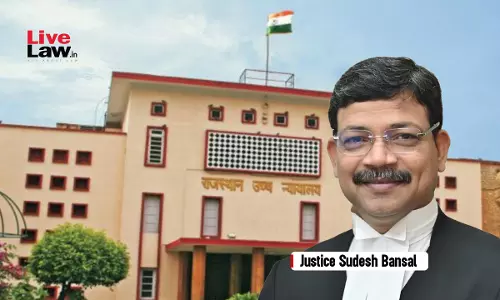
Whether Arbitration Agreement Has All Essential Elements Can Better Be Decided By Tribunal U/S 16 Of A&C Act: Rajasthan High Court
The Rajasthan High Court bench of Justice Sudesh Bansal has held that the issue of validity of arbitration agreement more particularly in respect of having essential elements of the arbitration agreement, can better be considered and decided on merits by the arbitration tribunal under section 16 of the Arbitration Act. Brief Facts The present application has been filed under section...
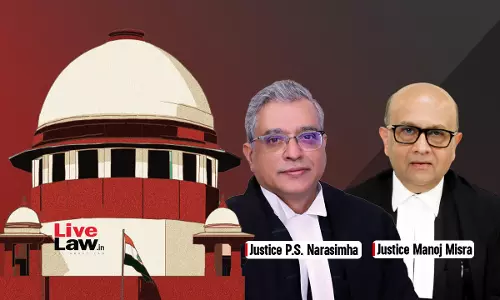
S. 14 Limitation Act Applicable To Proceedings Under Arbitration & Conciliation Act : Supreme Court
The Supreme Court has held that Section 14 of the Limitation Act, 1963 is applicable to the Arbitration and Conciliation Act, 1996.Section 14 of the Limitation Act provides for the exclusion of the time spent in pursuing bona fide proceedings in a wrong forum from the computation of the period of limitation.A bench comprising Justice PS Narasimha and Justice Manoj Misra observed that it...
Referral Court U/S 11 Of Arbitration Act Cannot Enter Into Merits Of Subject Matter Of Disputes: Rajasthan High Court
The Rajasthan High Court bench of Justice Sudesh Bansal has held that the court under section 11 of the Arbitration Act cannot enter into merits of subject matter of the disputes. It has to see only the prima facie existence of an arbitration agreement. Brief Facts These two Arbitration Applications have been filed under section 11 of the Arbitration Act seeking the appointment...

Interest Cannot Be Awarded By Arbitrator When Awarding Of Interest Is Prohibited In Contract: Madhya Pradesh High Court
The Madhya Pradesh High Court bench of Justices Sanjeev Sachdeva and Vinay Saraf has held that the tribunal has no discretion to award payment of interest when there is clear prohibition in the contract that the interest cannot be given. Brief Facts This petition has been filed to challenge the award to the limited extent that interest on the refund of security deposit and earnest...
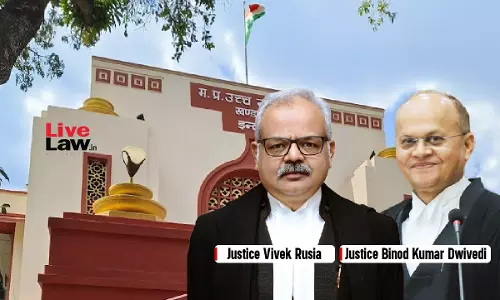
Executing Court Cannot Go Behind Award To Modify Or Declare It Void: Madhya Pradesh High Court
The Madhya Pradesh High Court bench of Justices Vivek Rusia and Binod Kumar Dwivedi has held that executing court cannot go behind the award or decree to modify or declare it void. Brief Facts This appeal has been filed against an order passed by the Executing Court by which while dismissing the petition, the court also set aside the award. It is the contention of the appellant...
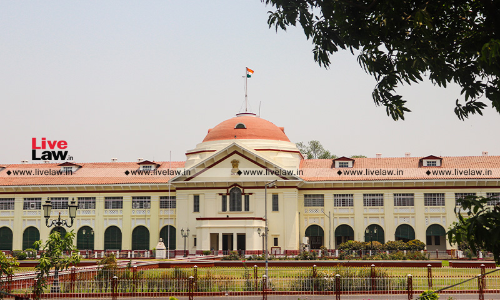
Once Person Empowered To Nominate Arbitrator Becomes Ineligible U/S 12(5), Matter Shall Not Be Referred To Arbitration: Patna High Court
The Patna High Court bench of Chief Justice K Vinod Chandran has held that once the person empowered to nominate an arbitrator under an arbitration clause becomes ineligible to nominate the arbitrator, the matter shall not referred to the Arbitration. Brief Facts An agreement was executed between the petitioner and the respondent in pursuance of a tender floated by the respondent....
![Arbitration Weekly Round-Up [ 2nd December To 8th December, 2024]](https://www.livelaw.in/h-upload/2024/05/24/500x300_541379-weekly-round-up-arbitration.webp "Arbitration Weekly Round-Up [ 2nd December To 8th December, 2024]")
Arbitration Weekly Round-Up [ 2nd December To 8th December, 2024]
High Courts Allahabad High Court Arbitration Clause Cannot Be Invoked Post Expiry Of Tenancy Agreement: Allahabad High Court Case Title: Anoop Maheshwari v. Thomas T. Kurian [S.C.C. REVISION No. - 157 of 2024] While entertaining a revision petition related to a tenancy agreement, the Allahabad High Court has held that a clause for arbitration cannot be invoked for any...

Order Passed U/S 11 Cannot Be Recalled If Valid Arbitration Agreement Exists To Justify Reference Of Parties To Arbitration: Calcutta HC
The Calcutta High Court bench of Justice Sabyasachi Bhattacharyya has held that an order passed under section 11 of the Arbitration Act on the basis of an arbitration clause cannot be recalled merely on the ground that reply given to a notice under section 21 was suppressed. Brief Facts The present application has been filed seeking recall of an order dated August 30, 2024 passed...
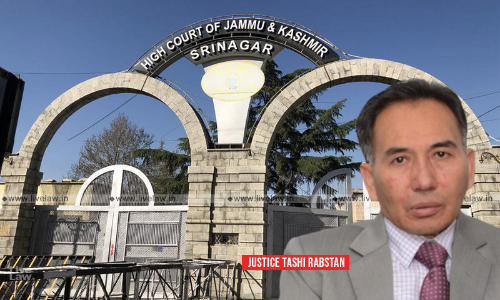
Petition U/S 11 Of Arbitration Act Cannot Be Entertained After Lapse Of 3 Yrs From Date Of Cause Of Action Arising: J&K High Court
The Jammu & Kashmir And Ladakh High Court bench of Justice Tashi Rabstan has held that the petition under section 11 of the Arbitration Act cannot be entertained after lapse of 3 years from the date of cause of action having arisen. Brief Facts The petitioner is a private limited company has filed this petition under section 11 of the Arbitration Act seeking appointment of...
Interpretation Of Contractual Stipulations Must Be Done To Give Full Effect To Arbitration Agreement: Rajasthan High Court
The Rajasthan High Court Bench of Justice Sudesh Bansal has held that it is a well-established principle of law if there is any contractual stipulation between the parties which under-mines the scope of the arbitration clause. Then, the same will be given an interpretation in the manner which gives full effect to the arbitration agreement between...