


Articles
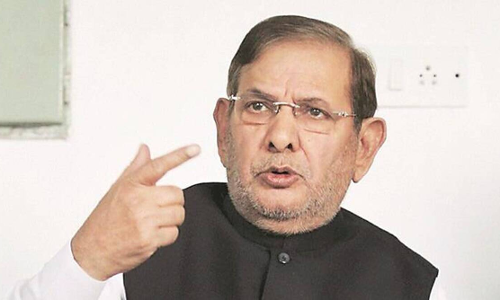
Sharad Yadav’s Legal Legacy
The former Janata Dal (U) chief, Sharad Yadav, who passed away on Thursday, will be remembered for crucial legal battles he fought towards the end of his long political career - one challenging his disqualification from the Rajya Sabha, and the other challenging the Government’s order to vacate his official accommodation in New Delhi, allotted to him while he was a Member of Parliament. Of these, Yadav had raised interesting legal questions with regard to his disqualification, which...

Concept Of Plea Bargaining
The Supreme court recently issued guidelines on disposing of cases through Plea Bargaining in an attempt to explore options for popularizing the very concept. However, it has once again started the eternal debate among legal scholars surrounding its fairness and constitutionality. To begin with, Plea Bargaining can be defined as the system of negotiating an agreement between the prosecution and defence wherein the defendant pleads guilty to a lesser offence or one or more offences...
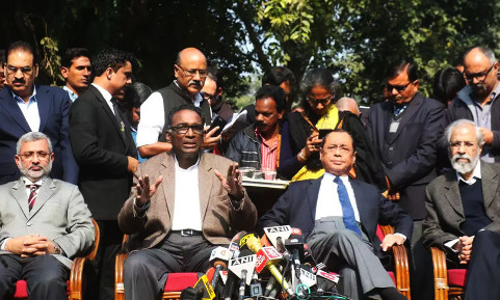
5th Anniversary of Supreme Court Judges’ Press Conference: What Has Changed and What Has Not?
The fifth anniversary of the ‘historical’ press conference by four Supreme Court Judges - held on January 12, 2018 in New Delhi- was yesterday. Those who have been witnesses to it within and outside the Court have moved on with their responsibilities considering it perhaps as a one-off event,which had tarnished the image of the Supreme Court for a brief period.The 2018 press conference invited unusual attention because it was unprecedented that four senior-most puisne Supreme...
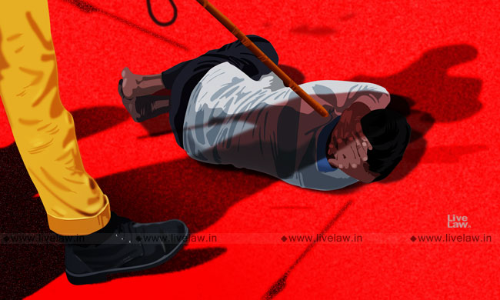
Law & Custodial Death
"One of the worst crimes in a civilized society under the Rule of Law is perhaps the death in custody. The Constitution's inherent rights, outlined in Articles 21 and 22(1), must be diligently and fiercely preserved. The right to live with dignity has been interpreted to include "life or personal liberty." As a result, it would also include a prohibition on torture and other forms of physical abuse by the State or its representatives. Except following the procedure established by law by...
Lack Of Substance Marks The Ongoing Tussle Between The Executive And The Judiciary
The ongoing turf battle between the Union Government and the Supreme Court’s Collegium is getting curiouser and curiouser. What initially appeared to be a contest for primacy over judicial appointments is now turning out to be an open display of discord between the Constitutional functionaries. While there should be no frequent public exhibition of bonhomie between the members of the Government and the Judiciary to ensure the independence of the latter, an exchange of barbs, as...

As The Bengaluru Police Seeks Disclosure Of A Journalist’s Source, The Legal Position In India Leans In Favour Of Its Protection
ON January 5, the Bengaluru Police issued a notice to founder and editor of news portal, The File, G.Mahantesh, in connection with a case pertaining to an e-office file noting of the Karnataka Education Department which the portal published. The portal had done a story on the basis of the leak of the file noting in November 2022. The Bengaluru Cybercrime Police, acting on a First Information Report, registered on the complaint of a senior department official on November 10 last year,...

‘Some’ Defendants Ex Parte: A Procedural Saga Of Order IX Rule 11
As a rule of procedure, if the defendant does not appear on the day fixed for hearing, the court can order to proceed ex parte. In other words, the trial will continue on merits at the option of the plaintiff even though there is no defendant to put his defence. This is the scenario when in a suit there is only one defendant. Supposedly, there are more defendants than one and out of them some defendants make an appearance while others do not. In such a scenario, the rule of procedure...

Pre–Nuptial Agreement
The concept of Pre – Nuptial agreement has a western origin since in countries like the United States of America, half of the marriages end up in divorce proceedings. The Pre – Nuptial Agreement steps out to be a precautionary measure safeguarding the assets of both the parties. The Pre Nuptial - Agreement is necessary in the modern period of time as the rate of breakdown of marriages have drastically increased compared to pre modern era. The nature of marriage is no more considered to...

A Feminist CJI And An Inclusive Judiciary
In today’s turbulent times where women’s rights are constantly questioned in places like Iran or in the USA where the Supreme Court itself sanctions a violation of women’s right to abortion, the role of the judiciary as the custodian of rights becomes important. When a woman steps into the halls of justice, she is met with stares and glares from the onlookers and faces harassment due to the overwhelming sense of male hegemony in the court system. There arises a need for the judiciary to...

Uttar Pradesh Population Policy 2021-30: A Feminist Exploration
The recent trend in government policies insinuates that despite the need for legislation does not seem apparent or sought by the targeted groups, the state acting under the paternalistic impression comes up with policies which are, sometimes, questioned by those groups themselves. In the long list of such legislative interventions, the latest entry is Uttar Pradesh’s Population Policy 2021-2030 and its counterpart, The Uttar Pradesh Population (Control, Stabilization And Welfare) Bill,...
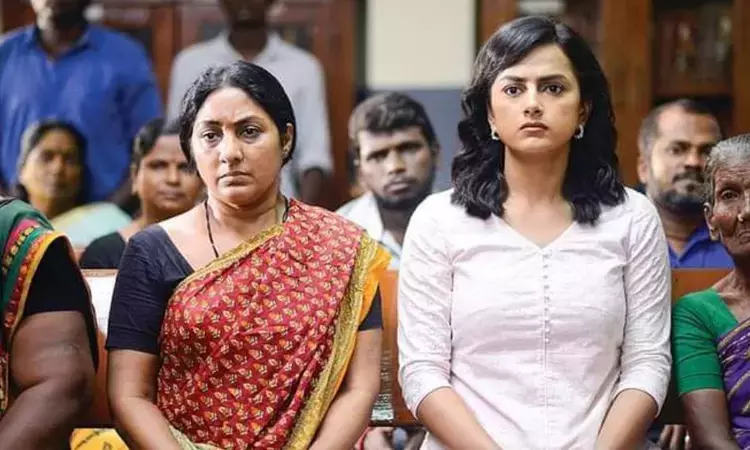
Law On Reels : "Witness" - A Hard-hitting Criticism Of Manual Scavenging
The recent Tamil film Witness, directed by Deepak Bhagvanth, examines the contours of manual scavenging in India. The movie revolves around a simple storyline of a mother - Indrani's quest for justice after her son Parthiban, who was forced into the septic tank, dies. The horrors of Manual Scavenging are counted throughout the film with caution not to hurt the manual scavengers' dignity.Manual Scavenging?A simple google search in the news section with the keywords' manual scavenging' reveals...

Busting The Myth Behind 'Love Jihad' Laws Made By Eleven States |Column By CU Singh, Senior Advocate
The myth of ‘love jihad’, slayed repeatedly and supposedly laid to rest, rises yet again. A hydra-headed monster that’s revived time and again by a not-so-subtle conspiracy between Hindutva forces, the executive, and the judiciary, it is making yet another come back at the close of 2022.This time its a multi-pronged effort, starting in March with a new anti-conversion law in Haryana, followed by Karnataka on September 30 with its Protection of Freedom of Religion Act, 2022, and wrapping up the...