


Articles
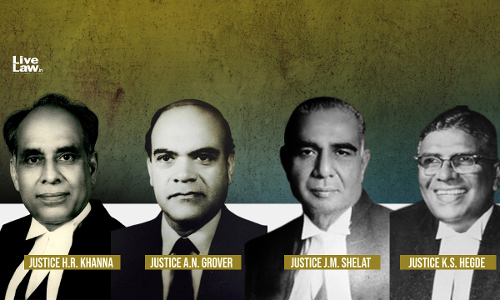
The Ghost Of Supersession
It was the late 2000s. On the speaker's podium at the Indian Law Institute was Mr. Somnath Chatterjee, an eminent Parliamentarian and the then distinguished Speaker of the Lok Sabha. The subject, as it often was, an incident which impacted judicial independence. Sitting and waiting for their turn to speak were the aging but mentally agile Justice Krishna Iyer and the sprightly Soli Sorabjee. Krishna Iyer was engrossed in a book which he picked up lying on the table titled 'Judges' by...

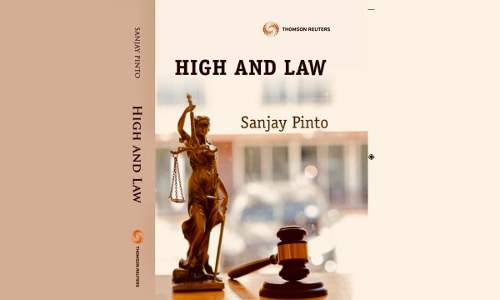
Book Review- High and Law By Advocate Sanjay Pinto
The simplest man should be able to turn to law to understand what he can or cannot do as well as what someone else can or cannot do to him. Written in clear and crisp manner Sanjay Pinto's popular weekly column has regularly demystified the intricacies of law and elucidated it for that simple man – one who is confused with the legalese that would confront him were he to seek remedies for himself. When the internet is brimming with limited information, misleading information and even...

Mental Health & Insurance Law: Locating The Flawed Discrimination
World Mental Health Day 2022 falls on 10 October. A chance to "rekindle our efforts to protect and improve mental health," says the World Health Organization (WHO). The COVID-19 Pandemic exacerbated the issue of mental health as a 25% increase in the prevalent anxiety and depression can be seen worldwide. According to WHO, despite the widespread mental health problem, the funding for this global issue remains short in supply and middle-income countries. This blog is an attempt to analyze...
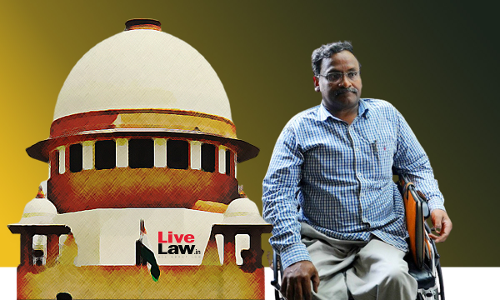
GN Saibaba Case : Questions Raised Regarding Supreme Court's Saturday Hearing
Lawyers groups are abuzz with discussions regarding the extraordinary special sitting held by the Supreme Court on Saturday to hear the petition filed by the State of Maharashtra against the discharge of Professor GN Saibaba and five others in a UAPA case.The tearing hurry with which the petition filed at 3.59 PM yesterday was listed for hearing on a non-working day, that too before a special bench(as per the present sitting arrangement,there is no regular bench consisting of Justice MR Shah and...

A Greek Comedy And An Indian Tragedy; Marital Rape Exception Under The Indian Law Must Go
In Lysistrata, an ancient Greek comedy by Aristophanes, performed in Athens in 411 BCE, Lysistrata- the protagonist- convenes the womenfolk of Greece to discuss the plan to end the Peloponnesian War. Lysistrata exhorts the women to refuse to have sex with their husbands until a treaty of peace is signed. The Greek women pursued their resolve and were successful in their plan. Lysistrata presses the warring city-states to negotiate for peace and in the climax the former enemies celebrate...
Problems Of The Collegium
Some news and events this week are somewhat disconcerting and call for comments purely as a matter of principle, without any reference to or casting aspersions on the people involved. It is reported that a meeting of the Supreme Court collegium is not to be held and recommendations for appointments made when less than one month remains prior to the retirement of a Chief Justice. The other aspect reportedly brought home by two members of the collegium is that no decision regarding...
Dobbs And X: A Tale Of Two Abortion Judgments
Abortion has been an issue of great debate over several years. In India, unlike the United States, the legislature has sanctioned abortions under the Medical Termination of Pregnancy Act, 1971 – albeit with conditions. In America, however, the Supreme Court of the United States, in 1971, in the now overruled decision of Roe[1], found that the right of a woman to have an abortion was constitutionally protected under the Fourteenth Amendment. Prior to Roe, abortions, except to save the...
The Confusions Around Same Day Sentencing Law In Death Penalty Cases
On September 19th, 2022, a 3-judge bench of the Supreme Court referred certain issues of death penalty sentencing to a larger constitutional bench. One of these issues relates to the amount of time required to collect and present mitigation evidence at the stage of sentencing. This issue is particularly important because, as evidenced by Project 39A's study, sentencing persons to death on the same day as their conviction is pervasive across trial courts. Same-day sentencing...

Supreme Court's Verdict On MTP Act Might Pave Way For Criminalization Of Marital Rape In India
India is one of the few countries in the world that is yet to criminalise martial rape. The issue has been the subject of much debate of late in a country whose courts have increasingly been delineating the right to individual autonomy as a right that is to be cherished and protected. Recently, the Delhi High Court attempted to provide clarity over the said controversy but the outcome was a split verdict, where Justice Rajiv Shakdher held that the exemption to the husband from the...
The Constitutional Courts Cannot And Should Not Quash An "FIR" During The Investigation Stage
C O N T E N T S Parts I N N E R T I T L E S Para No: Page No: A Introduction List of verdicts which hold that FIR can be quashed - given 1 3 1 4 B Legal status of an FIR and who can give it. 4 5 C The purpose of FIR 6 7 D Sec. 482 Cr.P.C. can...
Justice Indira Banerjee: The Judge & Her Jurisprudence
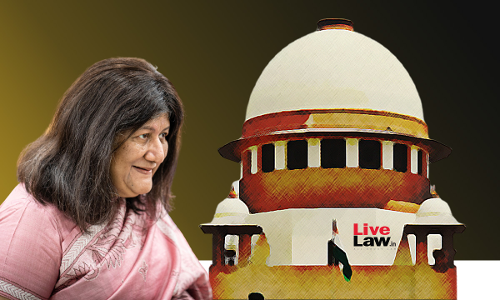
On 23rd September 2022, Justice Indira Banerjee has bid adieu to the Supreme Court of India by taking retirement from judgeship. Her elevation to the Apex Court, in the year 2018, was phenomenal as it was the first time in the judicial history of India that the Supreme Court got three (3) women judges serving at a time (i.e. Justices R. Banumathi, Indu Malhotra & Indira Banerjee). Notably, she was only the 8th woman to have the honour to get elevated to the Apex Court. Justice ...