


Articles
'National': In Letter And Spirit
Prof. (Dr.) Faizan Mustafa was serving as the Vice-Chancellor at NALSAR University of Law, Hyderabad since April 2012. Since he has completed two terms in office, he was recently directed to re-join his parent institution, namely the Aligarh Muslim University (AMU) on August 1, 2022. As a result of this, Prof. (Dr.) V. Balakista Reddy, the Registrar, has been given charge as the interim Vice-Chancellor for now. The position of the Vice-Chancellor had been advertised on April 12, 2022 and...
Addressing Climate Change: Policy Interventions And Sustainable Financing In India
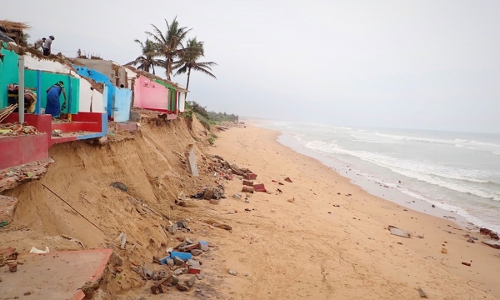
According to the Global Risks Report, 2022 published by the World Economic Forum, climate action failure is amongst the top three most severe environmental risks and amongst the five most critical long-term threats to the world as well as the most potentially damaging to people and planet over a 10-year horizon. A 2021 assessment report by the Intergovernmental Panel on Climate Change or IPCC drafted by over 200 scientists from over 60 countries, says that a rise of 1.5 degree Celsius in...
The Supreme Court As A Partisan Political Construct
When Chief Justice William Rehnquist, the longest serving Chief Justice of the US Supreme Court, died, Alan Dershowitz, the noted civil liberties lawyer wrote a most unusual obituary: "Chief Justice William Rehnquist set back liberty, equality, and human rights perhaps more than any American judge of this generation. His rise to power speaks volumes about the current state of American values. Rehnquist's judicial philosophy was result-oriented, activist, and authoritarian. He...
Appointment Of Chief Justice Of India-From Fiction to Fact
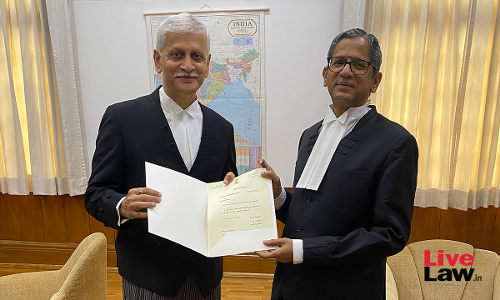
In R,R. Martin's 'A Game of thrones', you travel in the realm of fantasy - there's a civil war, and the characters you like don't always do the right thing and don't always win. It has court intrigues. The expression has always meant the Royal Court intrigues. It is, at its heart a struggle for power- either to gain more, or to maintain it, or to take it away from others. I meant to begin giving you a review on the popular book that was made to be a more popular TV serial but I am...

Keeping In Black & White: An Analysis Of The Official Secrets Act, 1923
Espionage, derived from the French word 'Espion' which means 'spy', is the act of secretly observing an individual, organization or a government, with the sole purpose of acquiring vulnerable information and then sharing it back to another organization or state. This tactic has been prominent around the world and there have been several historical texts, from East to West, mentioning the know-how of espionage, or in other words, spying. During the Colonial Times, the British relied...

Upholding Women's Reproductive Rights Through A Purposive Interpretation: Lessons From ' X Vs. The Principal Secretary Health And Family Welfare Department & Anr
Recently the Supreme Court modified the 15 July Order of the Delhi High Court, by granting the Petitioner her right to terminate her ongoing pregnancy of approximately 24 weeks. The stance of the 3-Judge bench of the Supreme Court has rightly used a liberal interpretation of provisions of Clause (c) of Rule 3B under the Medical Termination of Pregnancy (Amendment) Act 2021 (MTP 2021)-"change of marital status during the ongoing pregnancy (widowhood and divorce)"- to include unmarried women...

Cyber Defamation
Defamation is both a civil wrong and a crime. As per black's law dictionary, defamation means, "the offense of injuring a person's character, fame, or reputation by false and malicious statements". In simple words, defamation is an injury to the reputation of another person. There are two forms of defamation: Libel - It is a written defamation which is in permanent form like in a newspaper, magazine or, even in a television. It is addressed to the eyes and is easy to prove in the court...
'Bar Cannot Be Left At The Mercy Of Registry Officials' : Dushyant Dave Writes
I have been at the bar since 1978. I have always respected the judiciary. In turn, I have received much warmth from many judges. Over four decades, I have been a keen observer of the happenings in the corridors of the Courts, first the Gujarat High Court and since 1986, the Supreme Court of India. I always felt a sense of belonging to the institutions. Today, I felt completely alienated. What I witnessed in the Supreme Court today saddened me beyond words. I feel deeply hurt.When I...
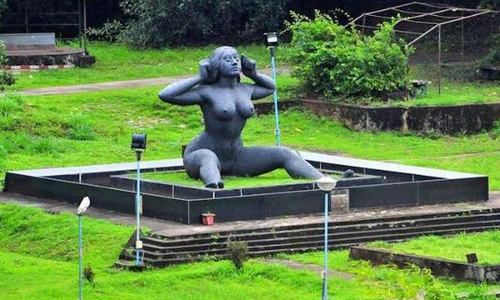
Legal Contours Of Artistic Nudity
"After all, who is a performer without his audience?" observed the author of the article on the Bollywood actor Ranveer Singhpublished by the Paper Magazine[i]. This interview was accompanied by some artistic (allegedly obscene) photo shoot of the actor in which he could be seen posing naked for the cameras. However, little did the author or the performer know that he might soon have to pay a heavy price for his own audience's sensitivities. The reference in the aforementioned case is...
PMLA Judgment : A Critique Of Upholding Of Twin Conditions For Bail
The Supreme Court, in Vijay Madanlal Choudhary vs Union of India 2022 LiveLaw (SC) 633, has upheld the Constitutional validity of "twin conditions" for bail under amended Section 45(1) of the Prevention of Money Laundering Act, 2002 Act. These twin conditions are that the Court should be satisfied that (i) there are reasonable grounds for believing that the accused is not guilty of such offence; and (ii) he is not likely to commit any offence while on bail. To hold that they are not...
Voting Rights of Prisoners
On June 17, the Bombay High Court came up with a judgement rejecting the plea filed by two of the sitting Maharashtra legislative assembly members, who are currently in judicial custody, wherein it denied to grant relief by disallowing the members to vote in the elections for Maharashtra Legislative Council, which were being conducted on 20th June. The impugned judgement has to be analyzed in light of Section 62(5) of the Representation of the People Act, 1951. It says: "No person...