


Articles
The Kesavananada Anniversary:Basic Structure Doctrine
April 24 marks the anniversary of the Kesavananda Bharati judgment enunciating the doctrine of basic structure. It is appropriate to dwell upon it and remember and light the memory of its most accomplished champion, Nani Palkhivala. The objective of the Constitution makers inspired by the freedom movement was to usher in an egalitarian society by bringing about socio-economic reforms. Agrarian reforms were high on the Government's agenda. With this end in view land reforms legislation...
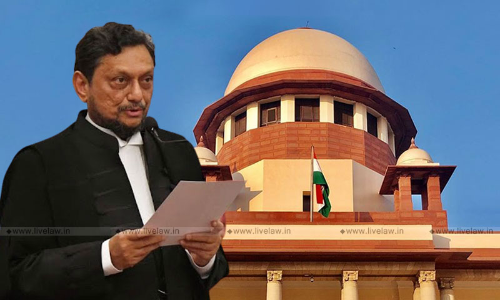
CJI Bobde Led Further Decline Of Supreme Court As A Constitutional Court
As the Chief Justice of India, Sharad Arvind Bobde had to preside over the Supreme Court when the country was going through a turbulent and difficult phase. There was(and still is) the unprecedented humanitarian crisis caused by the COVID-19 pandemic and the nationwide lockdown. It was also the time when widespread protests were simmering across the country against the ruling regime over the changes made to laws related to citizenship and farming. Corresponding to the rise of...

How Various High Courts Have Been Monitoring COVID19 Issues In Their Jurisdictions?
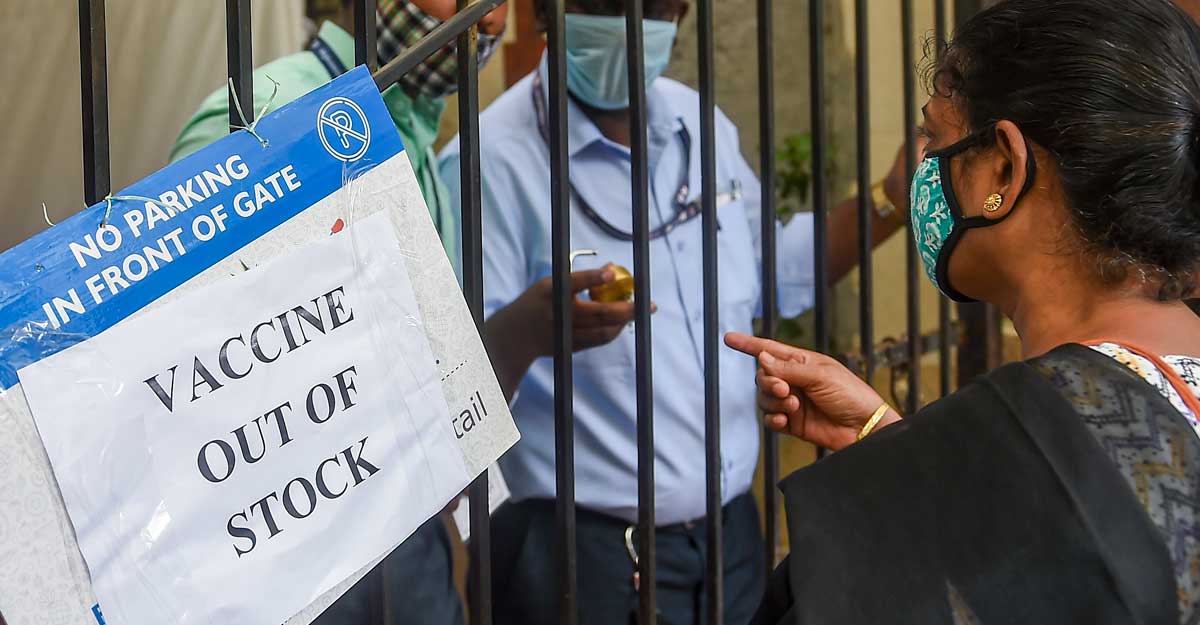
'Urgent: Need Oxygen' is flashing on all our screens left, right and centre. The present social conditions have a harrowing effect on the democratic institutions of our Constitution, that guarantees life, dignity and health. During these testing times, the Constitutional Courts that is our High Courts, have emerged as charioteers of justice and conscience. "If you don't feel ashamed of yourself, we are feeling ashamed of ourselves for being part of such a nasty society," the Bombay...
A Promise To Marry, Consent, And Rape – Examining The Jurisprudence
Section 375 of the Indian Penal Code, 1860 [hereinafter "IPC"] defines "rape". Clauses (a) to (d) gives a list of actions which amount to rape under the circumstances falling under the seven descriptions following the aforesaid clauses. The second description reads as under: "Secondly. – Without her consent." Explanation 2 provides that consent means an unequivocal voluntary agreement when the woman by words, gesture or any form or verbal or non-verbal communication, ...

Is Your Private Vehicle A 'Public Place?' Law Has Different Answers
Law is not an exact science. Its shades change depending on the context, differ from statute to statute. Background circumstances, and the expediency of the situation often influence the application of law. So, one might find different, if not totally conflicting, answers in law to similar questions. Two recent judgments on the issue whether a private car is a public place are examples. While the Delhi High Court held last week that a private car amounts to a public place in order to...
The Summer Of The Patriarch
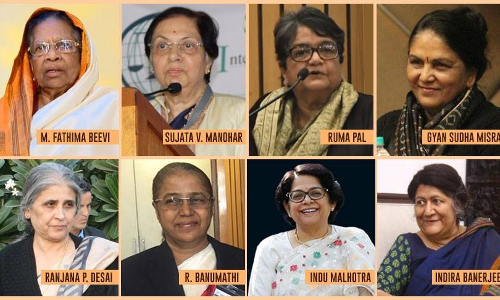
On a day when the Government of India informed the Supreme Court quite generously that it would take a mere 3 months more to decide on collegium recommendations which have been pending for over 6 months, it was the words of the Chief Justice of India that has quickly become a news story of its own.As a women's lawyers' group sought to intervene in the ongoing litigation concerning judicial appointments (or the lack thereof), Chief Justice Bobde has been quoted as saying:"Chief Justices of High...
Contemporary Relevance of Dr Ambedkar's Concept Of Constitutional Morality
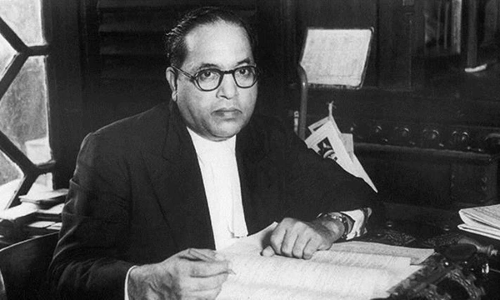
How is the growth of a democratic nation assessed? The obvious and most intuitive answer is the extent of prevalence of democratic norms. However, in a democratic nation these democratic norms are regulated and promoted by laws and legal institutions. A progressive democracy requires that the laws are framed for fullest realisation of human potential and these laws are adequately enforced. These aspects were aptly covered by Dr BR Ambedkar, the father of Indian Constitution, in the ...
Chief Justice Govind Mathur Of Allahabad High Court Will Be Remembered As A Defender Of Civil Liberties
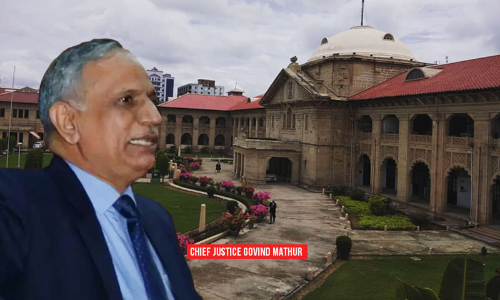
Justice Govind Mathur has retired as the Chief Justice of the Allahabad High Court. Originally from Rajasthan High Court, Justice Mathur was transferred to the Allahabad High Court in November 2017. He served as a Chief Justice of the High Court for a little over two years. In this short span, Justice Mathur made his mark as a fearless defender of personal liberty and human rights. In his farewell speech delivered yesterday in a virtual function, Chief Justice Mathur said that he was...
CEDE: Envisioning An Inclusive Legal System
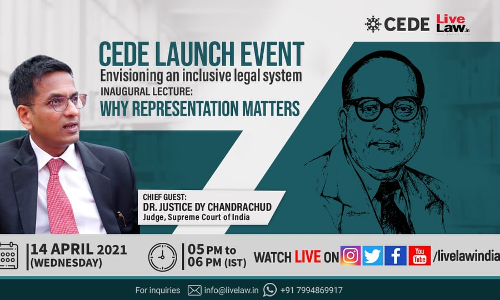
Quite recently, we have witnessed a couple of judges openly speak about the need for diversity on the Bench. The demands for equal representation are, however, not new. They have existed for more than a century now. Lack of Representation The issue of representation was central to India's constitutional reforms, which happened even prior to the enactment of the Constitution in 1950. While there were many oppositions to the issue, Dr. B.R. Ambedkar firmly and consistently argued for...

Post-Award Interim Reliefs Under Section 9: Is The Exclusion Of Award-Debtors Justified?
S.9 is the provision under the Arbitration and Conciliation Act, 1996 which provides for judicial intervention for the purpose of granting interim reliefs to the parties to arbitrations. The provision lays down three stages at which a party can approach the Court for seeking an interim relief namely, "before or during arbitral proceedings, or at any time after the making of the award but before it is enforced in accordance with S.36."[1] The remedy aims at protecting the subject-matter of...

The Legality Of Fantasy Gaming
With the proliferation of data users across the country, India is emerging as one of the leading online fantasy sports gaming platform throughout the world. The United States of America (USA) had the largest Fantasy Gaming market by user base, with industry reports attesting to daily fantasy sports contests in the US generating USD 2.91 billion in revenue and valuing the market at USD 7.22 billion as of 2017, until recently, when it was overtaken by India[1]. KPMG India in its July 2020...