


Articles
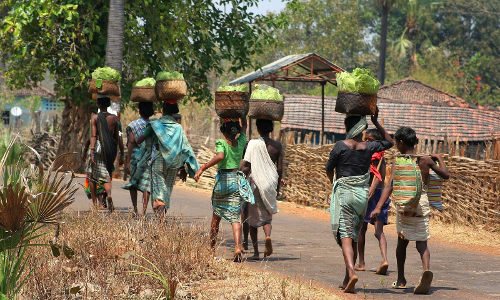
From The State To The Adivasis : Compensation In Lieu Of 'Development'
The proposed 3097 MV Etalin hydro electric project in Dibang Valley district of Arunachal Pradesh falls under the 'richest bio-geographical province of the Himalayan zone' and under 'one of the mega biodiversity hotspots of the world' as per the Forest Advisory Committee 's (FAC) observations. The forest land set to be diverted is also recognized as a vital tiger area in the region. As per the project proposal, the justification for locating the project in a forest area is to utilize...
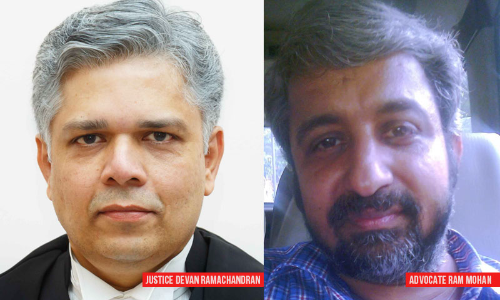
Dearest Ram Mohan: A Remembrance
The loss of someone close is always difficult to come to terms with.Ram Mohan was a very dear friend. I grew close to him more than two decades ago when he took a building on rent from me for his temporary residence in Kochi. Yesterday, I sat in Court till 3.30 pm - the first time I sat so late after reopening - and when I returned to my Chambers, my PS mentioned Ram's name. Before I heard what she was telling me, under the impression that he had come to meet me after very long, I eagerly asked...
The Meanderings Of Section 65B, Indian Evidence Act, 1872- A Poem
Nostalgic we are for the analogue days hard copy missives with postal receipts photos clicked on Kodak film duly accompanied with negative sheets. The digital revolution brought changes galore emails and servers, hard disks and clouds. Outside the vision of James F. Stephen, the proving of CDs and printouts. Then at the turn of the millennium Section 65B made an appearance (And that somewhat superfluous 65A) in our neat statute of evidence Brands, models, serial numbers, ...
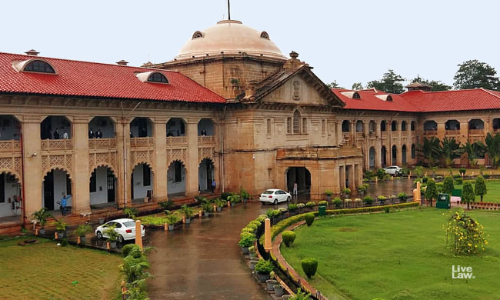
A Peep Into 'Roll Of Advocates' System Of Allahabad HC
Unlike the Advocate on Record [AoR] system followed by its neighbour Patna High Court, the Allahabad High Court has in place a different system to regulate the practice of the lawyers in its two benches viz. Allahabad and Lucknow which is called 'Roll of Advocates'. [RoA]Background To 'Roll of Advocates'Prior to introduction of the Roll of Advocates System, anyone registered with any State Bar Council or with the Bar Council of India could file, plead and appear before the Allahabad High Court....

GIPC Index And US Special 301 Report: (Ir)relevance For India
India has made some significant developments in its IP regime. In 2019, India ratified three WIPO treaties namely the Vienna, Nice and Locarno Agreements.[1] India also revised the Patents (Amendments) Rule in 2019[2] by which it allows both Indian and foreign applications to apply for expedited patent examinations.[3] Moreover, an 80% rebate is being provided to start-ups on patent filing fee.[4] India also rolled out National IPR Policy in 2016 and Trademark Rules 2017[5]. India,...
Two Recent Madras HC Judgments On Criminal Defamation: An Analysis
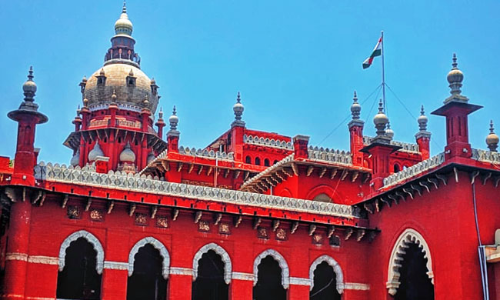
The Madras High Court through two judgments delivered on 5 May 2020 and 21 May 2020 has helped advance the cause of free speech in India. These two judgments address different aspects of the law relating to criminal defamation. The first deals with substantive aspects of the law, while the second judgment relates to procedure. In their own right, though, both the judgments represent significant contributions. Article 19 (1) (a) of the Constitution of India guarantees to every...
![[Column] Writs Before Commercial Divisions In High Courts, A Conundrum, Writes Justice Abdul Quddhose](https://www.livelaw.in/h-upload/2020/06/08/500x300_376061-justice-abdul-quddhose.jpg "[Column] Writs Before Commercial Divisions In High Courts, A Conundrum, Writes Justice Abdul Quddhose")
[Column] Writs Before Commercial Divisions In High Courts, A Conundrum, Writes Justice Abdul Quddhose
The object of the Commercial Courts Act, 2015 is to improve India's image as an attractive investment destination. The ease of doing Business index is assessed by the World Bank based on 10 parameters and "Contract enforcement "is one of them. India is known for its judicial delays and backlogs. In order to erase that image and to encourage foreign investments, the Commercial Courts Act came to be enacted. The Act envisages early disposal of Commercial disputes involving a particular...
Shri Padmanabhaswamy Temple Case (Marthanda Varma v. State of Kerala) - A Critique
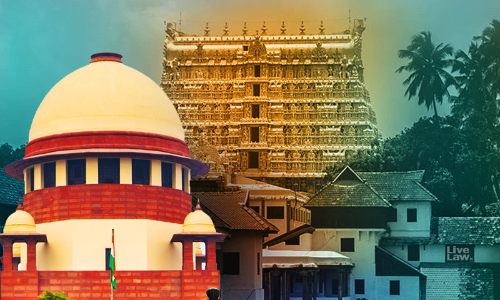
The Supreme Court judgment in the Padmanabhaswami Temple case may be said to have brought to a close a longstanding controversy regarding the management of this renowned temple at Tiruvananthapuram. The main issue was as to who is to manage the temple which has been under the control and management of the Travancore royal family at least for the last more than 250 years. One of the main contentions was that the management or trusteeship of the temple was vested in the Ruler of...
The Tenth Schedule In Rajasthan : Dissidence To Defection - The Dynamics Of Power
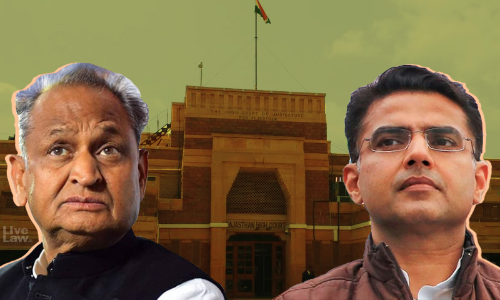
Pilots episode of Rajasthan power politics raised the issue of freedom of speech verses restrictions on defection. A political party which is not internally democratic cannot promise democratic governance while in power. Dissent and debate are, as rightly argued by Harish Salve, essential components of democracy. None should be disqualified as legislator for criticising the leader or the party. Constitutionalism of democracy must be in total agreement with the point raised on behalf of...

From Workplace To Cyber-Workspace: Practical Challenges Under Sexual Harassment Of Women At Workplace (Prevention, Prohibition And Redressal) Act,2013
INTRODUCTION Long bygone are the days when men used to be the solitary bread-earners of the family. Women empowerment and globalization have brought a revolutionary change in the status of women worldwide as more and more women have been stepping out of their domestic spheres to contribute to the world's ever-increasing working population. In the Indian IT industry women's representation is increasing rapidly, e.g. IBM offered jobs to 52 per cent women through campus recruitment ...
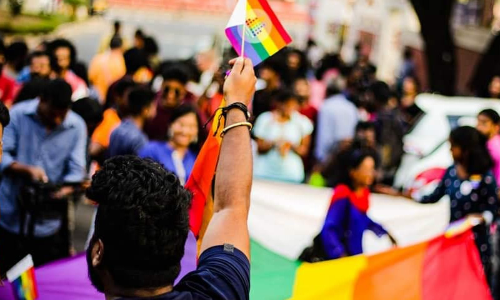
"Why am I Not an Equal Protector ?" : A Conundrum Of Agony For The LGBTQIA+ Community Vis-à-Vis The Defence Services In India
At the beginning of the year 2020, the Supreme Court of India delivered a landmark judgment which instilled a lot of joy and encouragement into all the 1653 female officers of the Indian Army[1], wherein the case of Secretary, Ministry of Defence v. Babita Puniya & Ors.[2], the Apex Court bench led by Dr. Justice D.Y. Chandrachud ordered for permanent commission for all women officers in the Indian Army and to do away with the unequal and arbitrary service rules which were followed...