




Articles

Cross-Border Transfer Of Healthcare Data: Reconciling India's DPDPA With GDPR
After the world was hit by the pandemic, the use of technology saw a paradigm shift, especially in the field of healthcare as patients quickly realized that adoption of technological communications was much more convenient than physical visits at hospitals. As the healthcare industry underwent a profound digital transformation, it accelerated a widespread reliance on remote medical expertise. Today, digital consultations, virtual diagnostics and cross-border medical opinions have become...
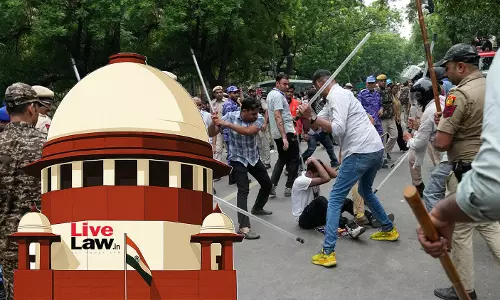
One Court, Two Eras : Judicial Approaches To Ramlila Maidan Incident & Student Protest Crackdown
The Courts' approach to the State's suppression of protests over the last half-decade has been quite dismal.
When State Tracks Your Every Coordinate But Denies Your Belonging
For the modern Indian, an existential fracture has opened at the intersection of civil identity and state power. In late June 2026, on the heels of Passport Seva Divas, the Ministry of External Affairs (MEA) issued an administrative clarification that delivered a profound shock to the national psyche. The Indian passport, the Ministry declared, is fundamentally a "travel document" meant to facilitate international transit; it cannot be treated as conclusive, standalone proof of...

Bombay High Court's Autorickshaw Ruling Reopens Gap PoSH Act Was Built To Close
On 24 March 2023, a State Bank of India employee finished his usual train ride from Navi Mumbai to Kurla and took a shared autorickshaw for the last leg to his branch at the Bandra Kurla Complex, as he had for fourteen years. The driver seated three passengers in the back, as shared autos do. On the account recorded in the judgment, which comes from the petition since the complainant did not appear before the High Court, what happened next between the employee and a female co-passenger, a chef...
Realising Constitutional Promise Of Speedy Justice
The constitutional promise of speedy justice can only be realised through effective implementation. Without institutional capacity and accountability, even the best legal reforms remain ineffective.We, the people of India, resolved to secure justice for all citizens, a promise enshrined in the Preamble of our Constitution. The preamble represents the will of the people of India[1], and it is only because of this will that all institutions acquire their authority and they are only allowed to...
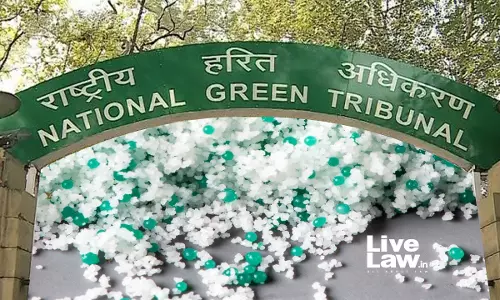
Microbeads: Micro Issue For Indian Legislators
Microplastics are a novel threat in the 21stcentury. Microplastics are minuscule particles of plastic waste that are less than 5 mm in diameter. The focus of this article is upon a subset of microplastics that are heavily employed in the personal care industry. Microbeads are used as an ingredient in personal care products due to their abrasive or exfoliant quality. From sunscreens to shower gels and face washes, the traces of microbeads can be found in almost every personal care product, as...
Right To Walk To Parliament
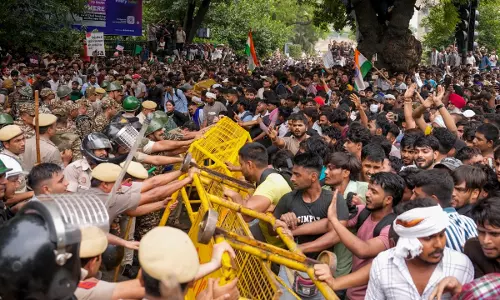
The tear gas came before noon yesterday. By evening the Delhi Police were saying 118 of their personnel had been injured and around seventy protesters detained, FIRs for rioting were being registered, internet stood suspended in parts of the capital, and four Metro stations in the heart of Lutyens' Delhi were shut. All of this because a few thousand young people wanted to walk two kilometres, from Jantar Mantar to Parliament, on the day Parliament opened.I have spent my working life in the...
Mandatory Ship-To GSTIN & Voluntary Closures: A Legal Guide To August 2026 E-Way Bill Update
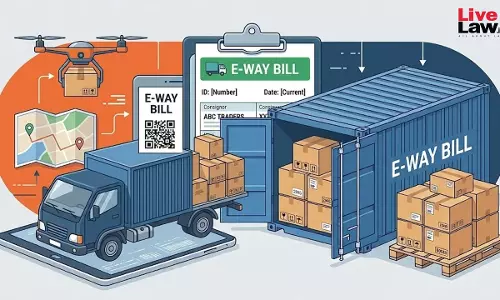
The Goods and Services Tax Network ("GSTN"), through its Advisory dated 17th June, 2026, has notified a set of structural changes to the e-Invoice Application Programming Interface ("API"), the e-Way Bill by Invoice Reference Number ("IRN") API, and the e-Way Bill ("EWB") Closure API. These changes, scheduled for Production implementation with effect from 1st August, 2026, mark a significant tightening of the compliance architecture governing the movement of goods under the Central Goods and...
Invisible Clause: Why AI-Generated Content Is Breaking Standard IP Assignment Agreements In India
Somewhere in India today, a startup is being acquired. The buyers' lawyers are working through due diligence: employment agreements, consultant contracts, and development agreements. They find the standard IP assignment clause stating that all intellectual property created in the course of employment vests absolutely in the company, and mentally tick the box.They shouldn't.Nobody in that room asks the obvious question: what if the code was written by GitHub Copilot? What if the marketing copy...
With Great Deference Comes Great Power: On Bihar SIR Judgment
A primary feature of constitutional democracies is limitation on state power. In this context, the judiciary's foundational role is not merely adjudication but also enforcing those constitutional limits. In a recent judgment upholding the Election Commission of India's (ECI) Special Intensive Revision (SIR) of Bihar's electoral rolls, the Supreme Court deployed a series of interpretive choices that disabled it from performing this foundational role. This article reveals that the Court's textual...

Who Owns Your Digital Self? Reimagining Personality Rights In Age Of AI Clones
Imagine a phone call from your loved one, only to discover later that the voice on the other end was not theirs, but an artificial intelligence system trained to sound exactly like them or imagine receiving a frantic call from your mother requesting urgent financial assistance. Convinced by the familiarity of her voice, you transfer the money immediately, only to discover later that the call was generated by artificial intelligence. A person may not be a celebrity nonetheless he carries an...

Protecting The Beautiful Game: Evolution Of Anti-Piracy Injunctions In India Through FIFA World Cup 2026
A Rights Deal Against the ClockAs the FIFA World Cup 2026 reaches its climax, with the final between defending champions Argentina and Spain expected to attract millions of viewers worldwide, the focus is no longer confined to the action on the pitch. Even before the tournament commenced, Zee Entertainment Enterprises Ltd., had secured the exclusive media rights for India, by approaching the Delhi High Court seeking protection against rogue websites and digital platforms expected to illegally...