




Articles
Who Bears Cost Of India's Green Mobility Transition?
Across the world, states are turning to greener technologies and alternative fuels in fulfilment of their environmental and developmental commitments. Those commitments are not a single, harmonious command. Sustainable Development Goal 7 seeks affordable and clean energy, while Goal 10 seeks reduced inequalities, and the two can pull against each other. A green measure whose costs fall hardest on those least able to bear them advances clean energy even as it quietly deepens inequality. India is...
Tackling Issue Of Speaker's Authority And Procrastination Under Anti Defection Law
Last month, six Lok Sabha MPs from Uddhav Thackeray-led Shiv Sena (Shiv Sena UBT) defected to the Eknath Shinde's Shiv Sena Faction on 22nd June 2026. Subsequently, Shiv Sena UBT issued show-cause notices for violating the party whip and demanded the Lok Sabha Speaker for their immediate disqualification. Similarly, in the exact month, twenty rebel Trinamool Congress (TMC) MPs switched part lines and declared a merger with the National Citizen Party of India (NCPI). While the Speaker approved...
Beyond Documents: Why Foreigners' Tribunals Must Assess Citizenship Evidence As Whole
The recent passport controversy revived an old question: which document proves that a person is an Indian citizen? But that question is framed too narrowly. Indian law does not identify one universal document that conclusively resolves every citizenship dispute. The harder question is how the evidence produced by a person should be assessed when the State disputes their membership of the political community. The reverse burden governing Foreigners' Tribunal proceedings cannot be administered as...
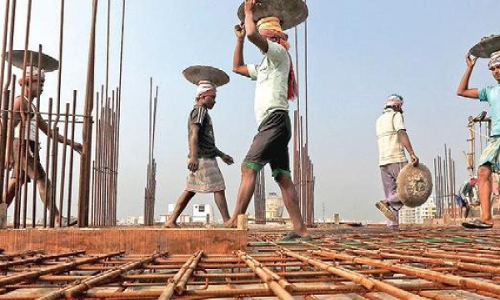
Heat As An Occupational Hazard: Enforcement Gap In India's Labour And Climate Law
The WHO now treats extreme heat as an occupational risk demanding accountability. Indian law, even after the new labour codes, still treats it as weather. That gap is where the duty of care goes to die.When roughly 45,000 factory workers walked off the floor in Noida and Greater Noida this April, the stated demands were wages, fixed hours and overtime, and the state read the protest, which turned violent by its fourth day, as a law-and-order problem. But the workers at its centre, in garment,...
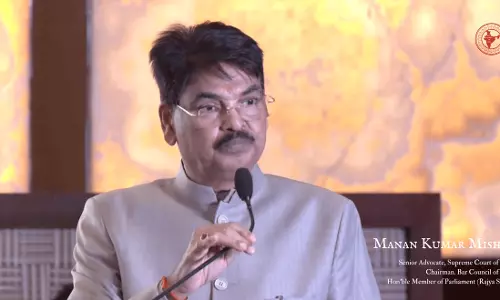
Who Speaks For The Indian Bar?
On 23 July, a press release went out on the letterhead of the Bar Council of India. It carried the Council's insignia, its address on Rouse Avenue, its telephone and its fax number. It was addressed to the "intellectuals of the country". It said that the students protesting in Delhi are not students at all.I want to set the politics aside for a moment and ask the question that comes before the politics. By what authority was this document issued?The Bar Council of India is not a club and its...
Is India's Data Protection Board Independent Enough To Protect You?
Most people believe that once laws are enacted establishing regulatory oversight, regulator independence is a done deal. The Digital Personal Data Protection Act, 2023 is set to become the exception to this rule, and the arena in which this contest is playing out is the Supreme Court of India itself.The DPDP Act 2023 and the DPDP Rules 2025 notified on 13th November 2025, are currently before the Supreme Court, challenged in a clutch of writ petitions by journalist Geeta Seshu, the Software...
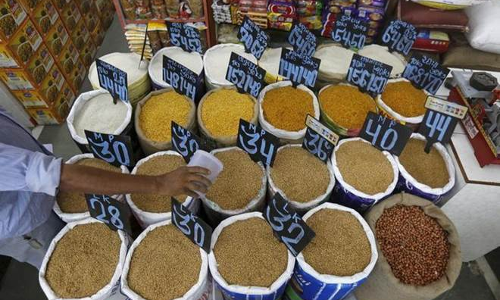
Should MSP Become A Legal Right? Constitutional Debate Around C2 Formula
The Supreme Court's recent notice on a petition challenging the Union Government's Minimum Support Price (MSP) framework has reopened a question that lies at the intersection of agrarian economics and constitutional welfare obligations: should MSP, calculated on the comprehensive C2 cost formula, be an enforceable legal right? The petition, drawing on the Swaminathan Commission's recommendation of MSP at C2+50%, reflects genuine and long-standing farmer distress. But converting this aspiration...
Rethinking Section 350 BNSS: Ensuring Payment Of Reasonable Expenses To Complainants And Witnesses
While the discourse on the Witness Protection Scheme has evolved following the enactment of the Bharatiya Nagarik Suraksha Sanhita, 2023, there is hardly any discussion on an equally important aspect, the payment of reasonable expenses to complainants and witnesses, despite courts repeatedly emphasising its significance. The financial burden of attending court continues to fall disproportionately on those least able to bear it. Section 350 of the BNSS seeks to address this concern, yet its...
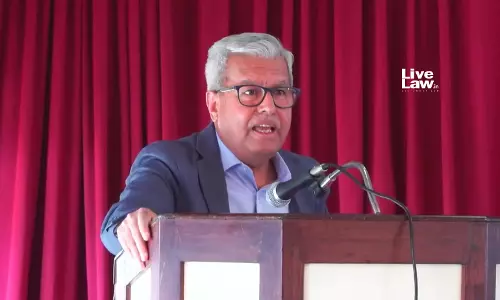
Court Lets GenZ Down : Writes Dushyant Dave
The Supreme Court of India has an extraordinary role and duty under the Constitution of India. It is a Constitutional Court and protector of the Fundamental Rights of the Citizens. Article 32 obliges the Court to intervene and grant relief in case citizens' fundamental rights are violated . During Constituent Assembly debates,Dr Ambedkar emphasised its importance saying," If I was asked to name any particular article in this Constitution as the most important -an article without which this...

Passport Paradox: Why India Needs Settled Answer On Citizenship Proof
Few statements by the government have generated as much public disquiet in recent months as the Ministry of External Affairs' clarification, issued around Passport Seva Divas in June, that an Indian passport is fundamentally a travel document and not conclusive proof of citizenship. For a country where the passport has long functioned, in the public imagination, as the gold standard of state-verified identity obtained only after police verification and scrutiny that many other documents do not...
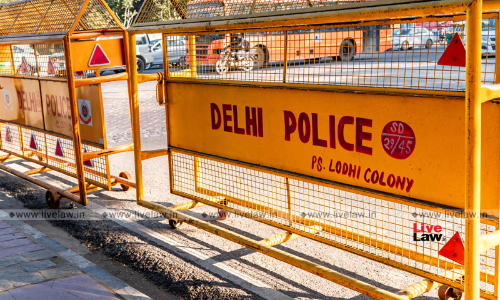
Constitution Does Not End At The Barricade
The police action at the "Sansad Chalo" protest shows how quickly a political assembly can be transformed into a dangerous "crowd"—and how easily that transformation is made to justify collective force.Power has a peculiar affection for collective nouns. The criminal courts teach this early.A stone is thrown by an individual. A barricade is pushed by identifiable persons. A police officer is struck by somebody who can, and must, be investigated. Yet when the police acts, the individual...
Cross-Border Transfer Of Healthcare Data: Reconciling India's DPDPA With GDPR
After the world was hit by the pandemic, the use of technology saw a paradigm shift, especially in the field of healthcare as patients quickly realized that adoption of technological communications was much more convenient than physical visits at hospitals. As the healthcare industry underwent a profound digital transformation, it accelerated a widespread reliance on remote medical expertise. Today, digital consultations, virtual diagnostics and cross-border medical opinions have become...