


Articles
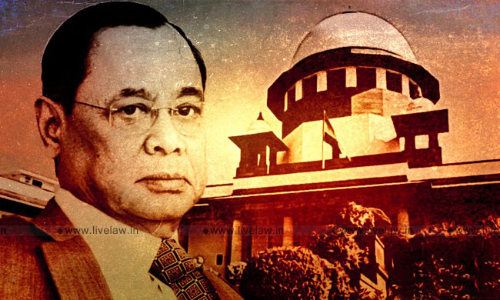
Not Only Must Justice Be Done; It Must Also Be Seen To Be Done
I request the Honorable Supreme Court to make Report public to be fair and reasonable, because: We don't know what the truth is! Entire law and procedures are made only to find out the truth. If CJI is innocent he should not be embarrassed. At the same time if the complainant has complaints about the process of inquiry, it is the duty of the institution to assure the integrity of the process. The judiciary shines as a credible pillar of constitutional democracy because of its openness of trial,...
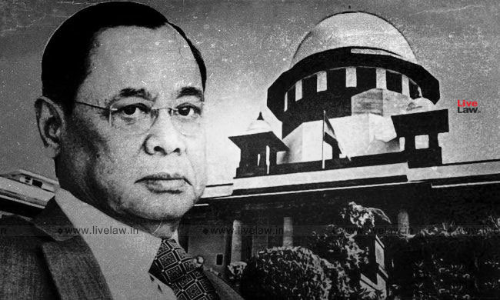
Judicial Emergency: Justice and Country Blindfolded
Panel for enquiry submitted its report to the CJI and says report will not be made public and copy will not be given to the erstwhile lady employee. Report was given soon after Justice DY Chandrachud 's letter to the panel saying do not proceed ex parte. Whether Full Court would get to see the report , we have to wait and see. So the CJI, the person complained against, would get to see the report but not the complainant, not the nation ( maybe not the full court ) but only the CJI or a few...
![[Debate] Applicability Of Section 360 CrPC And PO Act - A Response To Vrinda s Reply To Justice Ramkumar](https://www.livelaw.in/h-upload/2019/01/18/500x300_supreme-court.jpg "[Debate] Applicability Of Section 360 CrPC And PO Act - A Response To Vrinda s Reply To Justice Ramkumar")
[Debate] Applicability Of Section 360 CrPC And PO Act - A Response To Vrinda' s Reply To Justice Ramkumar
I have read the response of Miss VrindaBhardwaj to Justice Ramkumar's Article on the applicability of Section 360Cr.P.C., published in the live law. While I have no quarrel about the principles of interpretation highlighted by the author, I am sorry to say that the author has not correctly applied the relevant principles to the issue involved. The question of harmonious construction will arise only for the purpose of harmonising to apparently conflicting provisions both...
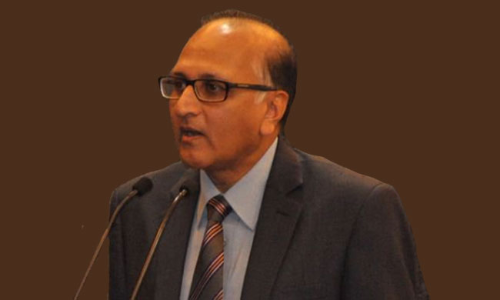
Justice Ravindra Bhat's Lasting Contribution To Indian IP Jurisprudence
Last Friday marked the final day of Justice Ravindra Bhat at the Delhi High Court before he takes over as the Chief Justice of the Rajasthan High Court. Over the last 15 years, Justice Bhat has penned landmark judgments in several different areas of law ranging from constitutional law to right to information to administrative law to intellectual property rights. While most of his judgments are intellectually rigorous and lucid, I would like to write a few words about his outstanding...
![Section 360 To Be Co-jointly Read With PO Act [A Response To Justice Ramkumars Article]](https://www.livelaw.in/h-upload/2019/04/01/500x300_359557-supreme-court-of-india.jpg "Section 360 To Be Co-jointly Read With PO Act [A Response To Justice Ramkumars Article]")
Section 360 To Be Co-jointly Read With PO Act [A Response To Justice Ramkumar's Article]
Interpretation is the art of finding out the true sense of enactment by giving the words of the enactment their natural and ordinary meaning. According to Gray, interpretation is the process by which a judge constructs from the words of a statute book, a meaning which he either believes to be that of the legislature or which, he proposes to attribute to it.[1] Accordingly, every legal text requires interpretation as the clarity in any legal text doesn't preclude the need for...

Extent Of Criminal Liability Under Competition Law
In M/s. Rajasthan Cylinders & Containers Ltd. vs. Competition Commission of India[1], the Delhi High Court upheld interpretation favored by the Competition Commission of India for initiating criminal action, where a person fails to comply with the directions of the Director General in submitting information/documents during the course of investigation. The judgment has been stayed by the Supreme Court. However, if the view taken by the High Court is upheld, it would have significant...
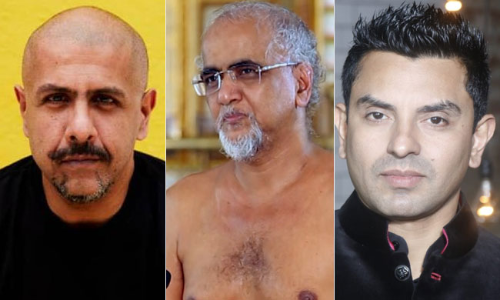
Burdening Legal Speech: Vishal Dadlani And The P&H High Court
Two decisions, delivered over the last few days, exemplify how the terrain of free speech remains a contested field in Indian constitutional law.Burdening Legal Speech: Vishal Dadlani and the P&H High CourtVishal Dadlani v State of Haryana came to the Punjab & Haryana High Court as a quashing petition. FIRs had been registered against Vishal Dadlani and Tehseen Poonawala under Sections 153A (promoting enmity between classes), 295A (hurting religious sentiments), and 509 (insulting the...

The Missing Jurisprudence Of A Sound Data Protection Law
It has almost been two years now that Supreme Court of India had delivered K.S Puttuswamy judgment – I (2017), by which it had recognized 'privacy' as a fundamental right in India. However, this epic declaration did not foster any substantive kinetic changes in the Indian Parliament, especially in the area of data protection law, which by the way, was regarded as one of the essential elements of privacy. This facet of privacy was emphasized in the judgments of Justice DY Chandrachud as...
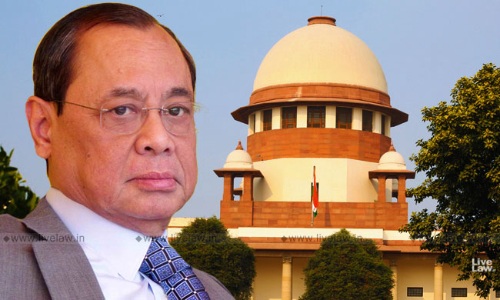
Mixing Of Personalities
The allegations against the CJI were real shocker for all of us in the Supreme Court, but what followed in the Supreme Court was even more shocking. Forming of a bench of three judges, then the scene performed by the CJI in the Court, resulted in mockery of justice. He initiated the proceedings of the court by elaborating his defence of "conspiracy", to the charge, and laced it with an emotional appeal based on his austerity and meagre savings. All of this paled into insignificance when the...
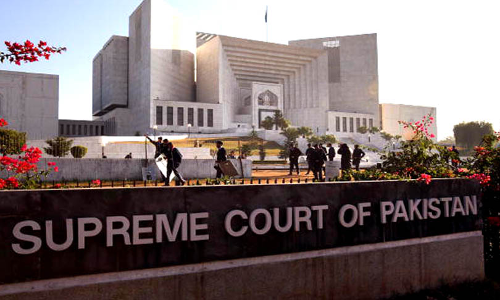
Pakistan SC Decision: Another Wake Up Call For New Delhi
The 2019 decision of seven Judges of the Pakistan Supreme Court in Civil Aviation Authority v Supreme Appellate Court Gilgit-Baltistan purportedly on the "historical and constitutional issue involving the status, authority and powers of Gilgit-Baltistan" is yet another instance of how Pakistan chooses to distort the Kashmir narrative for political expediency. The judgment penned by the Chief Justice of Pakistan quotes from my book, Unravelling the Kashmir Knot, and yet fails to counter the legal...
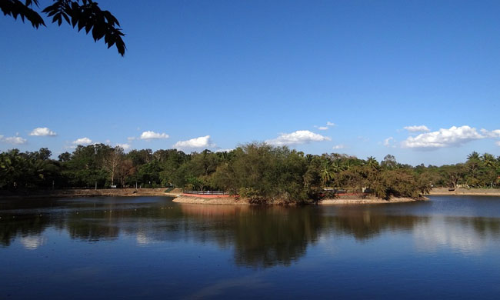
Rejuvenating Our Rivers: Creation Of Autonomous Inter-State River Basin Authorities
The Draft River Basin Management Bill, 2018 proposes the establishment of multiple River Basin Authorities for different inter-state river basins. The manner in which such authorities are envisaged to be set up under the Bill makes them highly dependent upon approvals from the Central Government and the concerned State Governments. This will eventually render them as puppets because of the strings attached to the governments. The current policy proposal advocates the setting up of Inter-State...
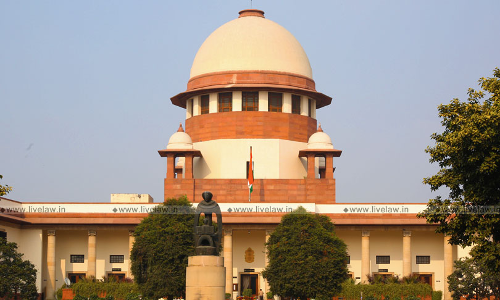
Has Section 360 Cr.P.C. Any Application In A State Where The Probation Of Offenders Act, 1958 Has Been Brought Into Force?
According to a recent verdict of the Supreme Court of India in Lakhanlal @ Lakhan Singh v. State ofMadhya Pradesh (Criminal Appeal No. 1306 of 2013) rendered on 04-04-2019, the provisions of the Cr.P.C. are not excluded by the provisions of the Probation of Offenders Act, 1958 (the "P.O. Act" for short) and Section 360 Cr.P.C. is in addition to the provisions of the P.O. Act. The appellant in the case before the Supreme Court was one of the eight accused persons who were convicted by the...