


Articles
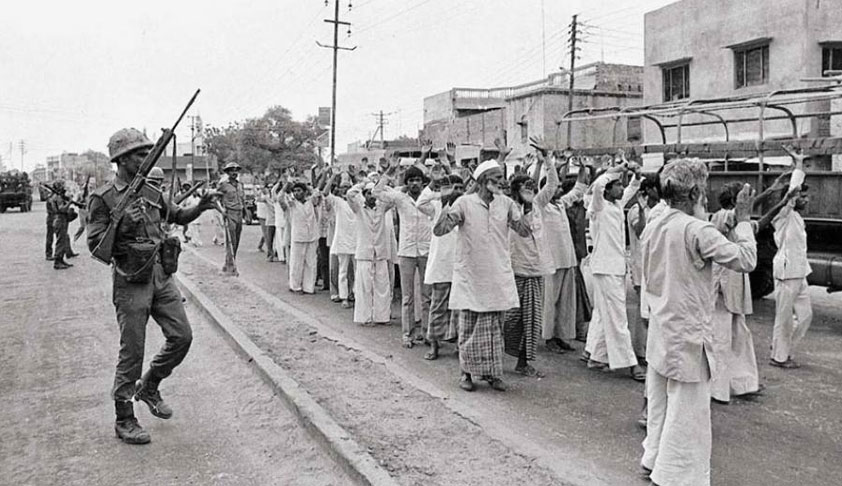
Hashimpura : How The Brave Efforts Of A Photo Journalist Provided Clinching Evidence In The Case.
Hashimpura evokes the horrors of the Holocaust.Imagine being forcibly taken away by armed forces at gun point from the comforts of your home, from the sight of your loved ones, to be packed into a truck with several others and to be taken away to a distant place and shot down in darkness and thrown into a canal- all because one belonged to a particular community.During May 1987, Meerut and surrounding areas were engulfed in communal riots triggered by the opening of the locks of Babri Masjid to...
The Story Of A Stay Order Which Keeps CBI Alive
'While the present controversy has enlivened discussions regarding reformative measures to insulate the agency from political influence, the stake holders may also keep in mind that the very existence of the agency is hanging by a loose thread extended by the SC.'The unprecedented existential crisis which engulfed the Central Bureau of Investigation last week following the Alok Verma-Rakesh Asthana episode did not escalate to damaging levels, thanks to a crucial intervention made by the Supreme...
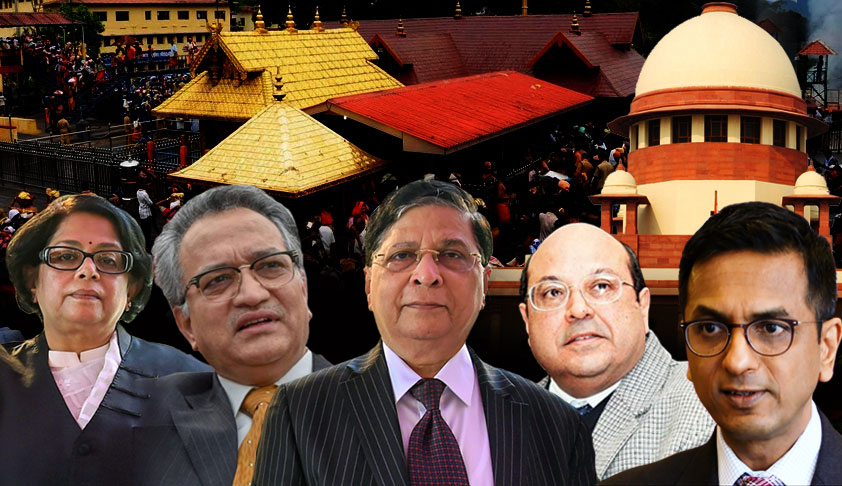
“I Send My Soul Through Time And Space/ To Greet You. You Will Understand…”: On Sabarimala And The Civil Rights Cases
From 1861 to 1865, a long and bitter civil war was fought in the United States of America. One of the major causes of the war was a dispute over the institution of slavery. After the pro-slavery Southern States were defeated, the institution was abolished throughout the U.S., Black people were formally emancipated, and three important amendments to the American Constitution were passed. The first of these, the thirteenth amendment, stated that “neither slavery nor involuntary servitude, except...
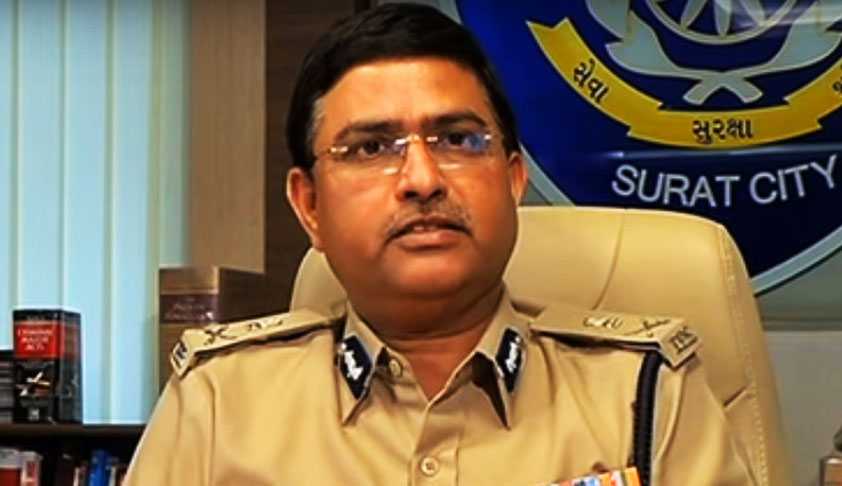
Explainer : Is The FIR Against Rakesh Asthana Invalid Because It Is Based On A Lapsed Provision?
The CBI is caught up in high drama as its No.2 official Rakesh Asthana has been named in an FIR in relation to a corruption case. As soon as the details of FIR got public, social media got abuzz with comments that the FIR was unsustainable as it was registered for an offence which is no longer in existence now – Section 13(1)(d) of the Prevention of Corruption Act,1988, which punishes criminal misconduct by a public servant. This provision is no longer in the Act, as it was substituted with a...
The Unjustness Of Non-Competitive Designation
Strong women and men make strong institutions. Emerging from shadows of the past, today the Supreme Court is manned by judges possessing the highest aggregate of superior knowledge and learning. With the top end of the institution comprising of a strong bench, the base of this institution still remains strongly embedded in the quality of its bar. The symbiotic relationship between the bench and the bar does not need any elaboration. The beauty of democracy of the institution lies in the bar...

Analysis Of Corporate Social Responsibility With Special Reference To India
Corporate social responsibility (CSR) is defined as operating a business in a manner that meets or exceeds the ethical, legal, commercial and public expectations that society has of business . In the last 20 years, there has been a sea change in the nature of the triangular relationship between companies, the state and society. CSR has become increasingly prominent in the Indian corporate scenario because organisations have realised that besides growing their businesses, it is also vital to...
Judicial Overhaul- Need Of The Hour
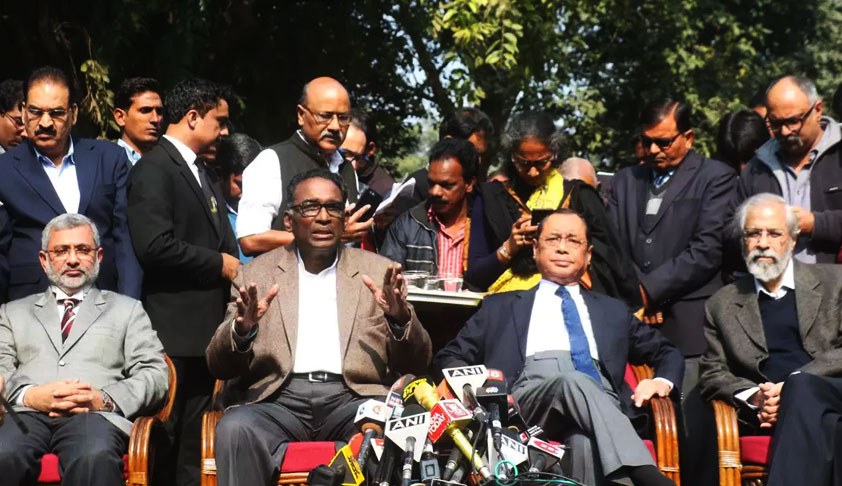
Extraordinary events that have taken place in January 2018 have attracted censure not only from the legal fraternity but from the citizenry too. Concerns raised in the press conference by the four Senior-most Judges with regard to the growing insecurity in the Judiciary due to the indifference of office bearers enjoying discretion with regard to the allocation of Cases to benches and allegations of discrepancies that have arisen out of this unfettered administrative power being granted in the...
#MeToo Movement In India: Need For A Comprehensive Legal And Social Engineering
Be it a spontaneous overflow of suppressed psychological and emotional trauma or a practical manifestation of ‘the theory of contagion’, the ‘#MeToo movement’ has come to stay in India.Bedeviled by a puritan conscience, while legislators, progressive members of the executive as well as members of the legal fraternity of the country have made common cause with the victims of sexual assaults and harassment at the hands of their predators, there is a growing perception and fear that the...
Criminal Defamation: A Tool Of Oppression To Shut Out Truth
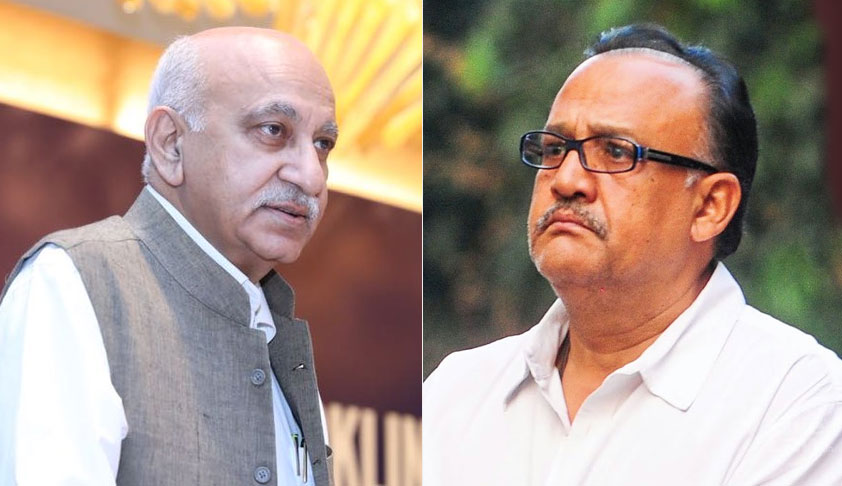
Provisions like criminal defamation enable those with power and privilege to use law as tool of oppression to shut out truthUnion Minister M J Akbar and film actor Alok Nath -who are caught up in the eye of '#MeToo' storm- have filed criminal complaints for defamation against women who have spoke against them. Though at least 15 women(till date) have come out against M J Akbar regarding acts of sexual harassment committed by him abusing his position as superior at work, he has chosen to go...
Understand The Law Relating To Sexual Harassment In India
The #MeToo campaign has highlighted the plight of women and a number of survivors have come forward to share unfortunate incidents of sexual harassment. In this piece, my endeavour is to summarize the law (Both – substantive and procedural) pertaining to this issue. Substantive LawThe substantive law i.e. what will constitute an offence against the body of a woman may be divided into 4 main categories depending upon the place where it is committed – a public place, a workplace, a shared...
Time’s Up To Apply ‘Reasonable Woman’ Test In Sexual Harassment Cases
“A sex-blind ‘reasonable man’ standard tends to be male-biased and tends to systematically ignore the experiences of women.”“Herland” is a 1915 novel which envisions a utopic world comprising only women. Written by Charlotte Perkins Gilman, the novel conveys that women will be able to establish a society free of conflict, domination and exploitation, if liberated from socially constructed gender stereotypes. There are three male characters in the movie who stumble upon this mystic ‘Herland’, to...
The Money Bill Cloud Persists Over The Aadhaar Act
One of the most significant issues before the Supreme Court in the Aadhar case was with regard to the passing of the Aadhaar Act as a Money Bill. While it may seem technical, this determination involved the arterial health of bicameralism, federalism and national integration which flow into the heart of Indian democracy. First the basics, a Money Bill under Article 110 of the Constitution is one which deals only with items referred to in Article 110(1) and has to be so certified by the Speaker...