


Articles

Can Appellate Court Cancel Suspension Of Sentence On Application By Anyone Apart From Public Prosecutor?
At the pre-conviction stage i.e., during trial, an accused moves a bail petition u/s 439 CrPC before the Sessions Court or the High Court or u/s 437, as the case may be. Once she is convicted post-trial in a non-bailable offence and the sentence awarded is more than 3 years, the accused seeks suspension of the execution of sentence during the pendency of the appeal u/s 389 CrPC. It is, therefore, important to bear in mind that while Section 439 is at the pre-conviction stage, Section 389 is at...
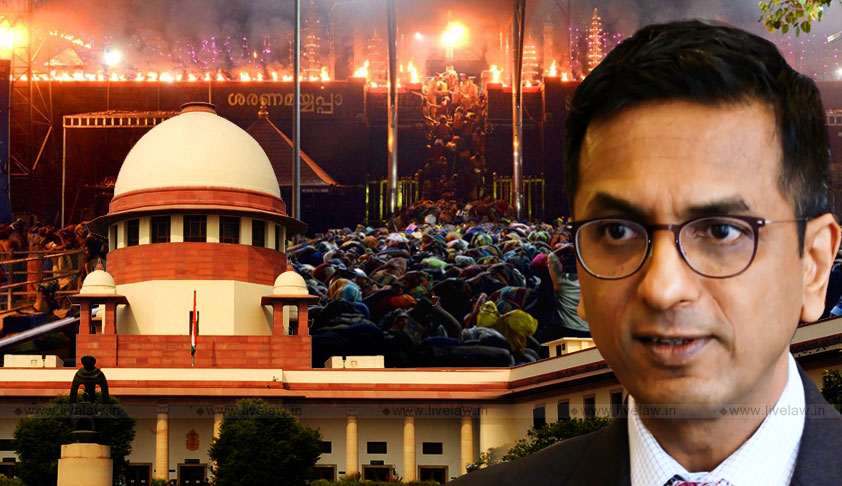
The Sabarimala Judgment – III: Justice Chandrachud And Radical Equality
Justice Indu Malhotra’s dissenting opinion sets up a crucial constitutional question: how do you reconcile the Constitution’s commitment to pluralism – which entails respect for group autonomy – with the claims of equality and non-discrimination, addressed from within those groups? It is this question that is at the heart of Justice Chandrachud’s concurring opinion.Chandrachud J. sets up the issue in the introductory part of his judgment, where he observes that the Indian Constitution is...
NLUD Stands Up Against Sexual Harassment
What’s happening in National Law University, Delhi is unparalleled-- a number of women and men have come out to share their own stories of sexual harassment, and rather than brushing these stories under the carpet, the student body has come out in massive numbers to express their solidarity with the survivors. Despite what knee-jerk responses to this movement would lead you to believe, sexual harassment is not limited to one college campus. Survivors across the board, in all colleges, are...
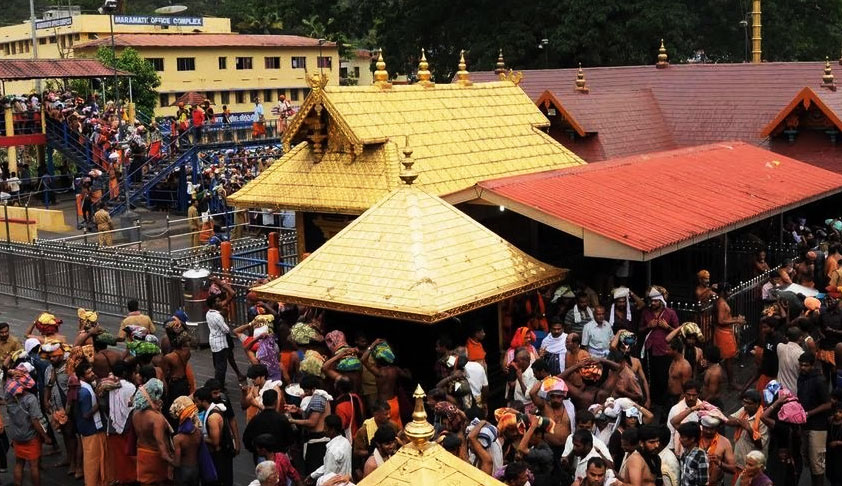
Women Entry In Sabarimala: Past, Present And Future
The Past 1955-56: TDB Notifications Two notifications, similarly-worded, one dated 21 October 1955 and the other dated 27 November 1956, were issued by the Travancore Devaswom Board (TDB). “In accordance with the fundamental principle underlying the prathishta (installation) of the venerable, holy and ancient temple of Sabarimala, Ayyappans who had not observed the usual vows as well as women who had attained maturity were not in the habit of entering the above mentioned temple for Darshan...
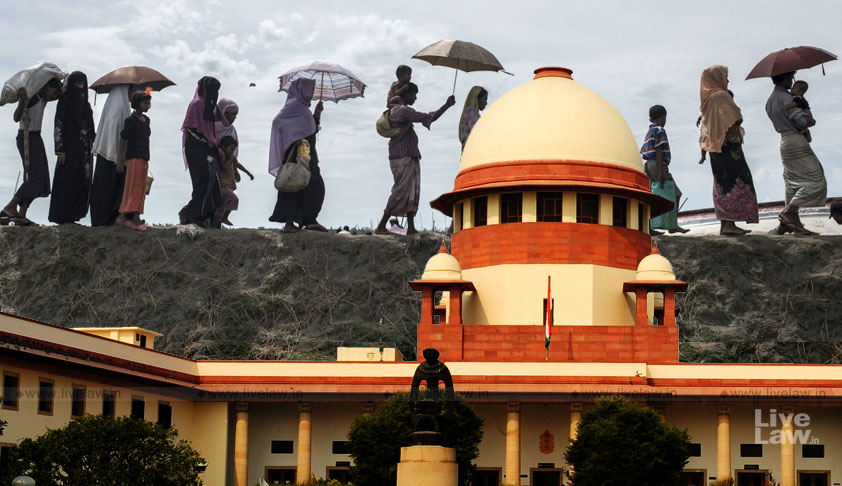
Supreme Court’s Refusal To Interfere With The Deportation Of Seven Rohingya Refugees Violates International Law
The Supreme Court of India on Thursday refused to stop the deportation of 7 Rohingya refugees to Myanmar. While, with the men minutes away from the border, the Bench agreed to hear the interim application in view of the grave urgency, the matter was dismissed. In doing so, the Supreme Court accepted the arguments made by Mr. Tushar Mehta, appearing for the Government, and agreed that the Rohingya refugees were ‘illegal immigrants’ and that they had “consented” to return to Myanmar. The...
Ayodhya : Impact Of Order Refusing Reference To Constitution Bench In The Main Case
A five-judge bench of the Supreme Court in the Ismail Faruqui case of 1994 observed that ‘a mosque is not essential part of the practice of the religion of Islam and namaz by Muslims can be offered anywhere, even in open’ and secondly Place of birth of Lord Ram was has additional protection of law because that place has ‘special significance’. At the instance of the Muslim parties, the Supreme Court gave a detailed majority judgment rejecting their claim to examine the correctness of these...

Equal Pay For Equal Work To Sexual Autonomy: Read The Significant Judgments Of Supreme Court On Women's Rights
"I raise up my voice—not so I can shout, but so that those without a voice can be heard...we cannot succeed when half of us are held back."[1]―this were the words of Noble Prize winner Malala Yousafzai, who rightly pointed towards the indispensability of making every woman in the world self-sufficient as the development of human race would not be possible without it and the Indian judiciary has been prodigiously vibrant in influencing the course of social change by being the voice of women whose...
The Sabarimala Judgment – II: Justice Malhotra, Group Autonomy, And Cultural Dissent
I had originally intended this series to follow a more familiar chronology – moving through the concurring opinions, and ending with Justice Indu Malhotra’s dissent. However, on a closer reading of the judgment, it strikes me that Malhotra J.’s dissent raises some crucial points, which remain unanswered in the opinions of the Chief Justice and Nariman J. – but are addressed in Chandrachud J.’s concurrence. For this reason, I will use this post to discuss the dissenting opinion, and flag its...
The 1951 Bombay HC Judgments That Unleashed A Genie And A Ghost
Justice RF Nariman in Adultery Judgment liberated the Genie Of Yusuf and Justice DY Chandrachud in Sabarimala case did the exorcism of Ghost of NarasuIn the year 1951, the Bombay High Court Bench of Chief Justice MC Chagla and Justice PB Gajendragadkar delivered two judgments, which have been discussed in recent constitution bench judgments in Adultery and Sabarimala Cases.Justice Rohinton Fali Nariman, in his concurring judgment in Joseph Shine, quotes a passage from CJ Chagla’s judgment dated...

Ordinance On Triple Talaq Is Justice For Seven And Half Months
On September 19, 2018, the Union Cabinet approved an Ordinance banning and criminalising the practice of triple talaq in India. Was such an ordinance needed when the Supreme Court has already dealt with the matter? Having argued in the past banning triple talaq legally, it is a question we never thought we would be asking. But now we find ourselves bound to revisit the question after sensing the political obsession of the present regime behind. Thus, we worry. Because, the agenda of the ruling...
The Sabarimala Judgment – I: An Overview
Earlier today, a Constitution Bench of the Supreme Court held, by a 4 – 1 Majority, that the Sabarimala Temple’s practice of barring entry to women between the ages of ten and fifty was unconstitutional. While the case raised a host of complex issues, involving the interaction of primary legislation (statute), subordinate legislation (rules), and the Constitution, the core reasoning of the Majority was straightforward enough. On this blog, we will examine the Sabarimala Judgment in three parts....

What To Expect Of The New CJI Ranjan Gogoi?
At times reformist, at times conformist, at times proactive, at times inactive- Justice Gogoi has exhibited contrasting traits in his judicial career so far.It might be ironic that the new Chief Justice of India Ranjan Gogoi, who is generally perceived as reticent by the legal fraternity, has made the most ground breaking revelation regarding the administration of Supreme Court this year. His participation in the unprecedented judges' press conference held in January 12 was by itself an act of...