


Articles
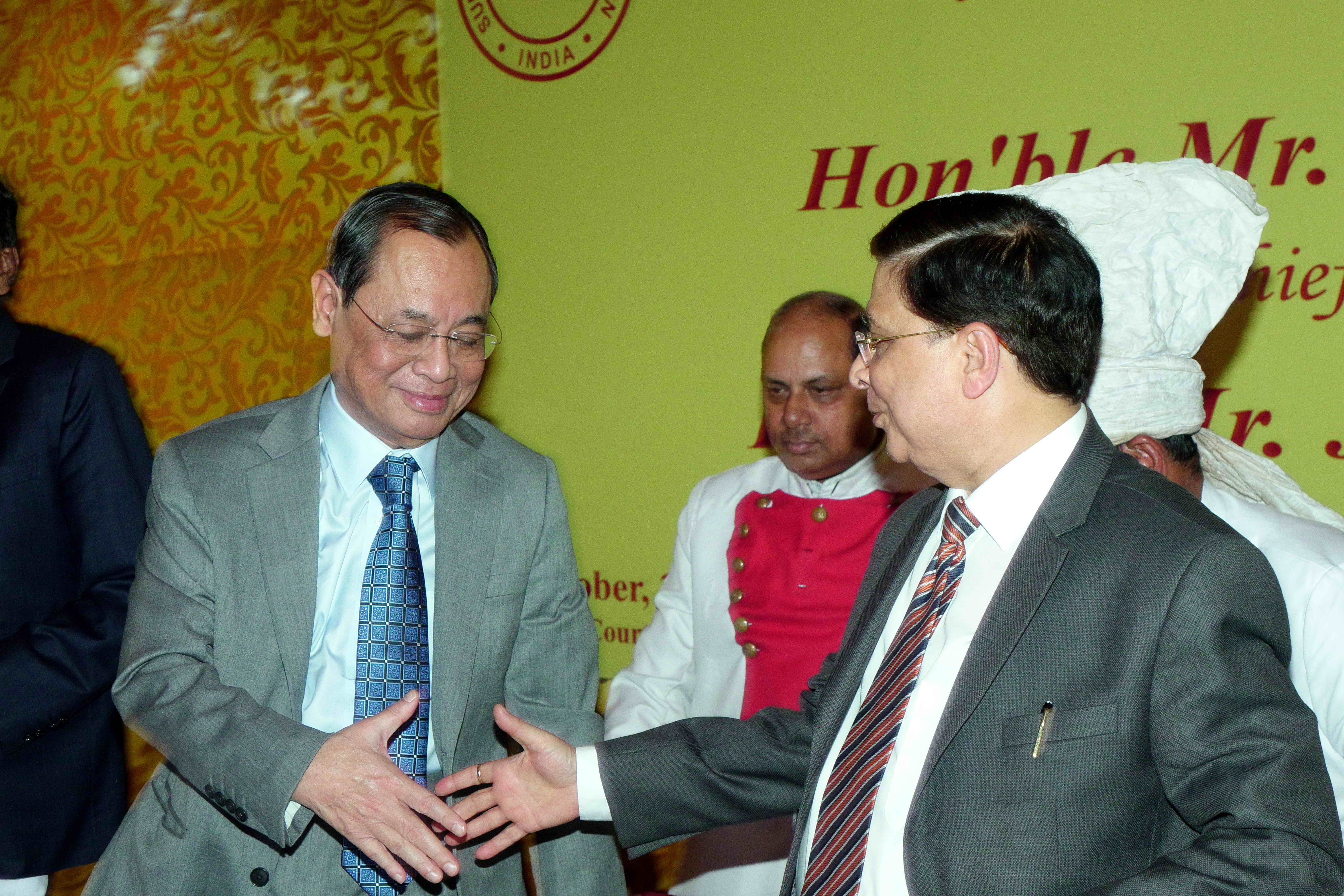
The New Chief Justice And The Awaiting Challenges
Tomorrow Justice Ranjan Gogoi will be taking oath as the 46th Chief Justice of the Supreme Court of India and as the first Chief Justice from the State of Assam.Being the head of judicial family of the country, a series of challenges await the new Chief Justice. The approach that will be adopted by Justice Gogoi in addressing these major challenges will be keenly observed.The first challenge certainly will be the issue of “Master of the Roster”. While all the judges of the Supreme Court are...
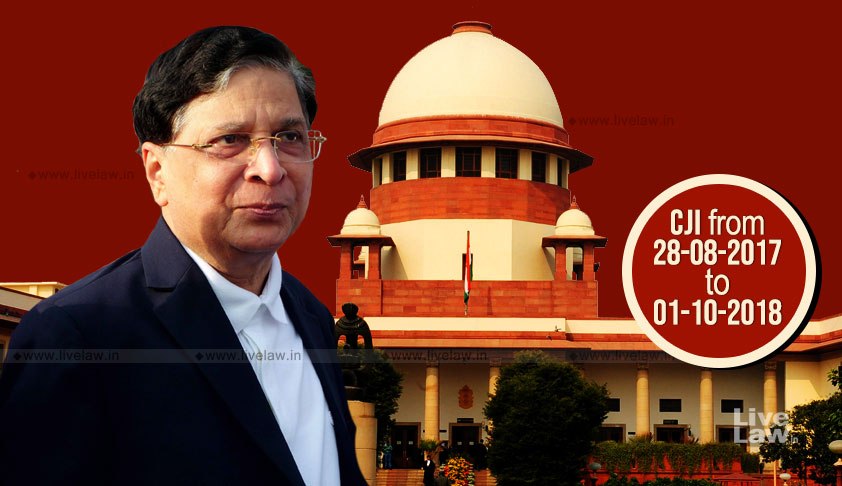
Will The Real CJI Dipak Misra Stand Up?How Will History Judge Him?
"A man has as many social selves as there are distinct groups of persons about whose opinion he cares. He generally shows a different side of himself to each of these different groups", William James, American Philosopher & Psychologist.Chief Justice of India Dipak Misra is demitting office after a tumultuous tenure, leaving behind a mixed legacy. Over his judicial career, CJI Misra was seen stating different things at different times, often contradictory to each other, lending credence to...
On Judicial Accountability To Law
“A judge is a law student who marks his own examination papers.”-----H. L. MenckenIt is often said that an independent, impartial, honest and competent judiciary is integral for upholding the rule of law.[1]The administration of criminal justice system becomes a fiasco when the criminal courts fail to return its’ verdicts that are candid enough to hold the guilty punished and the innocent exculpated. The strength and sanctity of the judgments lies in its’ reasoning and the capability to convince...
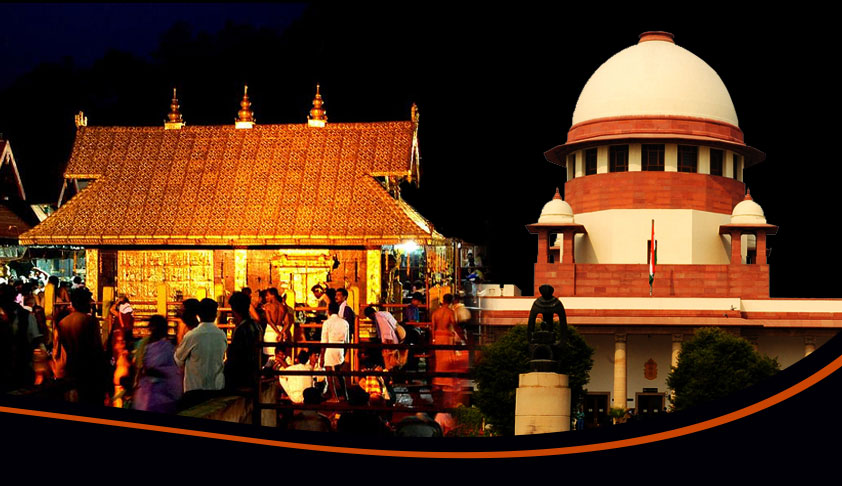
Reading Sabarimala Judgment In The Light Of Post Judgment Public Debates
Since the dawn of the Supreme Court Judgment allowing entry of women to Sabarimala Ayyappa Temple, apart from those who see the judgment as one of social reform and justice, there has been a variant of public opinion and discussions, many of them straightforward misogyny and others camouflaged as religious sentiments.Protesters proclaim that women who believe will never put their foot on the hills where Lord Ayyappa dwells, and they will not desecrate the sanctity of the place and the belief and...
Aadhaar Judgment : Certain Concerns
Aadhaar scheme has been one of the most ambitious projects of the Government of India. Initiated in 2009, the Aadhar scheme got statutory recognition through The Aadhaar (Targeted Delivery of Financial and Other Subsidies, Benefits and Services) Act, 2016 (“Aadhaar Act”). A unique identification number for every citizen in India envisaged by the Aadhar scheme has resulted in many privacy rights battles. The question of dignity, informational self-determination and consent forms the basis for the...
Aadhaar Verdict: Govt. Learns The Hard Way
The Supreme Court of India’s September 26 judgment in K. S. Puttaswamy vs. Union of India (Aadhaar case) is a first-hand lesson on good governance and constructive use of state power for the Government. Four of the five judges of the Constitution Bench came down heavily on the government for using Aadhaar as a tool to create a surveillance state in India, that is, by extending it to almost every aspect of human activity and life.Aadhaar was originally conceived by the Congress-led UPA government...
Understanding The Unlawful Activities (Prevention) Act, 1967
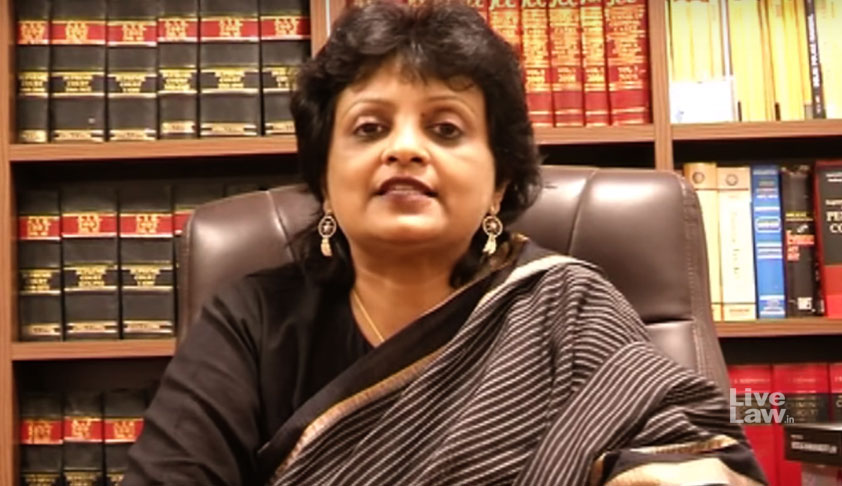
Full text of Lecture delivered by Senior Advocate Rebecca M.John at the Delhi High Court in a Seminar entitled "Understanding the Unlawful Activities ( prevention) Act 1967"At the start of the Sino-Indo Conflict on 20th October 1962, a state of Emergency was declared under Article 352 of the Constitution of India, on grounds of external aggression. During the same time period, a domestic crisis was brewing with Mr. C.N. Annadurai, leader of the Dravida Munnetra Kazhagam’s (DMK) openly...
Bhima Koregaon : Blind Spots Of Majority Judgment
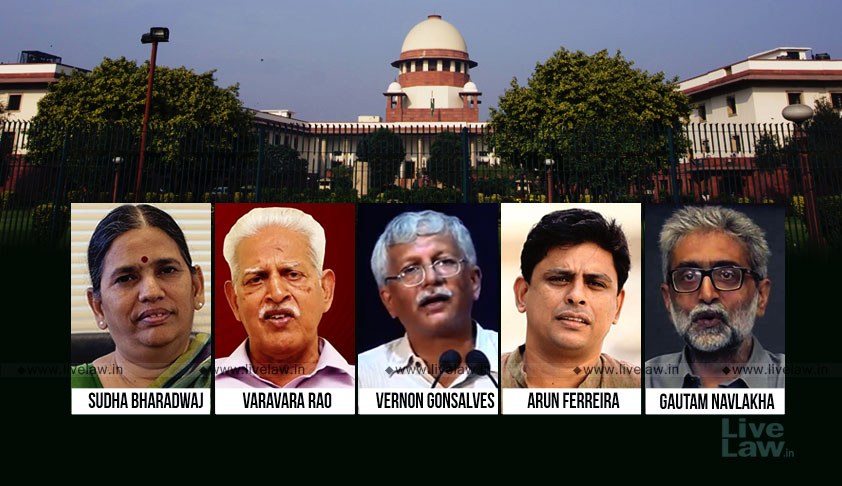
The dissenting judgement outweighs majority judgement in legal and factual reasoning.It is quite natural that the same set of facts will be perceived differently by different people. This can happen in judicial process too. Instances are galore,where different judges draw different inferences from the same set of facts presented before them. That is why we see appellate courts reversing trial court judgments on facts and judges on a single bench delivering dissenting opinions on factual...
![[The Tuesday Column] Triple Talaq Ordinance: The Modi Govt’s Shah Bano Moment](https://www.livelaw.in/cms/wp-content/uploads/2017/12/talaq.jpg "[The Tuesday Column] Triple Talaq Ordinance: The Modi Govt’s Shah Bano Moment")
[The Tuesday Column] Triple Talaq Ordinance: The Modi Govt’s Shah Bano Moment
In the landmark judgment of Shayara Bano vs. Union of India, the Supreme Court has held triple talaq or “talaq-e biddat” to be unconstitutional and in violation of Articles 14 and 13(1) of the Constitution of India. The court found this practice to be arbitrary as it permitted the termination of the marital relationship without any effort of reconciliation. With this judgment, the Supreme Court has rendered instant triple talaq by a Muslim man null and void. Therefore, despite such pronouncement...
Cross Border Insolvency “From Teritorialism To Universalism To Modified Universalism”
“Exercising discretion and applying the law locally is hard enough (for a judge). Doing so in an international setting “ups and ante” especially when the notional claim amounts exceed $1million as they did in Lehman”[i] The above statement perhaps brings out the true state of challenges and complexities which cross border insolvency proceedings throw open at international arena. The challenges still linger on despite the system having handled the cases of the complexities and dimension such as...
The Criminalisation Of Triple Talaq – Is It A Doom Of Criminal Law?
The archaic practice of the triple-talaq which is said to be oppressive to Muslim women was struck down last year by the Hon’ble Supreme Court of India in the case of Shayara Bano v. Union of India, as unconstitutional. Since then the debates have revolved around the criminalisation of practice of triple-talaq in order to deter Muslim men to resort to this fundamentally oppressive method. The discourse on the issue of criminalisation has been centred around arguments on grounds of religion,...

Blasphemy Law: A Weapon For Insecure Believers
In a mature democracy, speech ought to be countered with more speech and not with jail and violence.Section 295A of the Indian Penal Code, India's thinly disguised blasphemy law, is in news again, for wrong reasons as usual. Last week, Abhijit Iyer-Mitra, a Delhi based journalist, was booked under this section for a posting a satirical video on the erotic sculptures in Konark Temple. The jestful tone of the video did not appeal to many, and the momentous social media outrage caused the Odisha...