


Articles

Advancing Competition Jurisprudence In India :CCI Order On Walmart-Flipkart Deal
The entry of Wal-Mart in India has always been the subject matter of sufficient debate, primarily from a foreign direct investment (FDI) perspective. Of course, it also made excellent fodder for a sufficiently polarising debate on the threat to, and the protection of, smaller domestic retailers in India. Predictably, the proposed combination worried various stakeholders in the markets where Wal-mart and Flipkart are active or deal with commercially, many of whom made representations to the CCI...

Can A Governor Himself Waive Immunity Conferred On The Office By Article 361?
It is absolutely clear in the language of Article 361 that it is a command issued by the Constitution to the courts as a matter of public policy with a view to implement its object of ensuring the insulation of the high office of the President, Governor or the Raj Pramukh and no person can, by his act or conduct, relieve the court of the solemn obligation imposed on it by the Constitution.A fascinating issue of far-reaching constitutional significance had arisen before the division bench of the...
Judicial Review Of Arbitral Awards: Public Policy And Its Evolution Exploitation
A fundamental principle of arbitration is minimum judicial intervention, and this minimization is accomplished through non-substantive review of arbitral awards by national courts. The purpose behind such principle is to ensure the enforcement of the arbitral award and to uphold the sanctity of party autonomy.India, being a party to the UNCITRAL and the New York Convention, accepts in-principle the aforementioned-virtues of arbitration; however, for quite some time, the actions of its national...
72nd Independence Day: In Judiciary v/s Government, The Verdict Is Out
“The founding fathers always said governance should be left to those who people of India elected to govern. Governance and accountability go hand in hand. Basic structure theory emphasized it. The 13 benches of the SC should maintain a healthy balance on basic structure, separation of power. This is how I feel when we need to reflect.”Law Minister Ravi Shankar Prasad’s criticism of judicial activism, during the Independence Day celebrations at the Supreme Court lawns today sums up the nature of...
Independence Day Special : Is Independent India A Creation Of British Parliament?
Independence of India was not a mere transfer of power; it was the birth of a new nation, with renewed identity and fresh set of aspirations. It was the result of long struggle by the people of India. The freedom struggle was not just a political mobilization; rather, it was a cultural movement which shaped the national identity.The abstract notion of independence was given concrete contours through the legislative medium of "Indian Independence Act,1947". Enacted by the British Parliament, the...
Towards Loan Market Structure: More Liquidity & Relief From Stressed Assets For Banks?
The financial sector of the country is a major contributor towards the growth of the country. The sector comprises public sector banks (PSUs), commercial banks, insurance companies, Non-Banking Financial Companies (NBFCs), mutual funds, pension funds etc. The 17th Financial Stability Report (FSR)[i] released by RBI in June has highlighted that the stress in the banking sector continues as gross non-performing advances (GNPA) ratio rises further. Profitability of SCB[ii]s declined, partly...
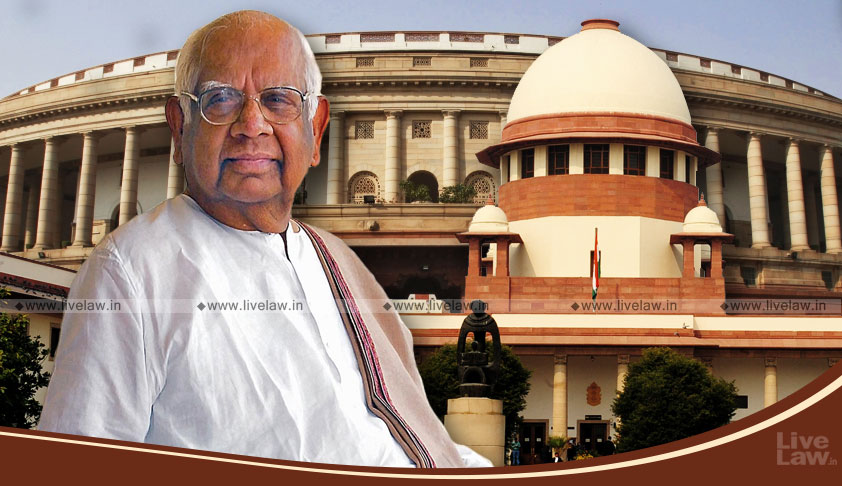
Somnath Chatterjee : A Man Who Held Constitution of India Always Supreme
"Rule of law has to be enforced not by expanding any organ's extent of powers, by encroaching into areas specifically assigned to any other, but by diligently and effectively discharging each one's assigned responsibilities."- Somnath Chatterjee, commenting on judicial interference in legislative domain.Somnath Chatterjee must have despised an unidimensional life. Perhaps, that's the reason why he chose to wear multiple hats to perform all ranges of roles which legal education enables one to do...

Crypto-Currency Exchanges, The Play Ground Of Young India
Crypto-currency Exchanges are the new playgrounds of Young India specifically the Young Technocrats and Restless Investors. Even though crypto-currencies have been around now for more than 10 years, it has seen more frenzy in the last one year with the price of Bit-coins the most popular of cryptocurrencies, appreciating to dizzy heights.Now, what are these crypto-currencies that have suddenly become the flavour of the season amongst the Young Technocrats and New Generation investors? All around...

Cyber Juvenile Delinquencies- Side Effects Of Internet And Social Networking Sites
“Conquering the challenge, proving oneself to the group and intellectual satisfaction are more important motivations than financial gain. Yesterday 4 hackers were arrested by police who used to book free online tickets for buses on upsrtconline.co.in website through compromising payment gateway traffic. Among the arrested two were B-tech student and other two were juvenile studying in class 11. They had created a close Facebook and WhatsApp group to share bugs and exploits. Shockingly the group...
When Repeal Comes In Disguise Of An Amendment
In 1985 the Supreme Court upheld the right of a divorced Muslim woman to seek maintenance from her former husband in the much famous Shah Bano case. The Parliament, under the leadership of then Prime Minister Rajiv Gandhi, quickly responded to take away this minimal right by enacting a law which was ironically christened ‘Muslim Women (Protection of Rights on Divorce) Act, 1986’. The Prevention of Corruption (Amendment) Act, 2018, which has been notified last month after receiving presidential...

Gearing For Another Reform In Arbitration: A Tester Or Change-Maker?
In the wake of “internationalisation” which is the present Indian agenda there have been several legal reforms that have been/ are being undertaken and looked closely by the present lawmakers and its enforcers.Today, the agenda of increasing foreign direct investment through liberalisation of existing norms and regulated sanctions is taking precedence and many remedial measures, including that in the space of international arbitration are being implemented.While the enthusiasm to make laws and...
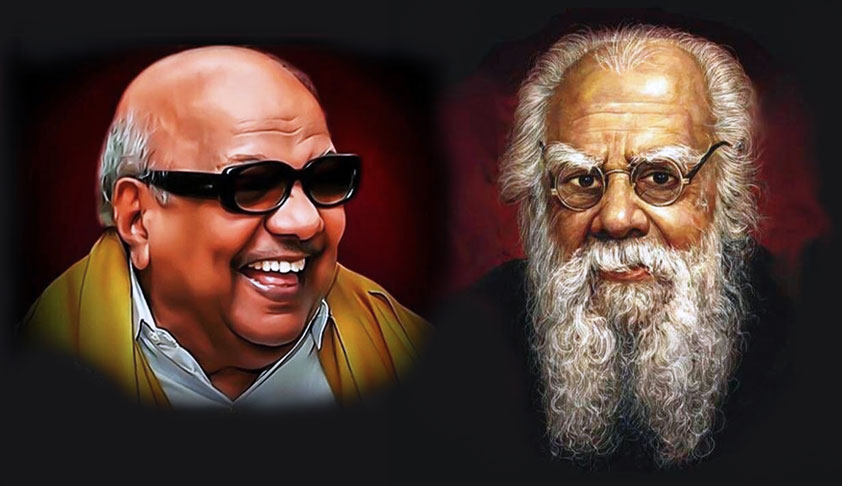
Law As Tool For Social Change : Examples From Karunanidhi
The legislative changes piloted by him are notable, as they are illustrative of the power of law to act as a catalyst for social change.Five-times CM and president of Dravida Munnetra Kazhakam(DMK) Party Muthuvel Karunanidhi, who passed away on August 7, rode to power on the wave of Dravidian movement. The Dravidian movement powered by the thoughts of Periyar E.V Ramaswamy started off as an attempt to assert Tamil cultural identity; gradually it gained more ideological depth under the guidance...