


Articles
Prevention of Corruption (Amendment) Bill, 2013 (As presented in Rajya Sabha – Salient Features)
The Rajya Sabha on 19th July 2018 passed a Bill seeking to amend the various provisions of Prevention of Corruption Act, 1988 (“PC Act, 1988”).The Bill which was originally proposed during 2013 was then referred to a Select Committee of Rajya Sabha, which submitted its report on August 12, 2016.Major changes suggested in the PC Act, 1988 as reported by the Rajya Sabha Select Committee, 2016 include: Giving a bribe as punishable offence: The Bill introduces the offence of ‘giving a bribe’ as a...

Whether Anticipatory Bail Should Be Valid Only Till The Filing Of Charge Sheet?An Analysis
The importance of anticipatory bail in the administration of criminal justice cannot be overemphasized. The Hon’ble Supreme Court has repeatedly emphasised that while considering the issue of bail, courts have to keep in view the competing interests of the society, to keep the criminals at bay and the right of an individual to personal liberty, maintaining a fine balance between the two. Similarly, certainty in the laws is equally important for a civilized society governed by the Rule of Law. ...
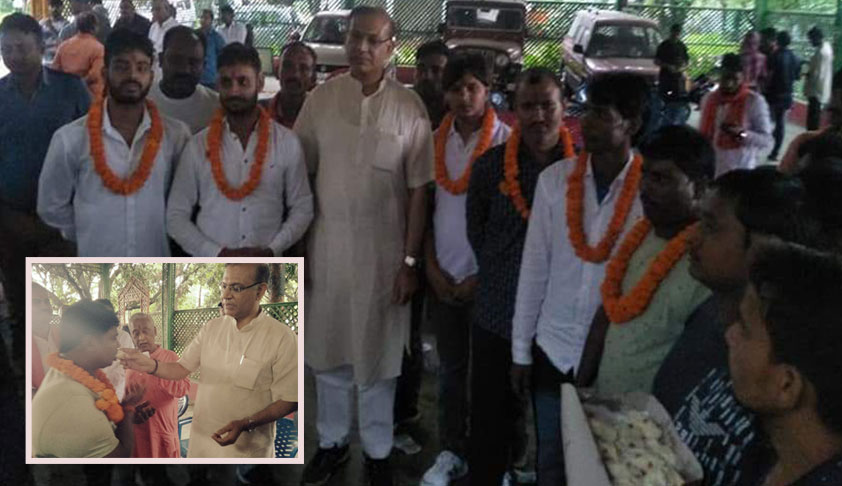
Garlanding Lynch-Mobs; Putting Justice in a Noose
When the political executive oscillates with tacit encouragement and open support for cow-vigilantism, the directives issued by the judiciary, however strong-worded and well-intentioned they are, may not remedy the situation much.It is only with a shudder that one could read the news that a Union Minister publicly feted the convicts in a lynching case. Union Minister of State for Civil Aviation Jayant Sinha arranged a heroic welcome to the men who were held guilty in the Ramgarh...
Re-Writing The Law On Search Under Section 50 Of The NDPS Act. Critiquing The Recent Judgment Of Supreme Court In Arif Khan vs. State of Uttarakhand
In a recent judgment[1] the Supreme Court appears to have re-written the law on Section 50 of the Narcotic Drugs and Psychotropic Substances Act, 1985 (“NDPS Act”) by holding that Section 50 mandatorily requires search to be carried out in the presence of a Magistrate or a Gazetted Officer even where the suspect has waived in writing his right to be taken to a Gazetted Officer or Magistrate.Section 50 of the NDPS Act requires that prior to commencing search of a suspect, the officer carrying out...
![[Debate] A Reply To The Article Immediate Post-Retirement Appointment of Judges: Mutual Bonhomie between Executive And Judiciary?](https://www.livelaw.in/cms/wp-content/uploads/2018/07/AK-Goel-RK-Agarwal-P-Sathasivam-Arun-Jaitley.jpg "[Debate] A Reply To The Article Immediate Post-Retirement Appointment of Judges: Mutual Bonhomie between Executive And Judiciary?")
[Debate] A Reply To The Article "Immediate Post-Retirement Appointment of Judges: Mutual Bonhomie between Executive And Judiciary?"
Soon after retirement, Justice RK Agrawal was appointed the President of the National Consumer Disputes Redressal Commission. The day before his retirement, Justice AK Goel was appointed the Chairperson of the National Green Tribunal. Manu Sebastian criticizes these appointments as being reflective of a "mutual bonhomie between Executive and Judiciary". [1]Sebastian argues that all these appointments took place within a short span of the retirements of these judges, which "…certainly casts a...
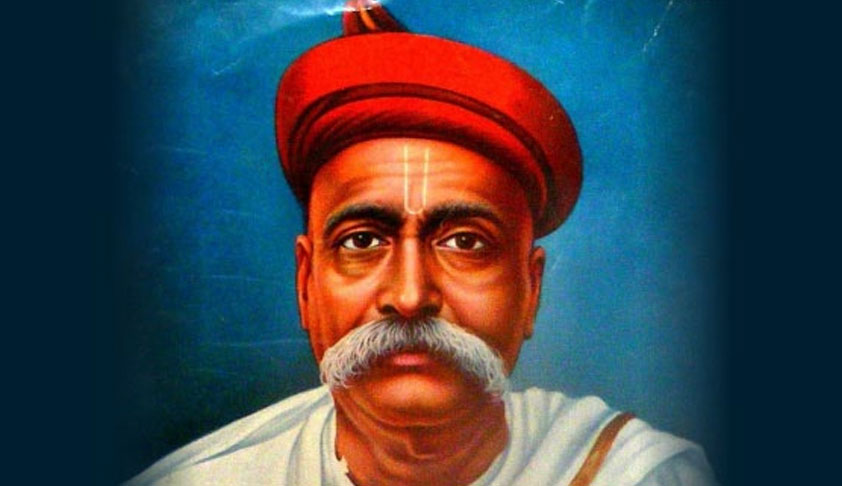
A Look Back At Tilak’s Sedition Trials
Bal Gangadhar Tilak was a prominent figure in India’s independence struggle. Although he was a law graduate and ran law classes as well, the taste of law applied on him by the British regime was quite sour. Tilak wrote in the weeklies Kesari in Marathi and Mahratta in English. He had launched both from Poona (now Pune) in 1881 alongwith Vishushashi Chiplunkar and GG Agarkar. Tilak edited Mahratta and Agarkar edited the Kesari. On 17 July 1882, almost within a year from publication, both were...
[Debate]Immediate Post-Retirement Appointment of Judges : Mutual Bonhomie between Executive And Judiciary?
"The Tribunals should not be heaven for retired persons and appointment process should not result in decisions being influenced if the Government itself is a litigant and appointment authority at the same time. There should be restriction on acceptance of any employment after retirement "- A Bench headed by Justice Adarsh Kumar Goel quoted and broadly approved the Amicus report, in Rojer Mathew v. South Indian Bank Ltd on May 7, 2018.It is timely to revisit the debate regarding the...
Supreme Court Judgments On Right To Information Act 2005: Wither Transparency?
Transparency activists have always applauded and given credit to the Supreme Court of India for its outstanding role in recognising the fact that the Right to Information to government information is a fundamental right of its citizens under Article 19 (1)(a) of the Constitution of India.The first landmark pronouncement in this respect was made by Justice Mathew in State of Uttar Pradesh v. Raj Narain (1975) 4 SCC 428 wherein he stated, “In a government of responsibility like ours, where all the...
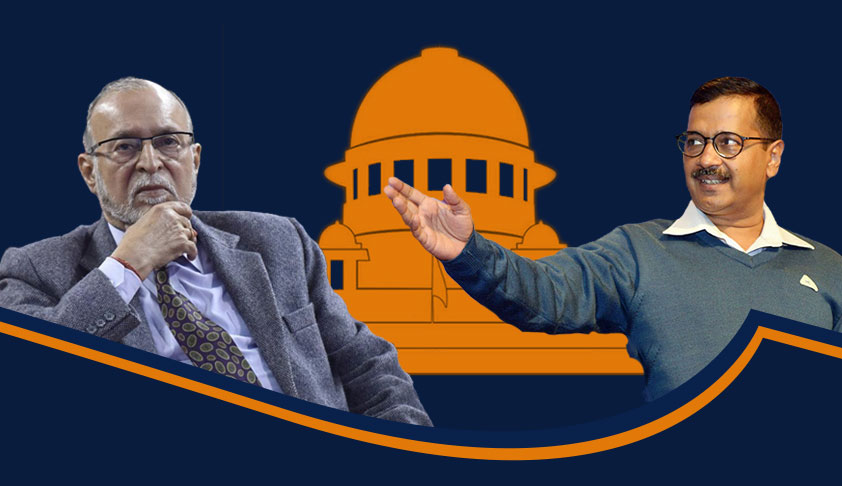
Aftermath Of Supreme Court Judgment On Delhi Govt v LG Tussle
It is too early to state that power of elected government has been cemented over the LG on all thorny issues which triggered off the legal battleThe Supreme Court has upheld the authority of the elected government of NCT of Delhi over the Lieutenant-General in matters of administration. The court held that LG is bound by the aid and advice of the Delhi Council of Ministers and the LG cannot interfere with each and every decision of the government. It said the LG’s power to make presidential...
The Victim Woman’s Reflexive Overt Acts Alone Constitute Matrimonial Cruelty Under Section 498 A Of The Indian Penal Code
A closer examination of Section 498 A of the Indian Penal Code, 1860 (‘IPC’ for short) will reveal that all acts of cruelty (as generally understood) against a woman by her husband or his relatives may not amount to matrimonial cruelty within the meaning of the Section. Such cruelty may amount to other offences either under the IPC or any other law but not the cruelty as contemplated by Section 498 A of IPC. The said Section reads as follows :-“498A : Husband or relative of husband of a woman...
The Selective Battles Of Bar Council Of India-II
The BCI ought to do more ground check before making tall claims for 99.9%, because most discerning members of the bar do not wish to be counted in that 99.9%.The Bar Council of India (BCI) seems like a sleeping leviathan which springs into action only to wage its “selective battles”. During April it had come up with a resolution—semantically flawed and conceptually confused, against lawyers who intended to move an impeachment motion against the CJI, which was commented upon in an earlier...

Vulnerable Witnesses And Criminal Justice System: Role Of Intermediaries
A recent June 21st incident where a child with Down's syndrome witnessed a murder and two attempted murders draws our attention to the serious lacunae in the Indian legal system with regard to the interface of vulnerable witnesses with the criminal justice system. The police and the prosecution have their own agenda to follow in terms of investigation, collection of evidence towards conviction and are little attuned to the disabilities and vulnerabilities of children, trauma survivors and...