


Articles
Governor Or An Agent
“A thousand years scarce serve to form a State; An hour may lay it in the dust.” - Lord Byron It is being said that Justice must not only be done but must appear to be done. Like Justice, accord to the constitutionalism must not only be inculcated but also appear to be inculcated. Governor and the office of the Governor has a long history. We are a federal structure, Are we? Perhaps yes, barring the manipulations and manoeuvring by few whose eyes twinkle more than the twinkle twinkle little...
A Bull(y) Goes Berserk
Bar Council of India has released a press note criticizing the statements made by Justice Chelameswar during various interviews post his retirement.It seems like Bar Council of India (BCI) has assumed disciplinary jurisdiction over the bench as well. I base my assumption on the preaching tone of the press release, which says, “Self-restraint by the Hon’ble judges of the highest court seems to be a forgotten virtue”Looking at the contents of the press release, delusion seems to be the only virtue...
99.9% - Not in my name
The Bar Council of India is created by the Advocates Act, 1961, with the singular aim of having a statutory body to regulate the profession of law, and the class of legal practitioners. Accordingly, the Bar Council has several functions including the laying down of the standards of professional conduct of advocates, to promote and support law reforms, promote legal education, etc.[1] To achieve these ends, the Bar Council has been given enormous powers.[2] In the earlier days, the Bar Council...
Sexual Harassment At Workplace: The Journey Of The Law
The safety of the people shall be the highest law of the land. The judiciary is the pillar for justice as it not only provides redressal mechanisms, but it also punishes the offender. The law on sexual harassment has mushroomed and nurtured after the 1997 landmark decision of the Supreme Court in the Vishaka v State of Rajasthan. However societal attitudes towards sexual harassment has impeded any effective implementation of the law.The Vishaka Case laid down the guidelines with respect to...
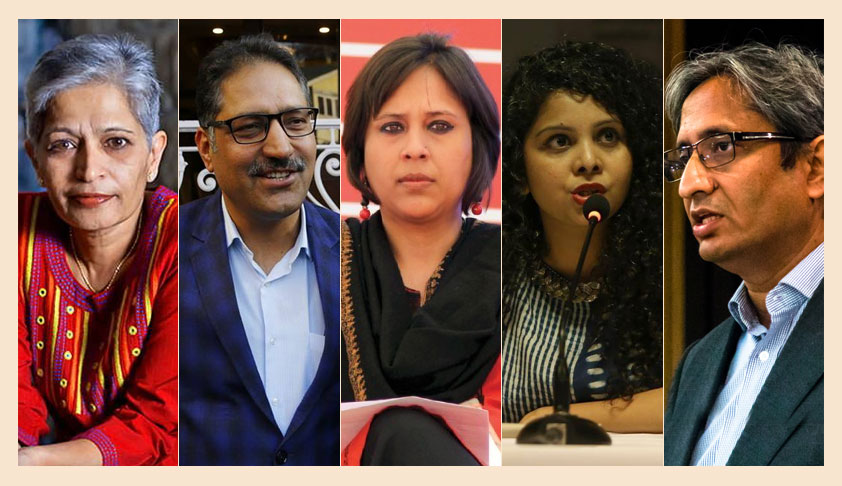
Silenced By Fear? Extra-Constitutional Threat To Press Freedom
What can the Constitutional Courts do when fundamental freedoms are curtailed by non-state actors like troll armies and fringe elements?As people all over the country were keenly awaiting the sighting of the crescent moon on June 15- believers for declaration of Eid-ul-Fitr and non-believers in anticipation of an extended weekend- the editor of Rising Kashmir, Shujaat Bukhari got killed by militants in front of his office at Srinagar. As many as 16 bullets were pumped into his body from close...

On World Refugee Day…
The notion of a ‘refugee crisis’, so heavily judgment-driven and emotionally charged, has, through its continuous replication, achieved so far three objectives: the impression of consensus, the reproduction of societal norms and stereotypes, and the evasion of political and social critique. In India, the challenge took a toll last year when the Central Government announced the deportation of 40,000 Rohingya refugees. Growing alongside the rise in populism is the opposition ‘between insiders and...
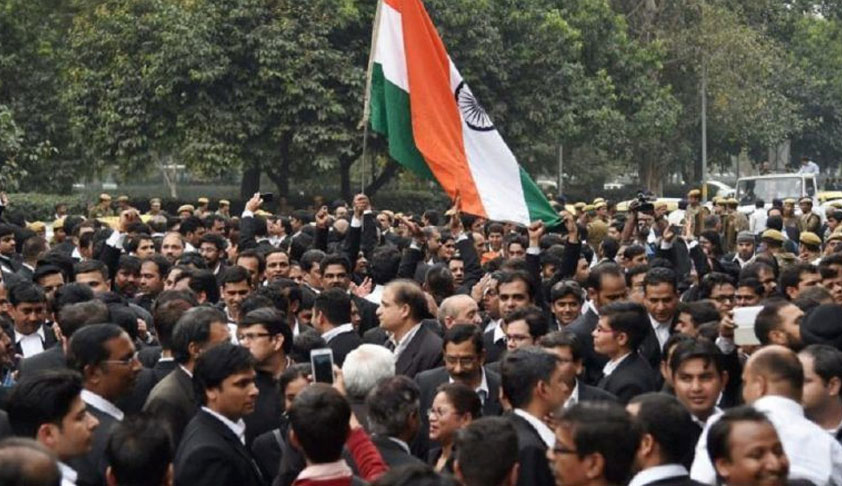
Is Resolution By Faridabad Distt Bar Assn Barring ‘Outstation’ Advocates Valid?
The District Bar Association, Faridabad, recently passed a resolution that an outstation advocate will not be allowed to appear in Faridabad courts unless he is accompanied by a local counsel. A drastic step to stop members of the fraternity from appearing in courts! In my view the resolution is, however, legally sustainable although it deserves to be withdrawn at the earliest. Let us see, how the resolution is legally acceptable.Handicapping advocates from appearing without a local counsel;...

Why Aadhaar Act is a Black Act -Part III
Citizens would face an unprecedented onslaught from the provisions of Aadhaar Act and Human DNA Profiling Bill and other related surveillance measures being bulldozed by unregulated and ungovernable technology. The Aadhaar Act paves the way for the manufacturing legitimacy of the proposed Human DNA Profiling Act. Biometric profiling of every sort is dehumanizing.The dangers of trusting identification technologies for determining social policies is bound to be consequential in a situation where...
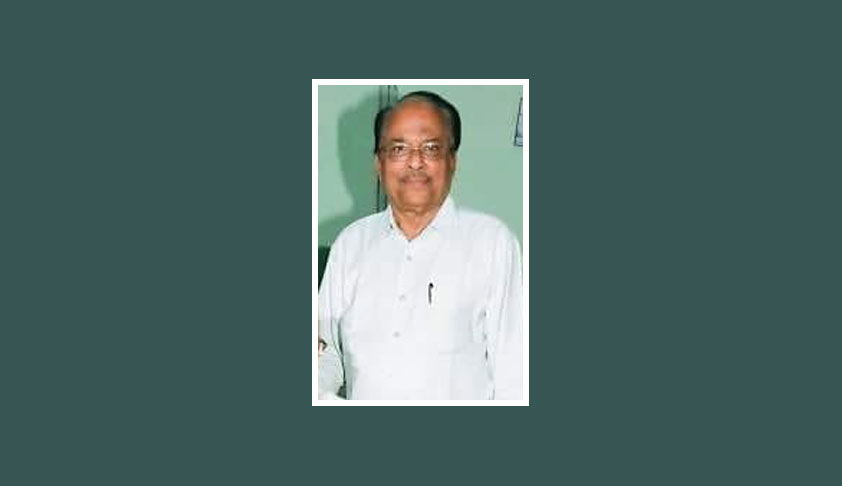
A Tribute To Senior Advocate MPR Nair (1934-2018)
Senior Advocate MPR Nair passed away in the morning of May 7, 2018, at the age of 84 at his residence at Palarivattom in Ernakulam district of Kerala. He suffered no major ailment and had a peaceful demise. He was cremated the next day in the presence of a large gathering cutting across all sections of the society vindicating his acceptance as a prominent citizen of this city.He was born on May 2, 1934, in a small hamlet called Pazhayangadi near Payyannur to the late M Neelakandan Nair and the...

A Disastrous Draft For Regulating Coasts
On 18th April 2018, the Ministry of Environment, Forest and Climate Change (MoEFCC) put out for public comments a new Draft of the Coastal Regulation Zone Notification, 2018 (‘ 2018 Draft’) which in its current form can lead to disastrous and drastic transformations of coastal India. The Draft proposes to replace the existing 2011 Coastal Regulation Zone Notification (‘2011 CRZ Notification’) is no improvement of the former. Rather it will alter whatever little is left of diverse coastal...
Homebuyers Triggering IBC – Mischief Managed?
Amidst the debate on homebuyers' claims in insolvency disputes, the Ministry of Corporate Affairs formed the Insolvency Law Committee ("ILC") which rendered its report in March 2018. Amongst other agendas, ILC focused on resolving the significant confusion regarding the status of homebuyers of under-construction apartments as creditors under the Insolvency and Bankruptcy Code, 2016 ("IBC"). Resultantly, moving forward with the ILC report, the President approved the Insolvency & Bankruptcy...

India’s ‘Unregulated’ Tryst with Artificial Intelligence: Looking Into Future Without A Law?
Over the last few years, artificial intelligence (AI) has expanded enough to be the new normal in a country’s technological advancement. The advent of this technology varies from nation to nation and depends on various factors, including the economy, employment scenario, technology, literacy and over and above these factors, the outlook of the government. Remarkably, Sh. Arun Jaitley, in his last Budget speech as the Finance Minister, mandated the NITI Aayog to devise a national policy on...